By the middle of the autumn term, every boy at Highdon knew that the most important room in the entire school was not the chapel, the library or even the great dining hall.
It was the Headmistress’s study.
The heavy oak door stood at the end of a quiet corridor in the oldest part of the main building. Brass nameplates gleamed beside the doorway, while generations of former pupils had walked nervously along the polished floorboards leading towards it.
The study belonged to Miss Beatrice Bowflower.
She had been Headmistress of Highdon for nearly fifteen years and was respected throughout Sussex as a woman of intelligence, fairness and unwavering standards.
Miss Bowflower was rarely seen hurrying.
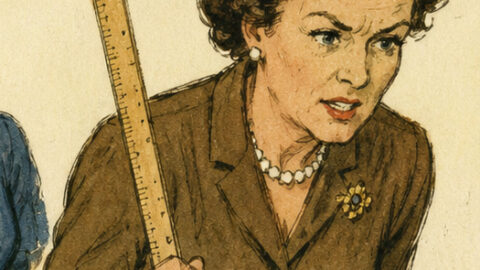
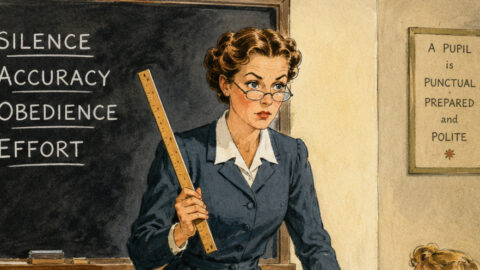
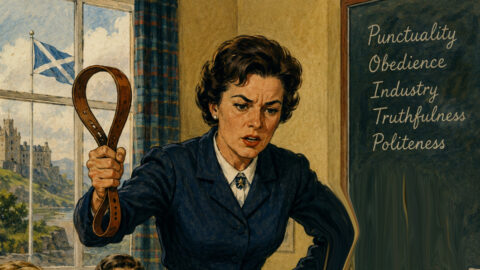
She walked with quiet confidence, always neatly dressed in a dark navy suit with a silver brooch fastened to her jacket. Her silver-grey hair was always perfectly arranged, and she carried herself with the quiet dignity of someone who expected to be obeyed without question. Her voice was calm and measured, and she possessed the remarkable ability to command attention without ever raising it.
Whenever she entered a room, conversations naturally came to an end.
The boys quickly discovered that she noticed everything.
A missing tie.
An untidy blazer.
Muddy shoes in the corridor.
A late arrival for chapel.
Nothing escaped her careful eye.
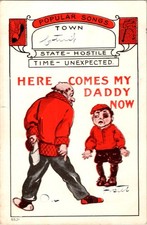
Like many traditional boarding schools of the early 1970s, Highdon still retained disciplinary customs that had existed for generations. Most boys completed their school careers without ever facing the school’s most serious sanctions, for everyone understood that such measures were reserved only for serious offences or repeated acts of defiance. Far more common were extra duties, loss of privileges, detentions and firm interviews with members of staff.
Behind Miss Bowflower’s desk stood an old oak cupboard.
It remained locked at all times.
Inside, every member of staff knew, rested two traditional instruments of school discipline.
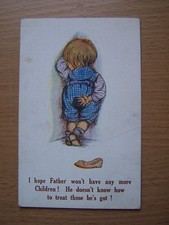
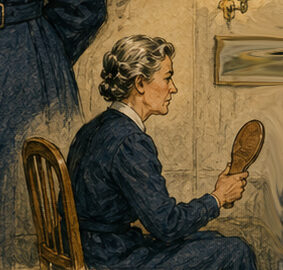
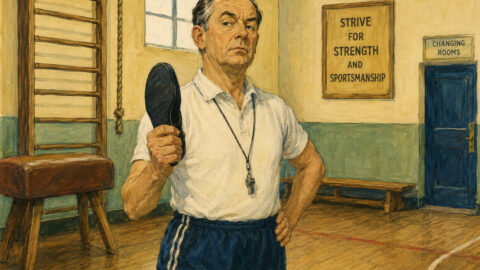
One was a well-worn black carpet slipper with a red rubber sole, used on occasions when a sharp reminder was considered sufficient for younger boys or comparatively minor offences.
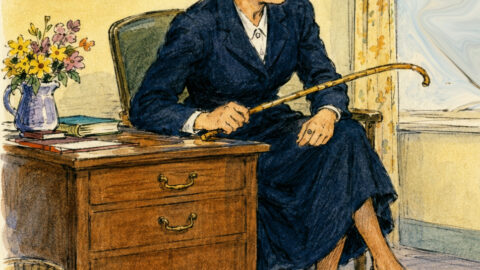
Beside it hung several slender school canes, each carefully polished and kept in immaculate condition. These were reserved only for the gravest breaches of school rules and could be used only with Miss Bowflower’s authority.
She never displayed either implement for effect.
Indeed, many boys spent years at Highdon without seeing the cupboard opened.
Miss Bowflower believed discipline should never become emotional or unpredictable.
“The rules,” she often reminded the staff, “exist to help boys grow into dependable young men. Punishment is never to satisfy temper. It is simply the final reminder when every other lesson has failed.”
Mrs Bellamy agreed wholeheartedly.
She believed encouragement achieved far more than fear ever could.
“If a boy knows you’ve listened to him,” she remarked one afternoon in the staff common room, “he’ll usually try much harder next time.”
Miss Harcourt, polishing her spectacles, gave a thoughtful smile.
“And if he chooses not to?”
Mrs Bellamy looked across the room.
“Then he must accept the consequences.”
Miss Harcourt nodded.
“Exactly. A quiet word where possible… the slipper when necessary… and only in the rarest circumstances should a boy find himself standing before Miss Bowflower for the cane.”
No one argued.
Although their methods sometimes differed, the staff respected one another’s judgement.
Meanwhile, life for the boys settled into a comfortable routine.
Lessons became more familiar.
Homework no longer seemed impossible.
Even Andrew Collins, who had arrived convinced he would never enjoy boarding school, found himself laughing with friends almost every evening.
Saturday afternoon brought the first rugby match of the term.
Ash House faced Oak House beneath grey autumn skies.
Parents lined the touchline wrapped in scarves and heavy coats while whistles echoed across the playing fields.
Mrs Fenwick surprised everyone by cheering louder than any of the boys.
“Come on, Ash House!”
Peter Lawson scored the winning try in the final minutes.
That evening the common room buzzed with excited conversation as every tackle seemed to grow more dramatic with each retelling.
Later, after supper, David Mercer quietly reminded his friends of the promise he had made on their first night.
“The cedar tree,” he whispered.
“The mystery.”
Peter’s eyes widened.
“I’d almost forgotten.”
“You won’t once you’ve seen it.”
The four boys slipped quietly into the school gardens while the last of the daylight faded behind the Sussex hills.
The great cedar stood alone near the old chapel wall.
Its enormous branches stretched across the grass like giant arms.
David knelt beside one of the roots.
“There,” he said.
At first nobody noticed anything unusual.
Then Simon spotted it.
Hidden beneath fallen leaves lay an old iron ring set into a flat stone.
Together the boys cleared away the earth.
With considerable effort they lifted the heavy slab.
A cool breath of air drifted upwards from the darkness below.
Andrew swallowed nervously.
“It really is a passage.”
Peter peered into the opening.
“I wonder where it goes.”
David smiled.
“That’s exactly what we’re going to find out.”
Far away, the chapel bell began to ring for evening prayers.
The sound echoed gently across the gardens.
Reluctantly, the boys lowered the stone back into place.
“Tomorrow,” David whispered.
“We’ll come prepared.”
As they hurried back across the lawn before anyone noticed their absence, none of them realised that someone had been quietly watching from an upstairs window.
Miss Beatrice Bowflower stood with her hands folded behind her back.
She had seen the boys near the cedar tree.
She said nothing.
Instead, the Headmistress allowed herself the faintest of smiles.
She knew perfectly well where the hidden passage led.
And she also knew that, if the boys chose to ignore the school rules in pursuing their adventure, they might soon find themselves standing quietly in her study—where a solemn lecture, the cupboard containing the school slipper, or, in the most serious circumstances, one of the slender canes, reminded every Highdon boy that curiosity and responsibility always had to walk hand in hand.
Before the autumn term was over, the secret hidden beneath the old chapel would change their lives forever.