One incident from the early 1960s has remained vividly in my memory, not only because of its unexpected nature but because it offered a rare glimpse into the realities of school discipline in Scotland at that time.
I had set off on what was to be a holiday in Scotland and spent my first night at a welcoming bed-and-breakfast just north of the picturesque village of Luss on the western shore of Loch Lomond. It was a beautiful summer morning. After enjoying a leisurely breakfast and taking a short stroll around the surrounding countryside, I returned to the guest house to load my luggage into the car before continuing my journey north.
As I was preparing to leave, the lady who owned the house came hurrying outside. She apologetically explained that her teenage daughter had somehow managed to miss the school bus and wondered whether I might be willing to give her a lift to school. Since I was travelling in that direction for the first part of my journey, even though it meant retracing my route south for a while, I was more than happy to help.
Her daughter, who was perhaps fourteen or fifteen years old, climbed quickly into the passenger seat, clearly anxious about the time. We set off down the road that follows the shores of Loch Lomond towards Helensburgh.
I was a rather shy young man in those days and was never especially good at making conversation with strangers, particularly teenage girls. Apart from confirming the route and exchanging a few polite remarks, I concentrated on the driving. I also drove carefully, conscious that I had someone else’s daughter in the car and wishing to make the journey as safe and comfortable as possible.
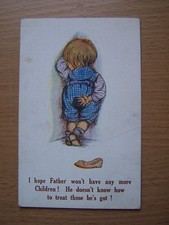
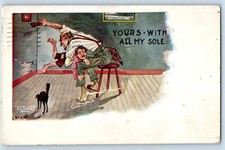
It soon became apparent, however, that my young passenger had other priorities. After glancing anxiously at her watch several times, she suddenly exclaimed that I would have to drive faster because she would “get belted” if she arrived late.
The remark took me completely by surprise.
Although I already had an interest in the subject of school discipline, I had never encountered the term “belting” as a school punishment. More surprising still was the suggestion that a girl might receive corporal punishment simply for arriving late. My understanding at the time was quite different. I would have assumed that corporal punishment was used primarily for more serious offences and, where it was still practised, was far more commonly administered to boys than girls. The idea that a female pupil might face the belt for something as straightforward as lateness seemed extraordinary.
Looking back, I wish I had found the confidence to ask her more about it. She might have explained whether this was an established school policy, whether the threat was routinely carried out, or whether she was exaggerating out of genuine anxiety. She may also have described who was responsible for administering such punishments. In Scottish secondary schools of that period, the teaching profession was predominantly female, perhaps around four-fifths of the staff, with the remaining fifth being male. However, senior disciplinary responsibilities, including the administration of corporal punishment where it was authorised, were often carried out by male members of staff, particularly headmasters or male deputy heads, even in schools where women greatly outnumbered men.
Unfortunately, my natural shyness got the better of me. Rather than satisfy my curiosity about what could have been a fascinating insight into Scottish school discipline, I focused entirely on making up the lost time.
Without driving recklessly, I made the best progress the roads would safely allow, following the winding route south before turning inland towards Helensburgh. My passenger remained visibly anxious throughout much of the journey, watching the clock almost as closely as she watched the road ahead.
At last we arrived outside the school with, by my watch, about five minutes to spare. My watch had been carefully set to the BBC Home Service time signal before I left home, so I was reasonably confident of its accuracy. Even so, I could not help hoping that the school’s clocks agreed with mine. If they did, then she had escaped whatever punishment she feared by only the narrowest of margins.
I never discovered whether her fears had been justified, nor whether arriving a few minutes late would really have resulted in a belting. The mystery has remained with me ever since. Yet that brief journey provided a memorable glimpse into an educational culture very different from the one familiar today, when the possibility of corporal punishment in schools, especially for a girl arriving late, would have seemed almost unimaginable outside certain parts of Scotland during that era.