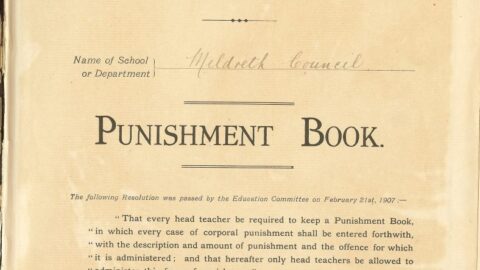
For much of the nineteenth and twentieth centuries, corporal punishment was an accepted method of maintaining discipline in schools throughout the United Kingdom, the United States, and many Commonwealth countries. Traditional British schools often used the birch or cane, while many American schools, particularly in the South, relied on the paddle. Supporters viewed these punishments as a quick, effective, and practical way to correct misconduct without removing students from the classroom.
Advocates argued that a brief, moderate paddling or caning caused only temporary discomfort and allowed students to return to class immediately. They believed this was preferable to suspensions, which removed students from the learning environment, disrupted their education, and created additional burdens for schools and families. Since corporal punishment was generally not recorded on academic transcripts, supporters also argued that it spared students from disciplinary records that could affect future educational or employment opportunities.
Many educators who supported corporal punishment considered it only one disciplinary tool among many rather than a complete solution to behavioural problems. They pointed out that alternatives such as detention, Saturday school, or in-school suspension required additional staffing, increased school costs, and often created hardships for students involved in jobs, sports, or extracurricular activities. From this perspective, corporal punishment was valued because it was immediate, clearly understood, and quickly resolved an incident.
However, opposition to corporal punishment steadily grew. Critics argued that physical punishment addressed only the behaviour itself rather than the underlying reasons for it. They believed that effective discipline required understanding why a student was misbehaving and using interventions that taught self-control, responsibility, and conflict resolution. Many teachers demonstrated that orderly classrooms could be maintained without resorting to physical punishment, suggesting that successful discipline depended more on classroom management and positive relationships than on corporal punishment.
Concerns also emerged about the potential for misuse. While many educators administered corporal punishment with restraint and believed they were acting in the student’s best interests, critics argued that any system permitting physical punishment carried the risk of excessive force, inconsistent application, or abuse. They also questioned whether older students, particularly in secondary schools, should be subjected to physical discipline given the changing social and emotional dynamics of adolescence.
Educational philosophy also evolved. Researchers and practitioners increasingly promoted approaches that focused on individual support, restorative practices, and positive behavioural interventions. Smaller class sizes, stronger teacher-student relationships, and greater attention to students’ emotional and social development were seen as more effective ways of preventing misconduct than relying primarily on punishment after it occurred.
Cultural and societal changes played an equally important role. In the United Kingdom, growing public concern about children’s rights and changing attitudes toward physical discipline contributed to the abolition of corporal punishment in state schools during the 1980s and in private schools by the late 1990s. In the United States, support for school corporal punishment declined in many states as educational practices shifted toward non-physical forms of discipline, although some states continue to permit its use where local communities support it.
Ultimately, corporal punishment was abolished in many educational systems not because everyone agreed it had never been effective, but because attitudes toward children’s rights, educational practice, and acceptable forms of discipline changed significantly. While supporters continued to view it as a practical disciplinary option, opponents argued that schools should focus on understanding the causes of behaviour, promoting positive relationships, and using disciplinary methods that did not involve physical punishment. These changing priorities led many governments and school systems to conclude that non-physical approaches were more consistent with modern educational values.