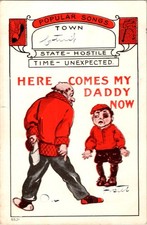
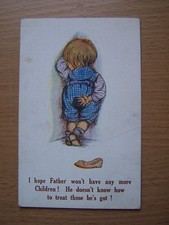
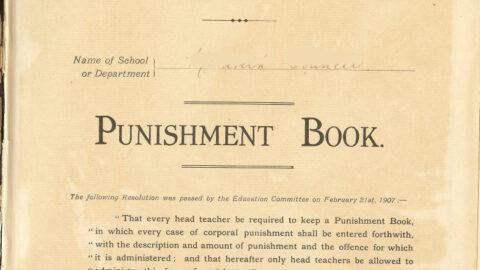
It appears that this particular teacher relied heavily on corporal punishment, administering smacks to both boys and girls as a regular form of discipline. By modern standards, this may seem shocking, particularly because of the frequency with which the punishments were reportedly given. However, it is important to consider such accounts within the legal and social context of the time rather than through the lens of present-day standards.
At the time these events took place, corporal punishment in schools was still lawful in many parts of the United Kingdom. The key legal distinction was between legitimate disciplinary punishment and any form of sexual misconduct. A teacher who administered a smack as punishment, even on a child’s clothed or, in some circumstances, bare buttocks, was not necessarily acting unlawfully. The law focused on whether the punishment was genuinely intended as discipline and whether it remained within what was then regarded as reasonable limits.
Education authorities and local school boards often had their own regulations governing corporal punishment. These rules commonly specified who was authorised to administer it and what instruments could be used. In many schools, only designated members of staff, usually the headteacher or senior teachers, were permitted to use the cane. The use of hands or slippers was sometimes discouraged or restricted by local policy, although practices varied considerably between schools and education authorities. These were administrative regulations rather than criminal laws, and breaches of school policy did not automatically constitute illegal conduct.
Even allowing for the standards of the period, the sheer number of smacks reportedly administered by this teacher is striking. While such frequency may seem excessive by today’s expectations, the legal question would not necessarily have been how often punishment was used, but whether individual incidents crossed the line into unreasonable or excessive force.
One detail that supports this distinction is the description of the physical effects of the punishment. Although the smacking was painful and left the child’s buttocks sore and stinging immediately afterwards, there were reportedly no lasting injuries. By the time the child returned home, the skin was said to be pink rather than bruised or broken. At the time, this would likely have been viewed as evidence that the punishment remained within what was then considered acceptable physical limits, even if the child felt it had been unfair or undeserved.
It is also worth considering the wider environment in which such punishments occurred. If a teacher was routinely smacking large numbers of pupils, it is unlikely that parents would have remained unaware. Younger children were often helped with bathing or dressing at home, making any marks or redness on their bodies visible to parents. Children also talked openly about school, frequently telling their parents who had been punished during the day or describing punishments they had witnessed. News of disciplinary practices often spread naturally among families through everyday conversations.
If parents had consistently objected to the teacher’s methods, complaints would almost certainly have arisen. The apparent absence of widespread objections suggests that many parents of the period regarded this type of corporal punishment as a normal and acceptable part of school discipline. This should not be interpreted as meaning every parent approved, but rather that societal attitudes towards physical punishment were very different from those that exist today.
When historical allegations of corporal punishment are examined in the present day, they must be judged according to the law and accepted standards that existed at the time the events occurred. Courts cannot simply apply modern legal principles retrospectively. Instead, they must consider whether the conduct was lawful under the legislation, regulations, and social expectations that were in force when the punishment took place.
Another significant factor in how corporal punishment was perceived was the level of openness with which it was administered. Where parents knew that physical discipline formed part of the school’s disciplinary system and there was no attempt to conceal it, they were often more willing to accept its use. Transparency helped foster trust between schools and families because parents understood both the school’s expectations and its methods of maintaining discipline.
One former headteacher recalled his experience at St Peter’s State Junior School, an all-boys school, between 1940 and 1968. The layout of the school meant that parents waiting to collect their sons could look directly into his office. They knew that he was aware they could see inside, and nothing was done to obstruct their view.
On occasions when corporal punishment was administered, parents could observe it taking place. They could see boys being caned, including instances where the punishment was delivered across the bare buttocks, a practice that was accepted in many schools during that period. There was no secrecy surrounding these punishments, and parents were fully aware of the school’s disciplinary procedures.
In his view, this openness reduced suspicion and mistrust. Difficulties arose later, when some schools began conducting punishments behind closed doors or adopted policies of telling pupils, “I won’t tell your parents this time.” Once discipline became hidden from families, concerns naturally increased. The lack of transparency created uncertainty about what was happening in schools and undermined the confidence that many parents had previously placed in school authorities.
Whether one agrees with the use of corporal punishment or not, historical accounts such as these illustrate how dramatically attitudes have changed. Practices that were once widely accepted by schools, parents, and much of society are now viewed very differently. Understanding the legal framework and social expectations of the time does not require approval of those practices, but it does provide important historical context when assessing events from the past.