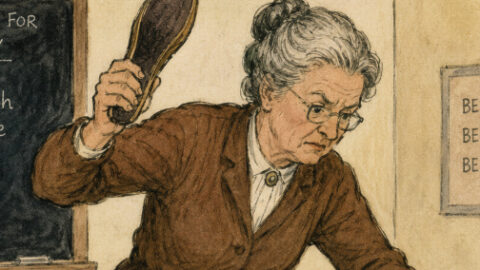
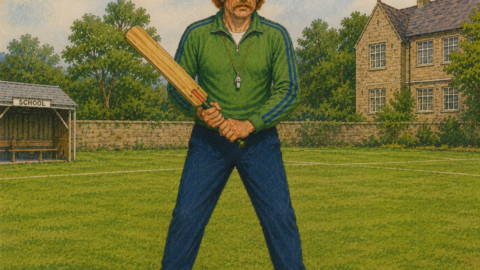
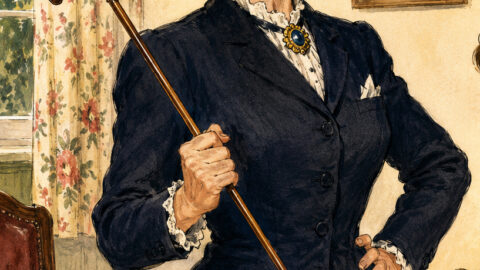
Looking back upon the period from the comfortable distance of a decade or more, many former pupils came to the same surprising conclusion. During the mid-1960s they had genuinely believed that they were witnessing the last years of routine corporal punishment in British schools. The signs seemed unmistakable. Masters who had once reached instinctively for the slipper now appeared content to issue detentions. Canings became less frequent in some grammar schools. Younger teachers spoke a different educational language from their predecessors, placing greater emphasis upon persuasion than fear. Even pupils themselves sensed that the atmosphere was changing.
The optimism of the decade encouraged that belief.
The 1960s were widely portrayed as an age in which old certainties were giving way to new ideas. Authority in every sphere of life seemed to be questioned. Universities expanded. Traditional social barriers weakened. Young people enjoyed freedoms unknown to their parents. Newspapers carried stories about educational reform, modern teaching methods and the gradual disappearance of customs that had survived almost unchanged since before the First World War.
Against such a background, it seemed only natural to assume that corporal punishment would soon follow the same path.
Many boys who left school in the second half of the decade entered adult life convinced that the cane belonged to a fading educational tradition. They expected future generations to hear about school beatings much as they themselves had heard about ink wells, gas lighting or compulsory school caps—interesting relics of another age.
Then came the surprise.
Meeting younger colleagues during the 1970s, they discovered that canings and slipperings had by no means disappeared. In some schools they remained a regular feature of daily discipline. Elsewhere they had actually become more formalised, with carefully prescribed procedures determining which offences merited the slipper and which demanded the cane.
The assumption that Britain had entered a new era proved, at best, only partially correct.
Indeed, conversations between former pupils from different parts of the country often produced remarkable contrasts.
“I thought all that had stopped.”
“It hadn’t at our place.”
“We hardly ever saw the cane after 1966.”
“Our Head still used it every week.”
One man’s memories could sound almost unbelievable to another whose education had taken place only fifty miles away.
This regional variation perhaps explains why the national debate became so confused. Newspapers published reports of schools abandoning corporal punishment entirely while, elsewhere, headmasters publicly defended it as an indispensable safeguard against declining discipline. Public opinion itself appeared divided. Some parents welcomed reform, believing schools should reflect a more modern relationship between teacher and pupil. Others feared that abandoning traditional sanctions would simply encourage disorder.
Educational journals carried increasingly vigorous arguments.
Supporters of corporal punishment insisted that newspaper critics misunderstood how schools actually functioned. The cane, they argued, was seldom employed indiscriminately. Serious offences required serious consequences. A swift punishment administered under controlled conditions was preferable to prolonged confrontation or repeated suspension. Many experienced heads maintained that physical punishment, sparingly used, actually reduced the need for harsher disciplinary measures.
Their opponents reached precisely the opposite conclusion.
They questioned whether respect founded upon fear deserved to be called respect at all. They pointed to schools where excellent discipline existed despite little or no use of corporal punishment. They argued that educational authority should rest upon fairness, consistency and professional competence rather than upon the threat of physical correction.
Neither side lacked conviction.
Within staff rooms across Britain the subject could provoke surprisingly passionate discussion.
Some younger teachers quietly admitted that they disliked administering corporal punishment, even where school regulations authorised it. They had entered teaching to educate rather than punish and found the ritual uncomfortable. Others regarded the matter with complete pragmatism. If school policy required the cane for certain offences, then it was simply another unpleasant duty to be carried out professionally.
Meanwhile the pupils continued to interpret events through their own distinctive perspective.
Schoolboys possessed an astonishing ability to compile informal statistics.
How many canings had occurred this term?
Which master had stopped using the slipper?
Did the new deputy head favour detention instead?
Which prefects were inclined to overlook minor infringements?
Such information circulated continuously through classrooms, corridors and playgrounds. Boys often knew perfectly well that disciplinary fashions were changing long before educational historians recognised the trend.
One particularly striking feature of the period was the declining role of prefects in administering corporal punishment.
Only a few years earlier, in many grammar schools, prefect authority had extended well beyond maintaining orderly queues or supervising corridors. Senior boys were entrusted with genuine disciplinary powers. Younger pupils who talked during assembly, appeared incorrectly dressed or committed minor breaches of school rules might find themselves summoned by a prefect and awarded a slippering without any master becoming involved.
Supporters regarded the system as valuable preparation for responsibility.
Critics saw it rather differently.
Increasingly, schools began transferring such authority back to the teaching staff. Prefects were encouraged to issue reports, assign lines or refer persistent offenders to masters instead. Even where the slipper remained available, it became a secondary measure rather than an immediate response.
The alteration was subtle but significant.
It suggested that schools were becoming less comfortable about allowing pupils to exercise physical authority over one another.
Another noticeable development concerned the distinction between punishment and discipline.
Earlier generations had often treated the two terms as almost interchangeable. By the early 1970s educational thinking increasingly separated them. A well-disciplined school, many argued, need not necessarily rely upon frequent corporal punishment. Order might equally be maintained through clear expectations, consistent routines and mutual respect.
Such ideas did not immediately transform everyday practice.
Old habits rarely disappear overnight, particularly within institutions proud of their traditions.
Many headmasters had spent entire careers believing that the occasional caning underpinned the authority of every other school regulation. To abandon it appeared an unnecessary gamble. Better, they thought, to retain a sanction that had maintained order for generations than to experiment with fashionable theories whose long-term consequences remained uncertain.
The wider social climate may also have influenced attitudes.
By the beginning of the 1970s the confidence and optimism that had characterised much of the previous decade seemed to have diminished. Britain experienced industrial disputes, economic uncertainty, political extremism and rising concerns about public order. Newspapers increasingly carried stories suggesting that authority itself was under challenge.
Within such an atmosphere, calls for firmer discipline naturally acquired renewed force.
It is therefore possible that the apparent revival of corporal punishment in some schools reflected broader anxieties rather than purely educational considerations. If society believed discipline was weakening generally, schools were inevitably expected to demonstrate firmness.
Whether that perception accurately reflected reality remains open to debate.
What cannot be doubted is that many former pupils experienced genuine surprise upon discovering that corporal punishment remained widespread well into the 1970s and, in some schools, beyond.
The generation that had imagined itself witnessing the closing scenes of a long tradition gradually realised that history had proved more complicated.
Educational change, like social change itself, rarely proceeds in a straight line.
Instead it advances unevenly, pauses unexpectedly, and occasionally appears to reverse direction altogether. Grammar schools across Britain became living examples of that truth. Some quietly retired the slipper to a cupboard from which it never again emerged. Others continued to regard it as an ordinary feature of school life. In one county the cane might have become a rarity; in another it still occupied a prominent place in the headmaster’s study.
For pupils comparing memories years later, the result was a fascinating patchwork of experiences.
There had never been one single story of corporal punishment in Britain’s grammar schools.
There were hundreds of stories, each shaped by its own traditions, personalities and local customs.
Only by placing them side by side does the broader picture finally emerge.