If there is one conclusion that emerges from the recollections of former pupils, it is that there never was a single British experience of corporal punishment. Every school possessed its own traditions, every headmaster his own philosophy, and every staff room its own unwritten understanding of when the slipper or cane should, or should not, be employed. Looking back across the country, one discovers not a uniform system but a remarkable patchwork of customs which varied from county to county and sometimes from one school to the next.
Perhaps nowhere was this more evident than in the boarding grammar schools.
One former boarder, educated between 1964 and 1971, remembered arriving at school to find an institution which seemed scarcely altered from the years immediately after the war. Discipline was woven into every hour of the day. Unlike day schools, where boys escaped home each afternoon, boarding schools supervised almost every aspect of life. Masters were not merely teachers but housemasters, guardians and disciplinarians. They saw boys at breakfast, in lessons, during games, at evening prep and before lights-out. Opportunities for misconduct—and therefore punishment—were correspondingly greater.
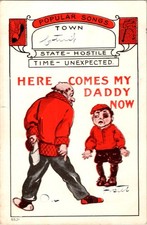
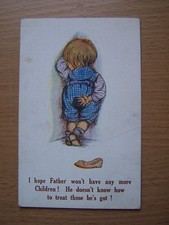
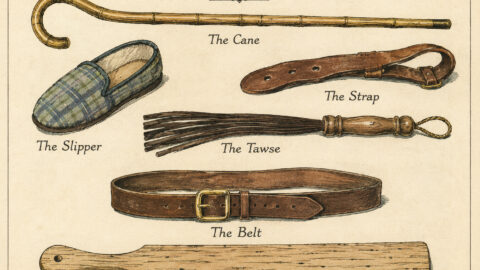
The slipper was an almost everyday presence.
Housemasters kept one readily available in studies or house offices, and boys quickly learned that breaches of house rules could be dealt with immediately. Excessive noise in dormitories, untidy lockers, failure to complete evening preparation, persistent lateness, practical jokes that went too far or repeated infringements of routine could all bring a slippering. The punishment itself was rarely surrounded by ceremony. It formed part of the ordinary rhythm of boarding life.
The Physical Education staff maintained their own formidable reputation.
Games departments throughout Britain often appeared to operate according to traditions distinct from the rest of the school, and boarding schools were no exception. Games masters were expected to maintain standards of effort and discipline upon the playing fields as rigorously as classroom teachers maintained order indoors. Boys who appeared idle, deliberately shirked exercise or repeatedly ignored instructions sometimes found themselves introduced to the gym slipper with uncomfortable speed.
Yet even within such schools, distinctions remained carefully observed.
The slipper dealt with everyday discipline.
The cane retained its special status.
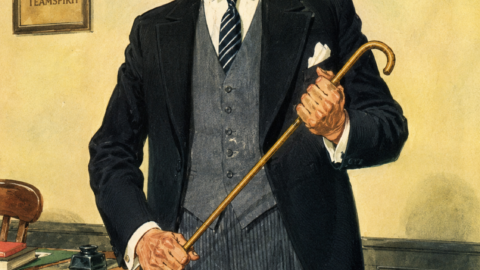
Reserved for more serious offences, its appearance immediately signalled that a boy had crossed a more significant boundary. Fighting, dishonesty, repeated disobedience, serious damage to property or persistent misconduct despite previous punishments might all justify a formal appearance before the headmaster or senior housemaster.
Many boys, remarkably, managed to complete their entire school careers without ever receiving the cane.
Others became rather better acquainted with it than they would have wished.
It was this distinction that many former pupils remembered most clearly. A slippering, though unpleasant, might soon become another story exchanged in the dormitory after lights-out. A caning remained something altogether different. It carried greater formality, greater anticipation and, perhaps above all, greater symbolic importance. Long after the discomfort had faded, boys often remembered the summons, the interview and the solemnity of the occasion.
The boarding school described by one former pupil appeared, at first sight, to embody every traditional feature of the English grammar school.
Uniform regulations were meticulously enforced.
Haircuts attracted regular inspection.
Beds had to be made to an exacting standard.
Shoes were expected to shine.
Studies were checked.
Silence during preparation periods was absolute.
Senior boys exercised considerable authority over juniors.
Corporal punishment existed within that broader framework of discipline rather than standing apart from it. It was regarded as one sanction among many, albeit the most memorable.
Then, quite suddenly, everything changed.
A new headmaster arrived.
There was no dramatic speech in assembly. No announcement appeared on the notice board proclaiming the end of corporal punishment. The cane simply ceased to appear. Slipperings quietly vanished. Masters adopted other forms of discipline, and before long boys realised that something which had seemed permanent had disappeared almost unnoticed.
Looking back, many found the speed of the transition astonishing.
One generation had regarded corporal punishment as an ordinary fact of school life.
The next scarcely encountered it at all.
Elsewhere, however, events unfolded rather differently.
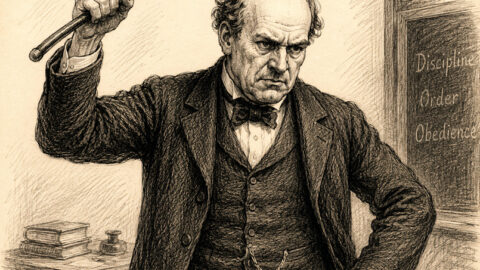
A former pupil from a Midlands grammar school between 1958 and 1965 painted a considerably harsher picture of everyday discipline. There, the headmaster and deputy headmaster were regularly seen carrying canes as they moved about the school. Their very presence served as a visible reminder of authority. Boys knew perfectly well that serious offences would be answered with formal corporal punishment, and few doubted that the threat was genuine.
Nor were the senior masters alone in exercising such powers.
Prefects possessed authority that would surprise many modern readers.
Younger boys whose appearance failed to satisfy school regulations could find themselves ordered before a prefect for offences which today might attract nothing more than a verbal reminder. Socks judged too light a shade of grey, an incorrectly tied school tie, failure to wear the regulation cap, talking while waiting in line, or other seemingly trivial breaches of uniform or conduct might all result in a slippering.
Such punishments reflected the values of the institution.
Uniformity mattered.
Obedience mattered.
Attention to detail mattered.
The precise offence often appeared less important than the principle that school rules, however minor, were to be observed.
Inside the classroom matters could prove equally brisk.
Some masters relied little upon corporal punishment and preferred detentions or additional work. Others possessed rather fewer reservations. A ruler lying conveniently upon the desk might become an instrument of discipline. Science masters, surrounded by laboratories full of practical equipment, acquired colourful reputations for improvisation. Rubber tubing, metre rules and other classroom implements occasionally found disciplinary uses that had never appeared in the manufacturer’s catalogue.
The Physical Education department, unsurprisingly, attracted its own collection of legends.
Thin gym shorts offered little protection, and games masters were remembered as carrying plimsolls with an ease suggesting long familiarity. Boys suspected of failing to apply themselves fully during vaulting, athletics or cross-country running sometimes received immediate encouragement in a form unlikely to appear within modern coaching manuals.
Yet even within this decidedly traditional school, change gradually asserted itself.
As the years passed, slipperings became less frequent.
Masters increasingly experimented with alternative punishments.
Most significantly, prefects discovered that they were expected to impose lines rather than administer corporal punishment for ordinary offences. Only if a younger boy ignored or refused the written punishment might the slipper still be employed.
One former prefect remembered this alteration with amused honesty.
During an entire term holding office he found occasion to administer only a single slippering. Physical punishment had become sufficiently unusual that both the prefect and the recipient remembered the occasion vividly many years afterwards. The memory itself illustrates how rapidly attitudes had shifted. Only a few years earlier such incidents would scarcely have merited comment.
Stories like these demonstrate how misleading broad generalisations can be.
To speak simply of “schools in the 1960s” is to overlook extraordinary diversity. Some institutions had already begun moving away from corporal punishment before the decade was half over. Others continued almost unchanged well into the following decade. Some headmasters regarded reform as inevitable. Others defended long-established customs with genuine conviction.
Perhaps the most striking feature of all is how quickly educational traditions that once seemed immovable could disappear.
Generations of boys had accepted the slipper and cane as permanent features of school life. They appeared woven into the very fabric of the grammar school. Yet within remarkably few years many vanished altogether, remembered chiefly in conversations between former pupils comparing stories of masters, studies, gymnasiums and punishment books.
Those conversations continue today.
Names long forgotten by everyone else still provoke immediate recognition among old boys. The mathematics master who always preferred detention. The games master whose slipper seemed never far from reach. The deputy head whose cane inspired respectful silence throughout the corridors. The headmaster whose successor quietly retired both implements without ceremony.
Together they form a mosaic of memories rather than a single narrative.
What emerges is neither an attempt to glorify nor to condemn an educational system that belonged to another age. Instead, these recollections reveal the complexity of a period during which British schools stood poised between two philosophies of discipline. One looked back to Victorian assumptions about authority, obedience and correction. The other pointed towards a more modern relationship between teachers and pupils.
For a brief period, both worlds existed side by side.
That, perhaps more than anything else, explains why former pupils remember the era with such fascination. They belonged to the generation that witnessed the old traditions in their final decades, never quite certain whether they were seeing the end of one age or merely another chapter in a much longer story.