The 1980s marked the beginning of a markedly different approach to school discipline. In 1986, Peter Hawkins and Malcolm Joseph introduced the Kostka Hall School Rules, designed to establish clear standards of conduct for pupils and to define acceptable boundaries of behaviour. The regulations addressed conduct in a wide range of situations, including travel to and from school, classroom behaviour, lunch periods, library use, sporting activities and examinations.
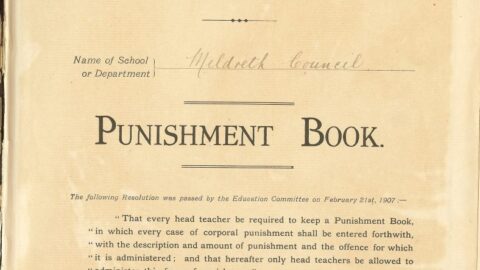
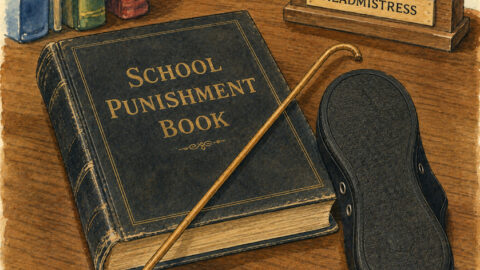
During the same period, the school also introduced what became known as the “strap book,” a register intended to ensure greater accountability among staff by requiring each use of corporal punishment to be formally recorded. Attitudes towards discipline were evolving throughout the wider community, and even before the final entry was made in the strap book in 1990, the use of corporal punishment had already declined considerably.
Outside the classroom, boys encountered staff members charged with maintaining order in the playground and recreational areas. Brother McDonald, in particular, was widely recognised as a strict disciplinarian. Former pupils recalled that his authority was symbolised by the strap he carried and by his commanding voice, to which boys responded immediately. Although feared, he was not generally regarded as excessively severe in the administration of punishment.
One former student, who attended the school until 1988, recalled that corporal punishment remained relatively common during his years there, despite official indications that its use had diminished. In a year level of approximately sixty boys, he estimated that several pupils each week were still subjected to the strap. He himself received corporal punishment from Brother McDonald, Peter Hawkins and Malcolm Joseph during his time at the school.
The former pupil further recalled an incident during his final year when, after responding disrespectfully to a mild reprimand from Brother McDonald during recess, he was struck across the backside in front of other students. Although he stated that the physical pain was slight, the public humiliation left a profound impression upon him. Reflecting later, he regarded the experience as a forceful reminder of the authority exercised by teachers and of his own status as a schoolboy despite his growing self-confidence and sense of maturity.
He contrasted these experiences with contemporary concerns regarding discipline in schools, wondering whether some modern pupils might benefit from similarly firm lessons in authority and responsibility.
The student later attended Xavier College from 1989 to 1992, having previously studied at Kostka Hall between 1985 and 1988. He noted that corporal punishment was no longer practised at the senior school during his years there, though threats of such punishment occasionally remained.
The following extracts are drawn from the volume Xavier Portraits by Greg Dening and Doug Kennedy, published in 1993, much of which reproduced material from Xavier: A Centenary Portrait.
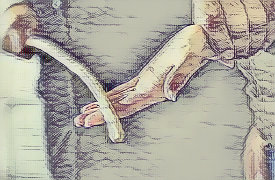
The authors observed that rumours concerning methods used to increase the weight and severity of straps were widespread among pupils. Some straps were described as tan-coloured, others black; some were carried openly by masters, while others were kept secured to prevent theft as souvenirs.
One account concerning Cornelius Hartnett, S.J., a First Division Prefect, records disciplinary measures imposed upon boys guilty of misconduct, including drunkenness and disorderly behaviour. Punishments ranged from formal apologies and expulsion from student organisations to corporal punishment administered for disruptive conduct within dormitories.
Former students often remembered the Prefects primarily for their severe disciplinary methods and the atmosphere of tension created between authority figures and pupils. Rectors and Prefects of Studies were regarded as imposing and distant personalities, whose offices inspired apprehension among students summoned before them.
Descriptions of the Prefect of Studies’ office portray it as a place associated less with guidance than with swift punishment. Boys approaching its heavy door often did so with considerable anxiety, prepared either to offer excuses or to present notes from masters detailing their offences and the punishments to follow.
The dormitories likewise operated under strict disciplinary expectations. While earlier arrangements had afforded boys a measure of privacy through curtained beds, later reforms replaced these with long open rows that allowed constant supervision. Minor breaches of silence that might elsewhere have earned detention could in the dormitories result in corporal punishment.
The school histories also recount a range of other disciplinary incidents and controversies, including expulsions for indecent conduct, complaints from parents concerning living conditions, investigations into attempted runaways, thefts, truancy, drunkenness and disputes regarding the severity of corporal punishment. While some parents criticised what they perceived as declining discipline within the school, others threatened legal action over what they considered excessive zeal in the administration of punishment.