As former pupils reflected on their school days, one question surfaced again and again.
Which punishment was actually the worst?
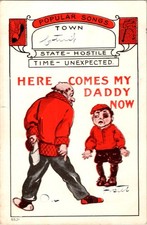
At first glance, the answer seemed obvious. The cane had a fearsome reputation throughout Britain’s schools and was generally regarded as the most serious form of corporal punishment. Receiving the cane usually meant that a child had committed a more significant offence than one deserving only a ruler or the slipper.
Yet memories proved far more complicated than reputation.
Many who had experienced both punishments admitted that the answer depended entirely upon the circumstances. The teacher, the offence, the location and even the child’s age all influenced how a punishment was remembered.
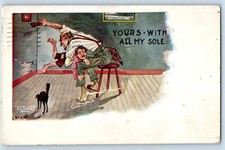
One former pupil spent his primary school years receiving both the cane and the slipper. Looking back, he remained convinced that the cane hurt considerably more. The sharp sting across the hands lingered long after the punishment had ended, whereas the slipper, delivered across the seat of the trousers, generally produced a broader but shorter-lived discomfort.
He believed age may also have played a part.
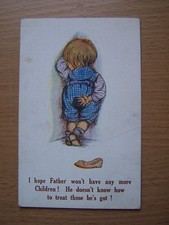
Teachers often seemed reluctant to use the slipper with full force on younger children. As a result, many pupils experienced it as more humiliating than painful. The cane, however, appeared to have no such gentleness. Even a few strokes across small hands could leave an impression that lasted for hours.
His later years at boarding school offered little opportunity for comparison.
There, discipline relied almost entirely upon the cane.
The slipper disappeared altogether.
Canings became part of boarding school life, usually administered in the dormitory rather than in the classroom. Although no child welcomed them, they became almost routine within the school’s disciplinary system.
Others reached rather different conclusions.
One former secondary school pupil remembered several occasions when a severe slippering actually hurt more than certain canings he had received. He recalled one particular caning that felt almost ceremonial—a token punishment intended to reinforce authority rather than inflict real pain.
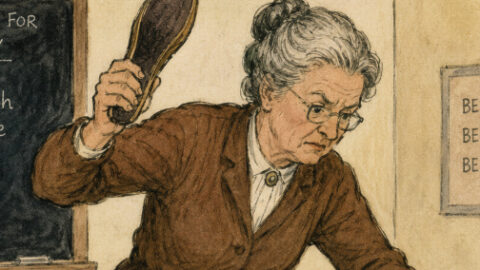
By contrast, a determined gym mistress armed with a gym shoe could leave a far more lasting impression.
It demonstrated an important point.
The implement itself did not always determine the severity.
The person using it often mattered much more.
The ruler occupied an unusual position within school discipline.
Although rarely viewed as serious punishment, it was probably the implement encountered most frequently in primary schools. Teachers kept rulers readily available on their desks, making them convenient for dealing with everyday classroom misdemeanours.
For many pupils, however, the ruler carried memories every bit as vivid as the cane.
One former pupil remembered arriving late at school one morning after an upsetting incident at home. Distressed and tearful, he invented a story about an imaginary sick relative to explain his lateness.
Unfortunately, he attended a deeply religious school.
The teacher immediately asked the entire class to pray for the supposed relative.
As the prayers continued, his feelings of guilt became almost unbearable.
Unable to live with the deception, he eventually confessed that the whole story had been untrue.
His teacher was furious.
Standing before the class, he received a stern lecture before being struck repeatedly across both hands with a wooden ruler.
Unlike the light taps often given for untidy work or poor handwriting, these blows were delivered with genuine force. His hands throbbed for some time afterwards.
Looking back as an adult, he freely admitted that he had deserved punishment for his dishonesty.
Even so, he remained convinced that this ruler punishment hurt considerably more than the slipperings he later received for childish mischief.
Another contributor found himself comparing one caning with another.
His first experience of the cane consisted of three strokes across the hand. The pain was immediate and intense.
Years later he received the cane again, this time across the seat of his trousers.
The comparison fascinated him.
The very same implement produced completely different experiences depending upon where it landed.
“The cane on the hand hurt much more than the cane on the bottom,” he concluded with a touch of humour. “So which hurt more—the cane or the cane?”
Others pointed out similar contradictions.
One pupil remembered receiving what was officially recorded as a caning for a rather embarrassing school incident. Yet the punishment itself felt surprisingly mild. Many slipperings he received from ordinary teachers had been considerably more painful.
Again, reputation and reality failed to match.
The cane represented authority.
The slipper often represented discomfort.
But either could prove more severe depending entirely upon who administered it.
Several former pupils admitted they had relatively little experience of the ruler. At secondary school it had become largely symbolic, used more to attract attention than to inflict punishment. In primary school, however, teachers varied enormously.
Some relied upon it regularly.
Others hardly used it at all.
Much depended upon individual teaching styles rather than school policy.
As memories accumulated, one conclusion became increasingly clear.
Children rarely feared an object.
They feared the person holding it.
A polished cane resting quietly in the Headmaster’s office was harmless enough until lifted into experienced hands. A simple wooden ruler lying on a classroom desk appeared perfectly ordinary until an angry teacher reached for it.
The real power behind every punishment lay not in leather, wood or rattan, but in the authority of the adult standing before the child.
Looking back across the decades, many former pupils no longer judged their school years simply by how much a punishment hurt.
Instead, they remembered the atmosphere that surrounded it—the silence as a teacher reached for a drawer, the nervous glances exchanged between classmates, the long walk to the front of the room, and the uneasy knowledge that, in a matter of moments, it might be your turn.