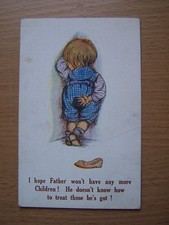
For many former pupils, the pain of corporal punishment faded surprisingly quickly.
What remained was something far more powerful.
It was the embarrassment.
It was the fear.
It was the memory of standing alone while everyone else watched.
Years after leaving school, many people admitted they could barely remember how much a particular punishment hurt. What they remembered in extraordinary detail was everything that came before it—the walk to the teacher’s desk, the silence in the classroom and the feeling that every pair of eyes was following them.
One former pupil summed it up perfectly.
He believed that receiving the cane in front of the class was considerably more humiliating than receiving it privately. Although the physical pain was identical, standing before thirty classmates while waiting for punishment seemed to magnify every moment. The classroom became unnaturally quiet. Books stopped rustling. Pens stopped moving. Every child knew exactly what was about to happen.
The punishment lasted only seconds.
The anticipation seemed to last forever.
Others found the opposite experience even more intimidating.
Being sent alone to the deputy headmistress’s office removed the audience but replaced it with something far worse—silence.
There were no classmates to distract attention.
No whispers.
No movement.
Only the quiet confidence of an experienced disciplinarian.
One former pupil could still picture his deputy headmistress decades later. She never rushed. Every movement appeared carefully planned.
She would begin with a measured lecture explaining exactly why punishment had become necessary. There was no shouting, no loss of temper and no dramatic display of anger. Somehow that calmness made the occasion even more unsettling.
After finishing her lecture, she would slowly pick up the cane.
Rather than striking immediately, she gently flexed the polished rattan between her hands several times, allowing the child to hear its unmistakable creak.
Only then would she ask for the hand.
The waiting became part of the punishment itself.
Many former pupils remembered this period of anticipation as vividly as the strokes that followed.
Another former pupil described a very different experience.
His most painful punishment did not occur because of anything he had done during school hours.
One Saturday afternoon he had been playing with friends when a thrown crab apple accidentally smashed a neighbour’s window.
Unlike the others, who immediately ran away, he stayed behind and admitted responsibility.
The owner of the house reacted far more kindly than expected.
Recognising it as an accident, he simply suggested that the boy discuss the matter with his parents.
Panic soon took over.
Too frightened to go home, the boy wandered around for over an hour before returning to the house with an invented story about asking his parents how much the repair might cost.
Remarkably, the householder accepted his explanation and allowed the matter to rest.
For the remainder of the weekend the boy lived in constant fear that the incident would somehow reach his parents.
Monday arrived.
The Headmistress summoned several children who had been present that day. They received a stern warning about making too much noise outside local houses but no mention was made of the broken window.
Relief flooded over him.
Surely the matter was over.
Two days later he was called back to the Headmistress’s office.
This time she questioned him specifically about the group.
Then came the question he had been dreading.
“Did you know a window had been broken?”
Believing honesty was now the safest course, he admitted that he did.
The Headmistress asked why he had not mentioned it during the previous meeting.
His answer came without thinking.
“You didn’t ask.”
The words had scarcely left his mouth before he realised his mistake.
Whether the Headmistress interpreted the reply as cheek, insolence or deliberate disrespect he never discovered.
Her reaction was immediate.
She seized him, raised his clothing sufficiently to expose his thigh and administered a succession of hard slaps across his leg.
Within moments he was crying.
By the time the punishment ended, vivid hand-shaped welts covered his skin. Later they developed into bruises that remained visible for days.
Looking back many years afterwards, he was never entirely certain what had angered the Headmistress most.
Perhaps she already knew he had broken the window.
Perhaps his apparently flippant answer had simply tested her patience beyond its limit.
Whatever the reason, the lesson remained unforgettable.
For him, no ruler, slipper or even later canings at secondary school ever erased the memory of that afternoon.
Another former pupil remembered an incident from infant school that had remained equally vivid.
He had lingered in the playground after the bell, kicking a football against the wall instead of returning promptly to class.
The Headmistress saw everything.
She called him into her office.
Expecting the familiar slap on the legs, he was shocked when she pulled a chair into the centre of the room, sat down and instructed him to lie across her lap.
She then pulled down his trousers and underclothes before delivering a firm spanking.
For a seven-year-old boy, the punishment was deeply upsetting.
Afterwards she calmly recorded the incident in the punishment book before warning him that any future appearance in her office might result in the school belt being used instead.
The sight of the hanging belt was enough.
He never gave her another reason to use it.
As the years passed, many former pupils realised that what endured longest was rarely the physical sensation itself.
Pain disappeared.
Bruises healed.
Even fear gradually faded.
But the emotions surrounding those moments—the embarrassment, the anticipation, the helplessness and, occasionally, the sense of unfairness—became woven into childhood memories that survived for the rest of their lives.
For some, those memories carried resentment.
For others, they became little more than curious reminders of an educational world that has now disappeared into history.
Whatever their personal views, they all shared one remarkable fact.
Decades later, they could still remember almost every detail.