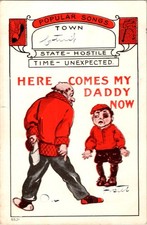
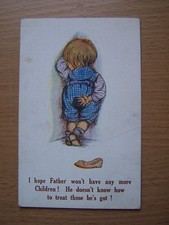
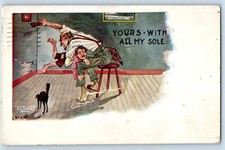
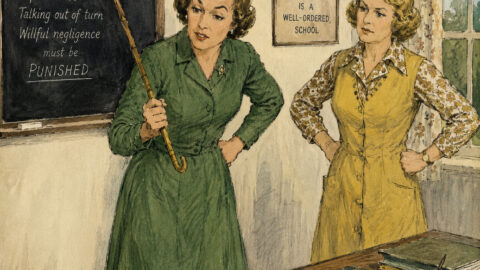
If school caning really caused widespread, lifelong trauma, why was it so often portrayed as harmless comedy in the children’s comics of the time?
Most children certainly disliked being punished at the time, but, like many childhood experiences—scraped knees, bumps, bruises, and other everyday mishaps—it was usually something they quickly moved on from.
Today, there is sometimes a tendency to encourage people to dwell on every unpleasant experience. That is not always healthy. As human beings, we need to acknowledge difficult events, learn from them where appropriate, and continue moving forward rather than allowing the past to dominate our lives. Speaking from personal experience of a heartbreaking bereavement, I know that healing often depends on eventually finding a way to carry on.
The comics of the era reflected the attitudes of their time. Although The Beano and The Dandy were published in Scotland, they most commonly showed teachers using the cane or the slipper. Interestingly, the Scottish tawse appeared only rarely. It was only years later, after I had learned what a tawse actually was, that I remembered seeing the occasional cartoon featuring it.
Between 1958 and 1963, I spent most of my pocket money on weekly copies of The Beano and The Dandy, later moving on to Buster and Hotspur. Buster was fairly short-lived, while Hotspur followed a style similar to The Eagle, with stories that promoted traditional values through athletes, war heroes, and patriotic adventures. Looking back today, many of those stories relied heavily on national stereotypes that I simply didn’t notice as a child.
I eventually stopped buying Hotspur after reading a quiz that referred to Agatha Christie’s novel Ten Little Indians by its original title, which felt uncomfortable even then.
The Dandy featured corporal punishment less often, but it did have the wonderfully surreal Desperate Dan, who, amusingly, looked remarkably like my father.
One of the funniest contradictions was the setting of Dan’s hometown, Cactus Gulch. Judging by Dan’s clothes, it ought to have been somewhere in Texas. Yet his nephews, Danny and Katie, Aunt Aggie, and most of the other townsfolk dressed like working-class Scots from the 1930s. The local schoolteacher always carried a strap rather than a cane, and, somehow, Cactus Gulch even seemed to have Dundee Corporation trams and British-style street lamps. The whole setting was delightfully absurd.
One story I particularly remember involved Danny placing a drawing pin on his teacher’s chair. Desperate Dan spotted it with his extraordinary eyesight and hurled a clod of earth to stop the teacher from sitting down. Unfortunately, Dan was so incredibly strong that the clod knocked the teacher straight through the classroom wall. Danny then received one stroke of the strap for putting the drawing pin on the chair and six more because Dan had tried to save him. It was presented entirely as slapstick comedy, which reflected the humour and attitudes of children’s comics at the time.