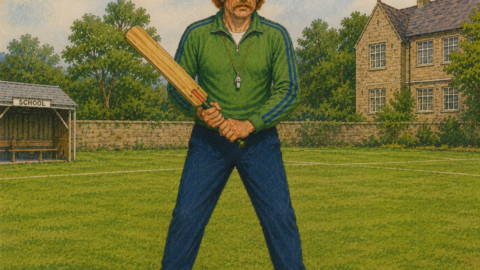
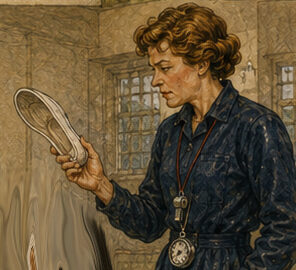
During the middle decades of the twentieth century, the school cane was a familiar item in many British schools where corporal punishment formed part of official disciplinary policy. Although today it is viewed as a historical artefact, the production of school canes once supported a small but well-established specialist industry. A number of traditional cane and walking stick manufacturers supplied thousands of schools across England, producing simple but carefully crafted implements designed specifically for educational use.
Britain’s Principal School Cane Manufacturers
One of the largest producers during the 1960s was the Sussex firm Messrs. Jacobs, Young and Westbury of Haywards Heath. The company manufactured approximately 15,000 school canes each year, making it one of the country’s leading suppliers. Their products were distributed to schools throughout Britain, and for many years they also fulfilled a significant contract supplying canes to the Inner London Education Authority (ILEA).
Although the firm’s standard canes carried no maker’s mark, those produced under the ILEA contract could easily be identified by the initials “ILEA”, which were carefully branded into the crook of the handle. These markings allowed education authorities to distinguish officially supplied canes from commercially purchased examples.
Another major manufacturer was John Gray & Co., a long-established London company renowned for producing high-quality walking sticks. Alongside its traditional products, the company manufactured many thousands of school canes every year, supplying schools across England and Wales. Their reputation for quality craftsmanship ensured their products remained in demand throughout the era when school caning was officially sanctioned.
Other important manufacturers included Cooper of Godalming, which produced approximately 6,000 canes annually, and Wilson of Carlisle, whose products were also widely used by schools. Together, these firms supplied the majority of educational establishments that required canes, creating a surprisingly substantial manufacturing trade devoted almost entirely to school discipline.
Traditional Craftsmanship
Despite their simple appearance, school canes were not mass-produced plastic or synthetic items. They were handcrafted from carefully selected lengths of rattan, a strong, lightweight climbing palm imported primarily from Southeast Asia.
Each cane began as a straight length of rattan. Skilled craftsmen first removed or carefully trimmed the natural nodules before sanding the entire surface smooth. Particular attention was paid to the striking end, ensuring there were no rough edges capable of breaking the skin during normal use.
Creating the familiar crook handle required considerable skill and patience. One end of the cane was immersed in a large vat of hot water, sometimes for an entire day, allowing the rattan fibres to soften without weakening their strength. Once sufficiently pliable, the softened section was bent around a smooth wooden former of large diameter and securely tied into position.
The cane then remained clamped while it dried naturally. As the moisture evaporated, the rattan hardened and permanently retained its curved shape. When the bindings were removed, the result was the distinctive crook handle that became the standard design used in most English schools.
The handle served several practical purposes. It provided a secure grip for the user, reducing the likelihood of the cane slipping during use. Equally importantly, the crook allowed the cane to be hung neatly on a wall hook, inside a cupboard, or behind a classroom door when not required.
Sizes for Different Schools
Manufacturers produced canes in a variety of lengths and thicknesses to meet the differing needs of schools catering for pupils of different ages.
Models were commonly marketed as Junior and Senior versions. Junior canes were generally shorter, lighter and more flexible, making them suitable for younger pupils, while Senior models were longer and slightly thicker, intended for use in secondary schools.
Typical specifications included:
- Length: approximately 22 to 38 inches (56–97 cm)
- Diameter: between 6 mm and 12 mm
A standard secondary school cane was usually around 32 inches (81 cm) in length with a diameter of approximately 10 mm. Such a cane possessed considerable flexibility, allowing it to bend significantly without breaking or splintering. This elasticity was regarded as one of rattan’s principal advantages, enabling repeated use while maintaining its strength.
Before leaving the workshop, the striking end was carefully rounded and polished to minimise the risk of accidental cuts. Nevertheless, prolonged use could eventually cause the fibres to fray, producing what teachers sometimes described as a “hairy” tip. When this occurred, the cane was generally discarded and replaced rather than repaired.
Cost and Durability
One reason for the widespread use of the school cane was its remarkably low cost. During the 1960s, a new school cane cost only around 10 pence in decimal currency, making replacement inexpensive whenever a cane became worn or damaged.
By comparison, the Scottish tawse, manufactured from thick, specially prepared leather, represented a far greater investment. A high-quality Lochgelly tawse typically cost around £2.50—many times the price of a cane.
However, the higher purchase price reflected exceptional durability. Whereas rattan canes eventually wore out, split or frayed through repeated use, a well-made tawse could remain fully serviceable for generations. Many schools retained the same tawse for decades, with some examples being passed from one teacher to another over the course of a century while remaining in excellent condition.
The contrast between the two implements reflected differing traditions of school discipline. English schools generally favoured the inexpensive, easily replaced rattan cane, while many Scottish schools relied upon the much more robust leather tawse, whose longevity often justified its considerably greater initial cost.
The Classroom Context
Throughout much of the twentieth century, corporal punishment was regarded by many education authorities as a legitimate disciplinary measure. Consequently, canes were standard equipment in countless schools and were stored alongside other classroom necessities. Their manufacture became a specialised trade supported by consistent demand from local education authorities, independent schools and educational suppliers.
Teaching remained a predominantly female profession during this period, particularly in primary education. Approximately 80 per cent of teachers were women, while around 20 per cent were men. Despite this imbalance, both male and female teachers could be authorised to administer corporal punishment where school regulations permitted, although practices varied considerably between individual schools and local authorities.
Today, these implements are preserved largely in museums and private collections as reminders of an educational system that has since undergone profound change. The craftsmanship involved in producing school canes reflects a small but interesting chapter of British manufacturing history, illustrating how traditional skills were adapted to meet the everyday needs of schools during a very different era.