By the early 1970s, corporal punishment remained common in many British schools, but its authority was no longer unquestioned.
Older teachers defended it as immediate, comprehensible and preferable to suspension. A few strokes, they argued, settled the matter. The pupil returned to lessons, the incident was closed, and no permanent mark appeared upon an academic record.
This argument had particular force in an age when exclusion from education was regarded as an exceptionally serious step. At some grammar schools, suspension and expulsion were almost unknown. Theft, smoking, fighting, insolence and truancy were dealt with internally, often by the cane.
Supporters claimed that the system maintained order without depriving a pupil of schooling. Critics replied that the convenience of the method did not make it just, consistent or safe.
Even within schools that accepted corporal punishment, disagreements arose over its use. When a new headmaster at one grammar school abruptly increased the normal penalty from three strokes to six, the change caused unease not only among pupils but among senior teachers and governors. He did not remain in office for long.
This episode illustrates an important point. Corporal punishment was not one fixed national institution but a collection of local practices. One school might reserve six strokes for a once-a-term emergency. Another might administer the cane almost every day, though most punishments consisted of only one or two strokes. At a school of four hundred boys, the full six might be awarded every week or fortnight. Sixth-form canings were rarer and, by reputation, more severe.
Teachers also differed enormously. A geography master might be renowned throughout the school as a ferocious caner while scarcely needing to use the instrument. His reputation performed the disciplinary work for him.
Others punished frequently yet achieved little. The same pupils returned again and again, suggesting that pain alone could not remedy boredom, unhappiness, resentment or recklessness.
Former pupils remain divided in their recollections. Some insist that they deserved what they received and that the cane prevented worse behaviour. Others remember unfair accusations, excessive force and humiliation. Many hold both views at once: they accept responsibility for the offence while questioning the punishment.
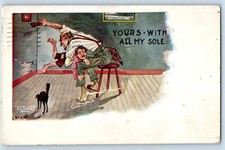
The phrase six of the best itself reveals the period’s uneasy mixture of severity and humour. It turned punishment into a sporting expression, as though the headmaster were a bowler delivering six excellent balls. Schoolboys adopted the phrase because joking made the threat easier to discuss.
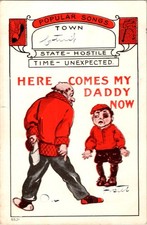
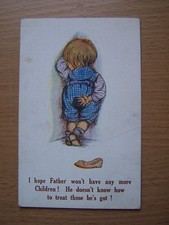
Behind the humour lay genuine fear: clammy hands, trembling knees, a dry mouth outside the study door, the effort not to cry in front of classmates, and the difficulty of returning to a hard wooden desk while pretending that nothing had happened.
The punishment did not end with the final stroke. There was the walk back through the corridors, the curiosity of other pupils and the inevitable questions. There was the evening explanation at home. There was also the private reckoning: shame, anger, relief, defiance or, occasionally, determination not to return.
For some, the experience became a turning point. For others, it was merely another episode in an unhappy school career. A few later became teachers themselves and discovered how differently authority appears when one is responsible for maintaining it.
By the close of the decade, Britain was increasingly debating whether corporal punishment belonged in a modern educational system. Was it a brisk and practical sanction, or a survival from an authoritarian age? Did it correct misconduct, or simply teach children that power could be expressed through physical force? Could any system dependent upon the judgement and strength of individual teachers ever be applied fairly?
The old school answer was that a good caning could settle almost anything.
The memories suggest a more complicated truth.
It could silence a classroom, frighten a habitual offender and satisfy a demand for immediate justice. It could also produce resentment, embarrassment and stories retold for a lifetime. Its effects depended upon the pupil, the teacher, the offence and the culture of the school.
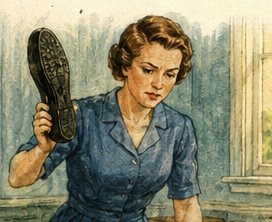
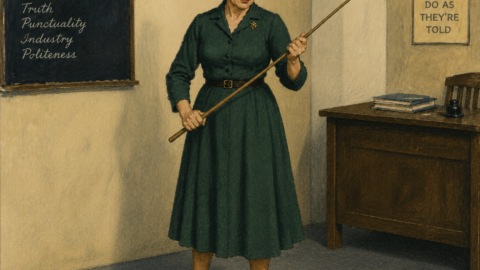
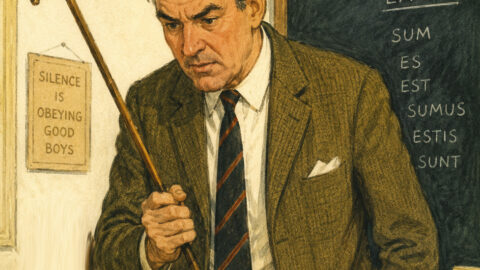
What cannot be doubted is the extraordinary place it occupied in the imagination of British pupils. The cane, slipper and tawse were more than disciplinary instruments. They were symbols of adult authority, surrounded by ceremony, rumour and fear.
And above them all stood that legendary maximum—the words no schoolboy wished to hear:
“Six of the best.”