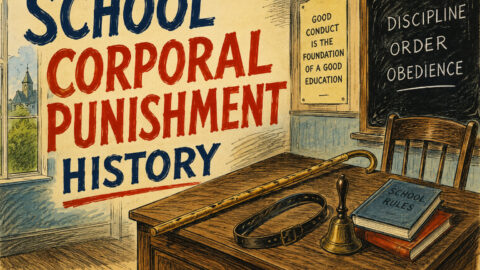
Discussions about school discipline inevitably provoke strong opinions. Many people who attended school several decades ago remember a time when teachers possessed far greater authority, classroom discipline was rarely questioned, and corporal punishment was accepted as part of school life. Others remember the same period very differently, recalling fear, humiliation, or punishment that they felt was excessive or unfair. Looking back, it is clear that the subject is far more complex than simple nostalgia suggests.
One of the greatest obstacles to any serious discussion about the possible return of corporal punishment is that society now has a much greater awareness of child abuse and safeguarding than it did in previous generations. Modern understanding recognises that while the overwhelming majority of teachers enter the profession because they genuinely care about educating and supporting children, a very small minority have, in the past, abused positions of trust. This increased awareness has fundamentally changed public attitudes.
Today’s teaching workforce is overwhelmingly committed to safeguarding children, with approximately 80 per cent of teachers being women and around 20 per cent men. Regardless of gender, teachers are expected to uphold exceptionally high professional standards and are subject to extensive background checks, safeguarding training, inspections and accountability measures that simply did not exist decades ago.
If corporal punishment were ever to be reconsidered—which appears highly unlikely—it could never resemble the relatively informal arrangements that existed in many schools throughout the twentieth century. Any such system would require an extraordinarily detailed legal framework, transparent oversight, strict recording procedures, parental involvement, independent review, and constant safeguarding protections. Even with such safeguards, it is doubtful that many modern teachers would wish to accept the legal, professional and emotional responsibility that administering physical punishment would inevitably bring. In reality, many educators already face considerable pressures, and few would be eager to assume an additional role that carries significant personal and professional risk.
More broadly, debates about school discipline often reflect wider concerns about changes in society itself. Critics argue that modern culture increasingly emphasises individual rights while paying comparatively little attention to personal responsibility. Whether or not one accepts this view in its entirety, it is undeniable that expectations surrounding authority, personal accountability and acceptable behaviour have changed considerably over recent decades.
A familiar illustration is the disruption caused by severe winter weather. It is often observed that only a modest snowfall can bring widespread disruption: schools close, public transport is suspended, businesses struggle to operate, and roads become heavily congested. Much of this is entirely understandable, reflecting legitimate concerns for public safety. However, critics argue that some disruption also results from individuals overestimating their own abilities. Drivers sometimes venture onto icy roads without the necessary experience, equipment or preparation, become stranded, and unintentionally create obstacles that affect thousands of other road users. The consequences extend well beyond the individual, delaying emergency services, preventing essential workers from reaching their destinations and leaving many competent drivers trapped for hours.
Those who worry about declining standards of responsibility see a similar pattern in attitudes towards children’s behaviour. They argue that modern parenting and educational philosophies often place considerable emphasis on children’s rights and self-expression but are sometimes less willing to enforce firm boundaries or accept meaningful consequences for persistent misconduct. Whether or not this criticism is entirely justified, many teachers report that managing disruptive behaviour has become increasingly difficult, while the authority once automatically granted to schools has diminished.
In previous generations, teachers generally exercised broad discretion in maintaining classroom discipline and could expect substantial parental support. Today the relationship between schools and families is often more complex. Parents rightly expect transparency, fairness and accountability, but disagreements can arise over where responsibility lies when a child’s behaviour repeatedly disrupts learning.
The caricature often presented by critics is familiar. A pupil commits serious acts of misconduct—perhaps physically assaulting a member of staff, deliberately destroying school property, or endangering other pupils—and any attempt by the school to impose firm sanctions is portrayed as excessive. Some frustrated observers argue that attention is frequently directed towards questioning the school’s response rather than addressing the seriousness of the original behaviour. Whether expressed through formal complaints, legal challenges or public criticism, they believe that school staff are increasingly expected to manage extremely difficult situations while possessing fewer practical disciplinary tools than their predecessors.
Of course, this perspective is only one side of a much broader debate. Modern educational practice rightly places considerable emphasis on understanding the causes of challenging behaviour, supporting pupils with additional needs, protecting children’s welfare and ensuring that disciplinary measures are proportionate, consistent and lawful. Few would argue for a return to an era in which punishment was poorly regulated or insufficiently scrutinised.
The real question is therefore not whether schools should simply recreate the disciplinary practices of the past, but how they can maintain orderly classrooms, protect teachers and pupils alike, encourage respect for authority, and foster personal responsibility while remaining consistent with modern safeguarding standards and contemporary expectations of children’s rights. Achieving that balance remains one of the most difficult challenges facing education today.