To the outside observer, the playground was the freest part of the school day.
Lessons had ended for the moment. Classroom doors stood open, footballs appeared from lockers, cricket bats emerged from storerooms and boys scattered across the grounds with all the energy that only schoolboys seem able to summon.
To the boys themselves, however, freedom had its limits.
The playground had rules every bit as real as those inside the classroom.
Running was encouraged—provided it was in the proper place.
Games were welcomed—provided they did not become rough.
Arguments were expected—but fighting was not.
The grounds of Kostka Hall were watched constantly by men whose task extended well beyond supervision. They were expected to preserve order, settle disputes and ensure that several hundred energetic boys returned to their classrooms in one piece.
Few became more closely identified with that responsibility than Brother McDonald.
To generations of Kostka boys, Brother McDonald was one of the school’s most familiar figures.
His voice carried effortlessly across the playground.
There seemed no corner of the grounds beyond its reach.
Whether boys were playing football, gathering beneath the trees or attempting to settle some disagreement of their own making, they knew they were being observed.
His favourite summons became part of school legend.
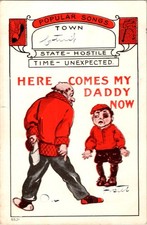
“Hey, you boy! Here, you boy!”
Those words could halt a game almost instantly.
Every nearby boy instinctively looked up.
Even those who had done nothing wrong wondered, for a fleeting moment, whether they might somehow be the intended recipient.
The effect owed as much to reputation as to volume.
Brother McDonald carried authority naturally.
For many years, he also carried something else.
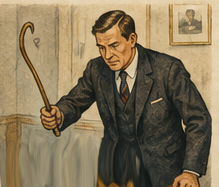
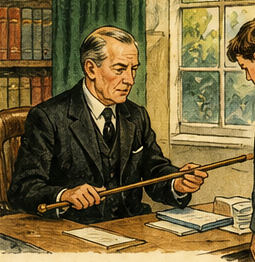
A leather strap.
Usually tucked neatly into his pocket, it accompanied him on his rounds through the playground much as a policeman might carry a notebook or a stationmaster a whistle.
Its presence was unmistakable.
Whether it would actually be used on any particular day was another matter entirely.
Former pupils often remembered Brother McDonald with surprising affection.
“He didn’t really hurt you very much,” one recalled years later.
“He was more frightening than painful.”
That distinction appeared repeatedly in recollections of old-school discipline.
The fear of punishment often exceeded the punishment itself.
A boy called over by Brother McDonald experienced several anxious moments before learning whether he would receive merely a warning, a stern lecture or something more tangible.
Those few seconds allowed imagination to perform its work.
The punishment frequently seemed worse before it arrived than after it had been delivered.
Even so, no sensible boy deliberately tested the proposition.
An old saying circulated around the school.
“You weren’t really a Kostka boy until Brother McDonald had strapped you.”
Like many pieces of school folklore, it was delivered with a grin.
No one actually sought the distinction.
Yet the saying reflected something important about the culture of the school.
Punishment was not regarded as extraordinary.
It was accepted as one of the experiences through which boys passed on their journey towards adolescence.
Some escaped it altogether.
Many did not.
The offences themselves were seldom dramatic.
Running through forbidden areas.
Ignoring instructions.
Scuffling too enthusiastically during football.
Climbing trees.
Late homework.
Talking when silence had been ordered.
The list was remarkably ordinary.
Most punishments arose not from wickedness but from ordinary schoolboy impulsiveness.
The boys themselves understood this perfectly.
Indeed, much of playground conversation centred upon comparing experiences.
Who had been caught?
Who had escaped?
Which master had been unusually lenient?
Which one had been in particularly stern humour?
Such discussions formed an unofficial education in school discipline.
New boys listened carefully.
Older boys became recognised authorities.
Advice flowed freely.
“Don’t argue.”
“Keep your hand still.”
“Say sorry before he asks.”
“Never laugh.”
Whether any of this genuinely improved one’s prospects remained open to debate.
Still, every generation passed the wisdom along.
The playground also provided opportunities for smaller acts of mischief.
Boys perfected the art of disappearing just before an approaching master reached them.
They learned how to conceal forbidden games behind legitimate ones.
Messages changed hands discreetly.
Marbles, cricket cards and treasured collections appeared and vanished with astonishing speed whenever supervision approached.
There existed an almost instinctive understanding between schoolboys everywhere.
Certain activities flourished only while authority looked elsewhere.
The appearance of a priest or master transformed the landscape instantly.
Football resumed.
Conversation moderated.
The innocent expression became a valuable survival skill.
The adults, of course, were rarely deceived.
Experience had taught them every variation of youthful ingenuity.
Most had once been schoolboys themselves.
That perhaps explained why punishment was often accompanied by a faint smile.
The offender might be reprimanded firmly, yet both parties understood that the offence belonged to a long tradition of schoolboy behaviour.
Discipline therefore became less a battle than an ongoing contest.
The boys invented.
The masters adapted.
The cycle repeated endlessly.
Occasionally, however, the contest produced moments remembered for decades.
One former pupil recalled challenging Brother McDonald verbally after receiving a mild reprimand during recess.
By then he was thirteen.
Almost ready for Xavier.
One of the oldest boys remaining at Kostka.
He considered himself nearly grown.
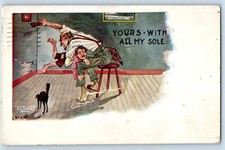
Without warning, Brother McDonald’s hand swung smartly against the seat of his trousers.
The blow itself caused little pain.
Its effect lay elsewhere.
It happened in full public view.
Dozens of boys witnessed the exchange.
The young teenager, confident of his growing independence only moments before, suddenly found himself reduced once more to the status of a schoolboy.
The embarrassment proved overwhelming.
Years later he reflected that the incident probably taught him more effectively than a severe strapping would have done.
Pride, after all, can bruise more easily than skin.
Such stories reveal an important truth about discipline in schools of the period.
Physical punishment was only one element.
Public accountability mattered just as much.
The real audience often consisted not of the teacher but of one’s classmates.
A boy who accepted punishment calmly earned respect.
One who protested excessively risked ridicule.
Schoolboys could display remarkable sympathy.
They could also prove merciless critics.
Few wished to become the centre of attention for the wrong reasons.
Assemblies reinforced these values.
When the entire school gathered together, order became almost ceremonial.
Rows of boys stood quietly.
Masters occupied their accustomed places.
Announcements were made.
Prayers offered.
Occasionally discipline entered the proceedings.
If a particularly serious offence demanded public attention, punishment might occur before the assembled school.
Modern readers may find such practices difficult to imagine.
At the time they were considered entirely consistent with the educational philosophy.
A public offence deserved a public lesson.
The purpose extended beyond the individual.
Every watching boy became part of the exercise.
The school sought not merely to punish misconduct but to discourage its repetition throughout the community.
Even minor routines reflected this broader philosophy.
When bells rang, conversations ceased.
Lines formed almost automatically.
Movement from one classroom to another occurred with surprising efficiency.
Teachers rarely needed to shout.
Expectation alone accomplished much of the work.
Visitors often commented upon the orderliness of Jesuit schools.
Supporters regarded it as evidence of high standards.
Critics sometimes described it as excessive regimentation.
Both observations contained an element of truth.
Order was unquestionably valued.
Whether it always encouraged learning remained a question educational thinkers would increasingly debate as the 1960s and 1970s progressed.
Within Kostka itself, gradual change had already begun.
Although the strap remained available, some teachers relied upon it less frequently than their predecessors.
Detentions, conversations with parents and other methods slowly assumed greater importance.
The shift was subtle rather than dramatic.
No announcement declared the beginning of a new era.
Instead, boys simply noticed that certain masters reached less often for the strap than those who had taught older brothers.
Others continued much as before.
For a time, old and new approaches existed side by side.
The playground reflected these changes as clearly as the classroom.
Brother McDonald, once rarely seen without the strap in his pocket, eventually stopped carrying it during his daily rounds.
No formal explanation appeared.
The boys merely observed that the familiar outline had disappeared.
His authority, however, had not.
A sharp word from Brother McDonald still carried considerable weight.
His reputation alone remained sufficient to restore order across the playground.
It suggested that authority depended upon more than punishment.
Respect, familiarity and long service possessed a force entirely their own.
Many boys who had once feared him came to appreciate him later.
Looking back as adults, they remembered not only the warnings and occasional punishments, but also the quiet constancy with which he watched over the school.
He belonged to Kostka as surely as the classrooms, the chapel and the winds blowing in from Port Phillip Bay.
The playground belonged to him.
And through countless ordinary school days, beneath footballs sailing through the air and boys racing across the grass, the traditions of the old Jesuit school continued almost unchanged.
Yet beyond the playground stood another world entirely.
When the bell summoned the boys back indoors, discipline ceased to be merely visible.
Inside the classrooms it became part of every lesson, every silence and every page written in an exercise book.