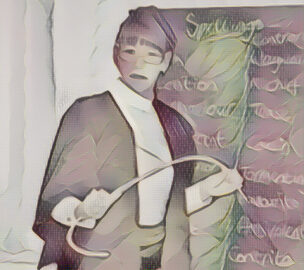
For many former pupils, the most powerful memory of school corporal punishment is not necessarily the physical pain.
It is the waiting.
The announcement that you were to be punished could change the atmosphere of an entire school day. A pupil might be told to remain behind after the lesson, report to the headteacher’s study at lunchtime or wait outside an office until called.
Those few minutes could seem considerably longer than they actually were.
Sometimes there was no waiting at all. Classroom punishment could be immediate. A teacher might stop the lesson, call a pupil forward and deal with the matter there and then.
The rest of the class became the audience.
One recollection in the original material describes the slipper being used frequently at junior school, with pupils bending over one of the desks at the front of the classroom. Books and papers could even be disturbed as the unfortunate pupil was manoeuvred into position.
It is difficult to imagine such a scene taking place in a British classroom today.
Yet within the educational culture of the time, there was another purpose behind making punishment visible. It demonstrated authority.
The teacher was not simply dealing with one misbehaving child. A warning was being delivered to everyone else in the room.
One punishment could potentially discipline an entire class.
There was also the sound.
Former pupils frequently remembered the distinctive noise made by a ruler, slipper, strap or cane. Sometimes hearing another child being punished was enough to create fear. You did not necessarily need to see what was happening to understand it.
The imagination could do the rest.
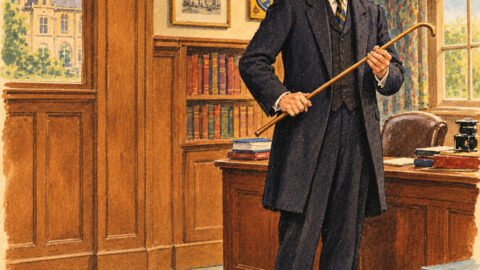
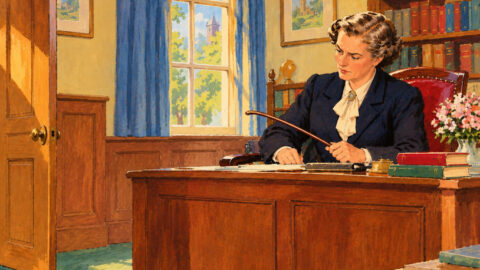
The cane developed perhaps the greatest reputation because it was often associated with more serious offences. Being sent to the headmaster or headmistress could therefore feel very different from receiving an immediate classroom punishment.
There was ceremony involved.
The walk along the corridor. The wait outside the study. The knock on the door. The explanation of what you had supposedly done.
Then there might be the punishment book.
In schools where such records were kept, the pupil’s name, offence and punishment could be entered almost like an administrative transaction. Something intensely personal to the child became another line in a school record.
Yet memories of corporal punishment differ enormously.
Some former pupils remember receiving the cane or slipper without believing that it caused them any lasting harm. They regarded it as simply another feature of childhood in a different age.
Others remember the humiliation much more strongly.
Being punished in front of classmates could be particularly difficult. Children who could tolerate the physical discomfort might nevertheless dread returning to their desks afterwards and facing their friends.
There was another uncomfortable reality.
Not every punishment was necessarily fair.
Teachers were human. They could misunderstand situations, lose patience or believe the wrong pupil. In an educational system where adults possessed considerable authority, challenging a teacher’s decision could be difficult.
A child could therefore be punished while genuinely believing they had done nothing wrong.
Perhaps that was one of the first cracks in the old system.
As society became increasingly willing to question authority, people also began asking a simple question:
If physical punishment depended upon the judgement of individual adults, what happened when that judgement was wrong?
The cane had always represented authority.
Increasingly, however, people began asking whether authority alone was enough.