PART FOUR — THE FATHER, THE GOVERNORS AND THE POLICE
The Quiet British Way of Settling a School Dispute
Not every parent wished to see a headmaster standing in the dock.
There was a certain manner in which respectable British families were expected to conduct their affairs during the early 1960s.
Disputes were preferably settled quietly.
One did not rush to the police station at the first sign of trouble, nor did one immediately engage a solicitor.
The traditional approach was to seek a private explanation.
In the case of a boy injured by corporal punishment, the father might request an appointment with the headmaster.
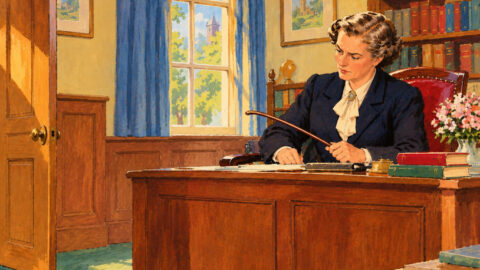
He would arrive at the school, perhaps carrying his hat and gloves, and be shown into the study by the secretary.
The headmaster would rise from behind his desk.
There would be an exchange of polite greetings.
Then the father would come to the point.
His son had returned home injured.
He wanted to know why.
One can imagine the uncomfortable atmosphere.
The headmaster, accustomed to questioning boys rather than being questioned himself, might find the experience distinctly disagreeable.
He could explain the original offence, the punishment imposed and the circumstances in which the injuries occurred.
Perhaps he would acknowledge that he had acted too severely.
Perhaps he would insist that the boy had exaggerated.
The father’s response would depend upon the explanation.
If satisfied that the matter had been an unfortunate mistake, he might accept an apology and depart.
If not, he could approach the governors.
The chairman of governors occupied an important position in the administration of a grammar school.
Although the precise powers of governors varied according to the type of establishment, they were generally expected to take serious complaints about the conduct of a headmaster seriously.
A formal complaint might therefore have placed the headmaster in an uncomfortable position.
His reputation, previously beyond question, could suddenly become the subject of scrutiny.
Other parents might come forward with their own experiences.
What had appeared to be an isolated incident might reveal a broader pattern of excessive discipline.
Alternatively, the governors might conclude that the headmaster had made a single error of judgement and that no further action was necessary.
There was, however, another consideration.
Some parents feared that complaining would make life more difficult for their sons.
A headmaster could exercise considerable influence over a boy’s school career.
References, recommendations, examination opportunities and appointments to positions of responsibility were all matters in which the school authorities might have a say.
A family contemplating a formal complaint might therefore wonder whether the boy would ultimately suffer more than the master.
Such fears could discourage even determined parents.
But others took the opposite view.
They believed that a schoolmaster who exceeded his authority ought to be held accountable, regardless of his position.
To remain silent, they argued, was to encourage further misconduct.
The problem was not simply whether the cane should be permitted.
It was whether the person holding it could be trusted to exercise restraint.
And when restraint failed, somebody had to be prepared to intervene.