Every school has its own way of introducing itself to a new boy.
Some rely upon speeches and prospectuses. Others let the older students establish the tone within the first few days. At Kostka Hall, however, the school seemed to speak for itself. A newcomer quickly learned that there was a right way to do almost everything. There was a proper way to enter a classroom, a proper way to address a priest or master, a proper way to line up, and even a proper way to walk between buildings.
Before long, he also learned the unwritten rules.
He discovered which teachers smiled readily, which masters expected absolute silence before speaking, which priests enjoyed a joke, and which were unlikely to tolerate even the smallest act of carelessness.
In a school governed by tradition, personalities mattered enormously.
Among the figures who left a lasting impression was Father Craig.
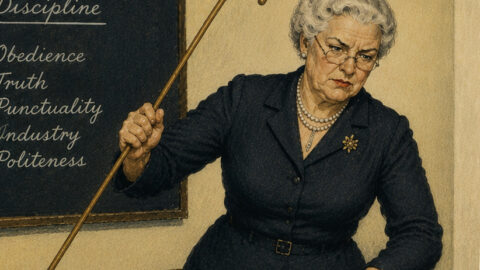
To younger boys, he seemed every inch the old-style Jesuit. His lined face, silver-grey hair and serious expression gave him an almost imposing appearance. Few boys could recall him laughing in class, and most knew him by reputation before they ever met him.
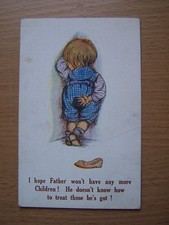
The reputation rested partly upon a single object.
His strap.
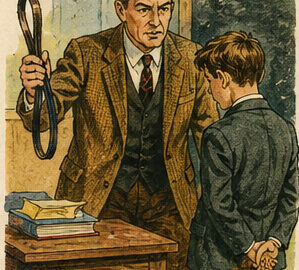
Although he did not use it frequently, its existence was enough to command attention. In schools of the period, the threat of punishment often proved more effective than punishment itself. Boys became remarkably skilled at calculating the likelihood of consequences. They knew which masters gave warnings, which preferred detentions, and which would reach almost instinctively for the strap.
Father Craig belonged to none of the extremes.
He was remembered as fair but firm. He punished when he believed punishment was necessary, and when he did, boys remembered it.
The pain lasted only a few moments.
The lesson, they were expected to believe, would last much longer.
The philosophy behind such discipline was seldom explained in modern educational language. Teachers did not speak of behavioural management or psychological development. Instead, they talked about character.
Character was expected to grow through habit.
Habit was created through discipline.
Discipline depended upon obedience.
The chain seemed perfectly logical to those responsible for maintaining it.
To boys, of course, the reasoning could appear rather different.
They judged masters less by educational philosophy than by everyday experience. A teacher who explained a difficult lesson patiently might earn lasting respect. One who lost his temper unpredictably often inspired only caution.
One of the most popular figures at Kostka managed to combine firmness with humanity.
Father Michael Fitzgibbon—known to every boy simply as “Fitzy”—arrived in 1954 and soon became one of the best-known members of staff.
He taught an extraordinary range of subjects. French, Latin, History and Religion all came under his care, demanding an energy that younger teachers might have envied.
Fitzy possessed an easy wit that enlivened his lessons. Boys remembered him as approachable and genuinely interested in their welfare. If someone found himself troubled by family difficulties or the ordinary anxieties of adolescence, Fitzy often proved a sympathetic listener.
Yet he remained unmistakably an authority figure.
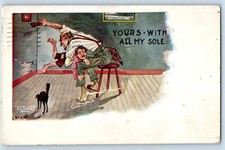
Like many teachers of his generation, he entered the classroom carrying a leather strap in his pocket.
Its presence was almost symbolic.
The lesson might proceed without interruption. An hour could pass filled with grammar, history dates or Latin declensions, and the strap would never leave his pocket.
But everyone knew it was there.
It represented the final authority behind every instruction.
One story concerning Fitzy soon entered school folklore.
Following an especially lively class, the strap disappeared.
No one admitted taking it.
The mystery became one of those tales that travelled from class to class, growing slightly more elaborate with each retelling. Some believed an especially daring boy had stolen it. Others suggested it had been hidden somewhere within the school grounds.
Years later the truth emerged.
Another teacher had quietly removed it.
Whether done as a practical joke or as a gentle protest against its use, nobody seemed entirely certain.
The story itself, however, revealed something changing beneath the surface.
Even while corporal punishment remained accepted practice, attitudes among teachers were beginning to differ.
Not everyone viewed the strap in quite the same way.
Elsewhere around the school, another teacher was quietly earning the affection of generations of younger boys.
Miss Mitchell was physically tiny.
Her size inspired some mischievous pupils to nickname her “Pipsqueak,” although the name was rarely spoken within her hearing.
Those who sat in her classroom generally remembered something rather different.
She cared deeply about her pupils.
She expected good manners, neat work and careful attention, but there was kindness beneath her strictness.
One incident remained vivid in the memory of a former pupil.
Walking as a class towards the old chapel at Maritima, he glanced at the diminutive teacher ahead of him and remarked to a friend that he was already taller than she was.
Miss Mitchell stopped immediately.
Turning calmly, she pointed not to her height, but to her forehead.
“What matters,” she explained, “is who’s bigger in here.”
It was a lesson delivered without anger, and perhaps for that reason it was remembered decades later.
Her discipline reflected the standards of the time.
Instead of a leather strap, she usually employed a wooden ruler across the knuckles.
Like countless schoolboys before them, pupils devised small strategies to reduce the sting. Some stretched their hands as high as possible, forcing the teacher to strike awkwardly. Others tried to tense their fingers or move at the last instant.
Rarely did such tactics succeed.
The punishment generally arrived exactly as expected.
Nevertheless, boys continued trying.
The contest between authority and ingenuity formed part of everyday school life.
Every generation believed it had invented these methods.
Every generation discovered its teachers had already seen them all.
The classrooms themselves reflected another age.
Rows of timber desks faced a blackboard covered in chalk writing.
Exercise books were inspected carefully.
Ink pens demanded patience.
A blot or careless smudge might require an entire page to be rewritten.
Windows admitted the bright coastal light of Brighton, but also the distractions of passing games outside.
Few classrooms escaped the occasional daydream.
A cricket match on the oval, the movement of clouds across Port Phillip Bay or simply the promise of lunchtime could lure attention away from multiplication tables or Latin verbs.
Teachers knew this perfectly well.
Good teachers recaptured wandering minds with humour or an interesting story.
Less patient teachers relied upon sterner methods.
Silence itself became a teaching tool.
Periods of complete quiet were common.
Not merely the absence of conversation, but absolute silence.
Boys worked with only the scratching of pens and the turning of pages breaking the stillness.
If a chair scraped unexpectedly across the floor, heads turned instinctively.
The offender usually wished the earth would swallow him.
Marching in orderly lines reinforced the same habits.
At first glance, such routines appeared trivial.
Taken together, however, they shaped the rhythm of school life.
A boy learned that order mattered.
He learned to wait.
To stand straight.
To keep pace.
To avoid unnecessary noise.
These lessons were considered almost as important as mathematics or English.
Visitors sometimes misunderstood the atmosphere.
To an outsider, the school might seem severe.
Yet many former pupils remembered considerable warmth beneath the discipline.
Teachers coached football and cricket after classes.
Priests attended concerts, sports days and swimming carnivals.
Masters knew boys by name, remembered brothers and occasionally even knew fathers who had attended years before.
Relationships developed over time.
Respect often replaced fear.
The strict master encountered by a frightened ten-year-old might become the trusted mentor of a confident thirteen-year-old.
Authority, in the Jesuit tradition, carried obligations as well as privileges.
A teacher expected obedience.
In return, he accepted responsibility for the welfare of those under his care.
The ideal was paternal rather than merely punitive.
Reality, naturally, varied according to personality.
Some men fulfilled the ideal with remarkable success.
Others fell short.
But few doubted the seriousness with which they approached their work.
Every September brought another intake of nervous new boys.
Every December saw another group departing for Xavier College or secondary school elsewhere.
The faces changed.
The traditions endured.
Among the first lessons every newcomer absorbed was that discipline reached beyond the classroom.
It extended into the playground.
It accompanied boys into the dormitories.
It followed them to chapel, sporting fixtures and excursions.
The entire school operated according to a shared understanding.
Good behaviour was expected everywhere.
Misconduct anywhere could have consequences everywhere.
This belief would shape the daily lives of generations of Kostka boys.
Nowhere would it become more visible than beyond the classroom walls, where the freedom of recess and lunchtime met the watchful eyes of the playground supervisors.
For there, among footballs, cricket bats and climbing frames, discipline took on an altogether different character.
The masters might no longer stand beside a blackboard.
But they were never very far away.