KOSTKA HALL — XAVIER BY THE SEA
On the Brighton foreshore, where the salt wind came in from Port Phillip Bay and rattled through the cypress trees, stood Kostka Hall.
It was not a large school by Melbourne standards, nor was it intended to be. Kostka was the seaside preparatory school of Xavier College, Kew: a place where younger boys were introduced to the traditions, discipline and expectations of a Jesuit education before moving on to the senior school.
The setting was gentler than the great bluestone buildings of Kew. There were open grounds, old houses, timber classrooms and glimpses of the water. Yet beneath the cheerful coastal atmosphere lay a firm and unmistakable order.
Kostka was a school of bells, lines, silence, polished shoes, completed homework and immediate consequences.
For generations of boys, the school day began with movement under supervision. Boys marched into class, stood when a master entered, kept quiet when silence was ordered and learned quickly that rules were not matters for negotiation.
The discipline was rarely hidden. It was part of the public life of the school.
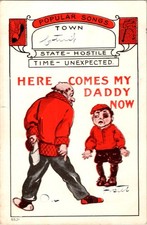
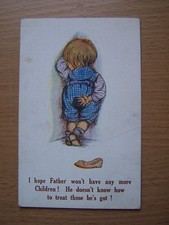
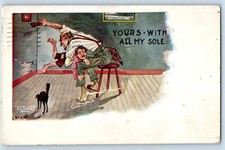
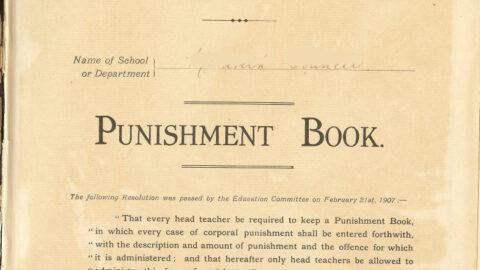
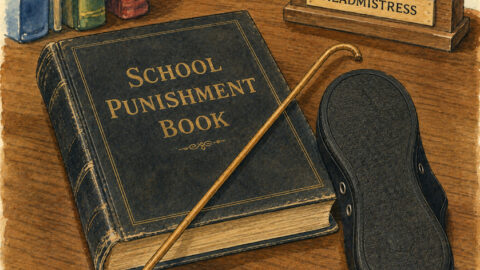
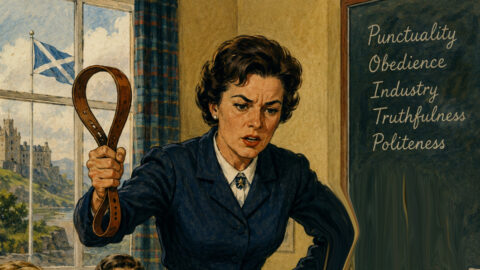
A boy might be given lines to write, kept behind for a penal, made to stand apart from his classmates or sent to a senior master. For more serious offences, there was the strap.
It was carried in pockets, placed on desks or kept in offices. Sometimes its mere appearance was enough. At other times it was used in front of a class or at assembly, where punishment became both a penalty for one boy and a warning to everyone else.
To understand Kostka in its earlier years, it is necessary to understand the schoolmaster as he then appeared in the imagination of a boy.
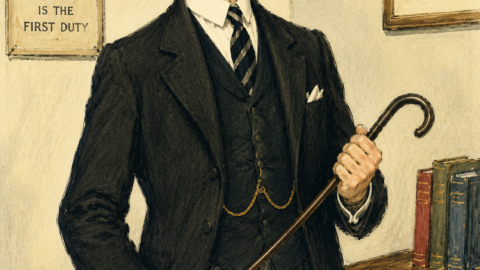
He was not merely a teacher of Latin, history or religion. He was a figure of authority whose influence extended from classroom to chapel, from playground to dormitory, and even beyond the school gates.
He might be affectionate, humorous and fatherly. He might also be stern, quick-tempered and armed with a leather strap.
Often, he was all of these things at once.
THE OLD PRIEST
Father McCurtin was already seventy-two when he began at Kostka.
To the boys he seemed a figure from another age: gentle, cheerful and possessed of a lively sense of humour. He did not usually teach the younger classes. Instead, he moved among the senior boys, talking with them and taking an interest in their affairs.
Those who knew him in that way remembered him as fatherly and conversational.
But memory is rarely uniform in a school.
Other boys recalled a stricter figure. For serious offences, Father McCurtin could strap a boy at assembly before the entire school. In such moments the kindly old priest became the representative of the institution itself.
This combination of warmth and severity was not regarded as unusual.
A master might offer advice one day and punishment the next. A boy was expected to accept both as belonging to the same system of care.
The theory was simple enough. Discipline formed character. Obedience prepared a boy for responsibility. Endurance taught courage.
Whether the boys themselves saw the matter in quite the same way depended greatly on which side of the strap they happened to be standing.
NIGHTS AT ST JOHN’S
For boarders, the school day did not end when the classrooms emptied.
Mr Carroll, master and prefect of discipline from 1937 to 1940, slept in St John’s with the boys. At bedtime they gathered in a circle around him, sitting on their beds while he read aloud.
The evening might begin with something improving, such as The Lives of the Saints, and conclude with the comic adventures of P. G. Wodehouse.
It was an arrangement characteristic of boarding-school life: morality and amusement, solemnity and laughter, all under the eye of the master.
Then came lights out.
Mr Carroll walked through the house for perhaps half an hour, listening for whispers, footsteps and the unmistakable sounds of boys who had no intention of sleeping.
The boarders knew that he could lose his temper.
They also knew that he could use the strap without much patience for lengthy explanations.
Mischief after lights out therefore carried a particular thrill. It was rebellion conducted in darkness, with the knowledge that the master was moving somewhere nearby.
A creaking floorboard could stop a conversation in an instant.
A shadow beneath the door could send boys diving beneath their blankets.
Those who were caught expected no courtroom defence. They expected punishment.
THE STERN FACE OF FATHER CRAIG
To younger boys, Father Craig appeared ancient and formidable.
They remembered the wrinkles, the silvery hair and the stern expression. They also knew that he possessed a large strap.
He did not use it often, according to those who recalled him, but this may only have strengthened its reputation.
A frequently used strap became part of ordinary school life. A rarely used one gathered mythology.
Boys discussed its size, weight and severity. They watched where it was kept. They noticed when a master reached towards the familiar pocket or drawer.
The object acquired a personality of its own.
Father Craig also understood the power of a public warning.
On one occasion he spoke to the assembled boys about Jesuit traditions and the importance of discipline. While a boy remained at Kostka, and later at Xavier, discipline would stand at the heart of school life.
Then he mentioned one rule in particular.
The younger boys were not to climb trees.
As he spoke, he pointed towards the two great cypress trees standing between Maritima and the classrooms.
No warning could have made them more attractive.
Before long, one of the new boys decided to test the regulation. He was discovered several branches above the ground, brought down, given four cuts and sent home for the day.
The rule had been explained. The consequence had been demonstrated. The remaining boys had received their lesson.
FITZY
Father Michael Fitzgibbon arrived at Kostka in 1954, during a period of rebuilding and renewal.
He taught French, history, Latin and religion. He was genial, clever and witty, and boys knew him affectionately as “Fitzy”.
He could offer wise counsel when a boy was troubled. He could also show a sterner side when a class became disorderly.
Like many masters of the period, he entered the room prepared for both possibilities.
A strap was carried in his pocket.
One day, after a class had experienced its sting, the strap mysteriously disappeared.
For years its fate remained one of those small school legends passed from one generation to the next. Boys naturally imagined that a heroic pupil had stolen it and hidden it somewhere beyond recovery.
The truth, when eventually disclosed, was less dramatic but perhaps more amusing.
Another teacher had confiscated it.
The incident revealed something often overlooked in later accounts of school discipline. Staff themselves did not always agree about the proper use of punishment. Some accepted the strap without hesitation. Others believed particular masters used it too freely. A few quietly intervened.
Even in an institution built upon obedience, there were disagreements about how authority should be exercised.
MISS MITCHELL
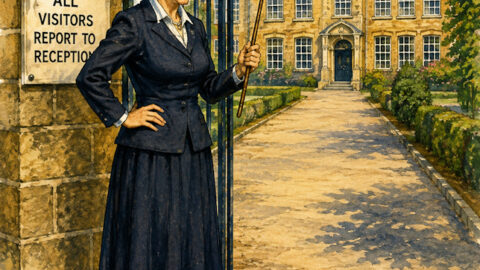
Not all discipline at Kostka came from imposing men in clerical collars.
Mrs Mitchell was a very small woman, so small that some of the cheekier boys called her “Pipsqueak”.
The nickname was not necessarily cruel. Schoolboys have always given names to teachers, particularly those they like enough to discuss constantly.
Former pupils remembered her as delightful, caring and reasonably strict.
By 1964 she was teaching Grade Three, with a class of more than forty boys. To manage such a room required patience, alertness and a certain command of theatre.
One day, while the class was walking towards the old chapel at Maritima, a boy remarked to a friend that he was taller than Miss Mitchell.
She heard him.
She stopped, turned and pointed to her temple.
What mattered, she told him, was who was bigger in there.
It was the kind of reply boys remembered for the rest of their lives.
Her usual instrument of correction was a ruler across the knuckles. The boys developed a defensive technique. By raising the hand as high as possible, they could make it difficult for her to strike with much force.
This was another part of the old school ritual: for every punishment, boys invented some small method of resistance.
They wore extra clothing beneath trousers before a caning. They rubbed their hands on cold metal after the strap. They tried to appear fearless before their classmates.
They could rarely avoid the punishment itself, but they could deny the master complete control over how it was received.
A SCHOOL OF ORDER
Discipline at Kostka did not begin and end with corporal punishment.
It shaped the whole rhythm of school life.
There were periods of compulsory silence. Boys marched in ordered lines. Homework was inspected. Uniforms were watched. Movement between buildings was regulated.
A boy learned where he could go, when he could speak and how quickly he was expected to obey.
Penals were held after school, often twice a week. Boys might spend the time writing lines, completing unfinished work or sitting in supervised silence.
For some, these detentions were worse than the strap.
The strap hurt sharply but briefly. A penal consumed an afternoon.
It took away cricket, football, the journey home with friends and the precious hours between school and evening.
Yet it was the strap that remained strongest in memory.
It was physical, public and dramatic. It involved the walk to the front of the room, the outstretched hand and the silence of watching classmates.
School regulations limited the punishment. The accepted rule was that no boy should receive more than six cuts in a day.
Such a restriction may sound severe to later generations. At the time, it was presented as evidence of moderation.
Kostka’s use of corporal punishment was often described as lenient compared with that of other schools. Former pupils said punishment varied according to the master but was rarely sadistic.
That distinction mattered greatly to those who defended the system.
The strap, they argued, was not cruelty. It was discipline.
It was to be administered for a reason, within limits and without personal malice.
But from the boy’s side of the desk, the difference between theory and experience could be considerable.
A punishment might be regarded as fair by one pupil, excessive by another and unforgettable by both.
THE PLAYGROUND VOICE
Outside the classroom, authority took on a different tone.
Brother McDonald was one of the figures responsible for order in the playground. Generations of boys remembered both his voice and the strap he carried.
His cry travelled across the yard:
“Hey, you boy! Here, you boy!”
Every boy within hearing distance looked around.
It was said that one was not truly a Kostka boy until one had been strapped by Brother McDonald.
Former pupils often added that he did not strike particularly hard. This qualification was common in school reminiscence. A master might be remembered as strict but fair, frightening but kind, or frequent with the strap without being cruel.
Brother McDonald’s authority rested less upon the severity of each punishment than upon his constant presence.
He seemed to see everything.
A scuffle, an insult, a forbidden game or a piece of insolence could bring the voice across the yard.
The strap in his pocket was a symbol, but the voice was often enough.
THE BOYS’ VIEW
Boys did not experience discipline passively.
They watched the masters as closely as the masters watched them.
They knew which teacher was easily distracted, which one could take a joke and which one should never be tested after lunch.
They knew who struck hard, who merely made a show of it and who became more dangerous when angry.
Information passed quickly through the school.
A boy emerging from an office might be surrounded by friends asking how many cuts he had received and how severe they had been. His performance under punishment could affect his standing among them.
To cry was humiliating.
To laugh afterwards was admired.
To pretend that the punishment had not hurt was almost compulsory.
Yet bravado could conceal a good deal.
The schoolboy code demanded courage in public, even when fear and pain were real. A boy might bury his stinging hand beneath his arm, blink back tears and return to his desk while half the class watched.
Later, in the playground, the experience became a story.
Details were exaggerated. The master was imitated. The punishment was transformed into comedy.
In this way, boys reclaimed something from the authority that had been exercised over them.
BETWEEN AFFECTION AND FEAR
The old Kostka cannot be described simply as harsh or kindly.
It was both.
The same master who strapped a boy might coach his football team, help him with Latin, visit him when he was sick or speak gently to him during a family difficulty.
The same pupil who complained bitterly about punishment might remember the teacher with affection decades later.
School memory is filled with such contradictions.
Men who seemed terrifying at ten years of age later appeared merely human. Punishments once accepted as ordinary came to seem strange or excessive. Incidents once resented became humorous stories told at reunions.
Others did not soften with time.
For some boys, humiliation remained humiliation. Fear remained fear. An unjust punishment was not redeemed merely because it belonged to another era.
The history of Kostka is therefore not only a history of rules and masters. It is also a history of memory: of how boys understood authority when they were young, and how they judged it after becoming men.
Through the 1950s and 1960s, the old order remained secure.
But by the 1970s, change had begun to enter the school.
The strap was still present. Penals continued. Masters still relied upon traditions inherited from earlier generations.
Yet beyond the gates, Australian society was questioning authority in new ways.
Parents were asking more questions. Teachers were reconsidering old methods. Boys were less willing to accept that a rule was justified simply because it had always existed.
The change was gradual.
At first, it could scarcely be seen.
But the age of unquestioned discipline was approaching its end.