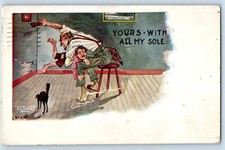
For many children who attended school in Britain during the 1950s, 1960s and 1970s, corporal punishment was simply part of everyday school life. Whether a child attended a village primary school, a large town junior school or a grammar school, the possibility of receiving the cane, the slipper, a ruler across the hands or even a sharp slap on the legs was never far away.
Looking back today, those experiences are remembered in very different ways. Some people recall the fear more vividly than the pain. Others remember the embarrassment of standing before their classmates waiting for punishment. Many can still describe, in remarkable detail, the teacher who administered it, the room where it happened and even the sound of the implement before it landed.
One former pupil remembered receiving both the cane and the slipper many times during primary school. He experienced punishment from both male and female teachers and was disciplined both in front of his classmates and privately in the headmistress’s office. Although he accepted that both punishments hurt, he always believed the cane was considerably more painful than the slipper.
The cane was usually delivered across the hands. It produced an immediate sharp sting that seemed to travel through the entire arm. The slipper, by comparison, usually landed across the seat of the trousers and produced a duller, broader pain. If given the choice, he admitted he would have accepted almost any slippering rather than another caning.
Yet pain alone did not tell the whole story.
Male teachers were often remembered for striking with great force. Female teachers, however, developed a reputation for remarkable accuracy. They seemed able to place every stroke exactly where it would have the greatest effect.
One deputy headmistress, in particular, remained unforgettable.
Before administering the punishment, she would deliberately allow the child to wait. The silence was almost worse than the punishment itself. She would lecture calmly about the offence before taking up the cane and bending it gently between her hands, allowing the pupil to hear the familiar creak of polished rattan.
Only then would she step forward.
Sometimes she aimed directly across the fingertips so that every finger seemed to burn at once. She had perfected a slight flick of the wrist just before the cane landed, making the stroke feel sharper than anyone expected. Decades later, former pupils could still picture every movement she made.
Others remembered entirely different experiences.
One gentleman recalled what remained the most painful punishment of his entire childhood—not a cane or a slipper, but a hand across the bare thigh from his infant school teacher. More than sixty years later he could still remember the exact spot where it happened.
The school itself has long since disappeared.
Where classrooms once stood there are now quiet retirement bungalows, yet he found himself studying aerial photographs and modern satellite images, trying to identify the place where the incident occurred. It surprised even him that such an ordinary moment from childhood had remained so firmly fixed in his memory while countless other school days had faded away.
Ironically, he could remember almost nothing about the slippering he later received in junior school.
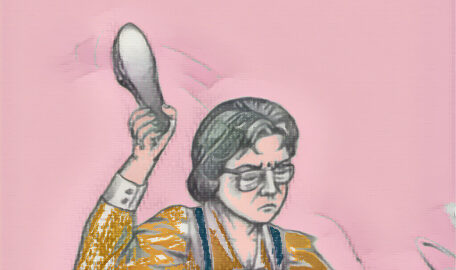
Bent over a classroom desk before his classmates, he was struck with a gym shoe belonging to another pupil. The punishment itself quickly faded from memory, but the owner of the slipper never let him forget it. Whenever academic results were announced, his rival would jokingly remind him that he had once been punished with his slipper. In later years the joke became even sweeter, as one boy won a place at the local public school while the other attended a less prestigious grammar school.
Elsewhere, memories followed a similar pattern.
One former pupil explained that corporal punishment in his primary school was generally quite limited. Most discipline consisted of rulers across the hands or occasional slaps on the legs. Only in cases of serious or repeated misconduct were pupils sent to the headmaster for the slipper, making it something almost mythical in the minds of many children.
He believed he may have been the only member of his class ever to receive it.
The rarity of the punishment made it seem far more significant than it probably was. Looking back, he concluded that the slipper from the headmaster had probably been the most painful punishment he experienced during those years, although he admitted that comparing different punishments was never straightforward. Every incident depended on the circumstances, the teacher involved and, perhaps most importantly, the emotions surrounding the event.
As children, few ever thought about these distinctions.
Punishment was punishment.
Whether it came from a stern headmaster, a patient class teacher or a feared deputy headmistress, every child hoped simply not to be the next name called.
Only years later, when memories had softened and life had moved on, did many begin comparing experiences. Some remembered fear, others remembered pain, while many discovered that what had stayed with them longest was neither. Instead, it was the atmosphere of those old classrooms, the silence before the punishment, and the unforgettable personalities of the teachers who delivered it.