Time has a curious way of changing memories.
Events that once seemed frightening often become softened by the passing years, while seemingly ordinary moments remain crystal clear. For many former pupils, memories of school discipline belong somewhere between those two extremes. They are neither entirely happy nor entirely bitter. Instead, they form part of a childhood spent in a very different Britain, where discipline was accepted as an ordinary part of education.
Those who experienced corporal punishment rarely claim that every teacher was harsh.
In fact, many remember quite the opposite.
Most teachers were fair, patient and deeply committed to the children in their care. Corporal punishment was simply one tool among many available to them. It sat alongside praise, encouragement, extra homework, detention and stern lectures. Most pupils spent far more time receiving kindness than punishment.
Yet the possibility of punishment was always there.
It influenced behaviour in subtle ways.
Children thought twice before talking back to a teacher. Mischief was often abandoned halfway through because someone would whisper, “You’ll get the cane for that.”
Whether the threat actually worked is impossible to measure.
But few doubted its existence.
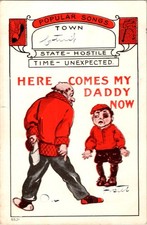
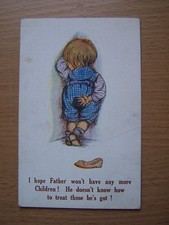
Several former pupils admitted that the fear of punishment was often worse than the punishment itself.
The journey to the Headmaster’s office could feel endless. Every step seemed to increase the tension.
Some tried desperately to think of an excuse.
Others silently rehearsed apologies.
Many simply wished they could disappear altogether.
Once inside the office, the atmosphere changed completely.
The classroom noise vanished.
The familiar chatter of friends was replaced by quiet authority.
The Headmaster or Headmistress rarely needed to raise their voice.
Their calmness alone was often enough to make an already nervous child feel even smaller.
Many schools developed rituals that became instantly recognisable.
A teacher might quietly remove their spectacles before reaching into a cupboard.
Another would ask the pupil to explain exactly what had happened before deciding upon a punishment.
Some insisted that children understood why they were being disciplined before any punishment was administered.
Others believed very few words were necessary.
Former pupils often remembered these little routines far more clearly than the punishment itself.
They could still picture the polished wooden desk.
The rows of books.
The framed certificates on the wall.
The cupboard where the cane was kept.
The chair placed carefully in the middle of the room.
These details became frozen in memory.
One interesting feature shared by many recollections is how rarely children questioned the authority of teachers.
Whether they agreed with the punishment or not, few imagined challenging it.
Parents generally supported the school.
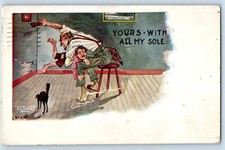
A child returning home complaining about being slippered or caned often found themselves facing another difficult conversation.
The common assumption was simple.
“If the school punished you, you probably deserved it.”
Of course, children did not always agree.
Many remembered occasions they believed were unfair.
Some admitted receiving punishment because another child blamed them.
Others recalled teachers losing patience after a difficult day.
Looking back as adults, many accepted that teachers were human.
They became tired.
They became frustrated.
They occasionally made mistakes.
The pupils, however, remembered those mistakes just as clearly as the teachers remembered the misbehaviour.
Perhaps that is why opinions about corporal punishment remain so divided today.
Some former pupils believe it taught respect and responsibility.
Others feel it caused unnecessary fear and humiliation.
Many occupy a middle ground.
They acknowledge that it happened.
They recognise it belonged to another era.
Yet they have little desire either to glorify it or to condemn everyone who worked within that system.
History rarely fits neatly into modern opinions.
Schools reflected the society in which they existed.
During much of the twentieth century, corporal punishment was not considered unusual by most parents, teachers or education authorities. It formed part of a wider culture that valued discipline, obedience and respect for authority.
As attitudes changed, so too did education.
Research into child development expanded.
Teaching methods evolved.
Gradually, schools moved away from physical punishment and adopted different approaches to behaviour and discipline.
Today’s classrooms are very different places.
Many younger teachers have never seen a school cane.
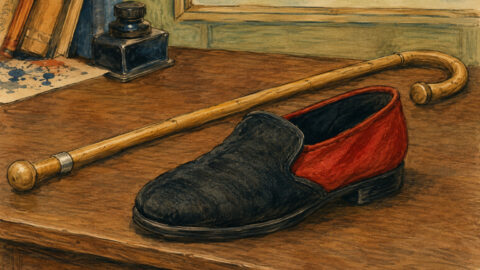
The slipper, once familiar in staff cupboards across Britain, has become little more than a museum piece or a curiosity in books about educational history.
Children now grow up in schools where discipline takes very different forms.
For those who lived through the earlier period, however, memories remain.
Not because they wish to return to those days.
But because childhood memories—whether joyful, painful or somewhere in between—have an extraordinary way of staying with us.
A particular corridor.
A classroom window.
The smell of chalk dust.
The polished floor of the assembly hall.
Even after half a century or more, they can transport someone back to another time in an instant.
Corporal punishment became only one chapter in much larger school lives filled with friendships, playground games, favourite teachers, examination nerves and growing independence.
It is perhaps within that wider picture that these memories are best understood—not as isolated moments of discipline, but as small pieces of a generation’s shared experience of growing up in Britain’s schools.