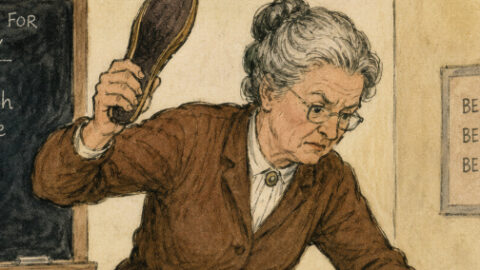
By the 1970s, school corporal punishment had entered a strange period in its history.
It was still very much alive.
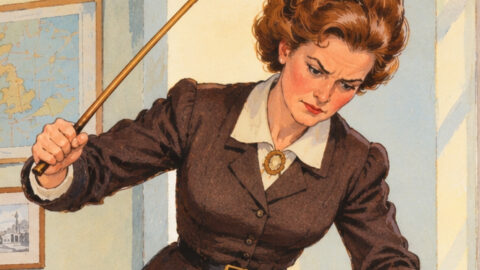
In many British schools, pupils could still be sent to the headteacher for the cane, punished with the slipper in the classroom or PE changing room, or receive the ruler across the hand. Yet outside the school gates, attitudes were changing rapidly.
Something that had survived for generations was beginning to look increasingly out of place.
The change was not immediate or uniform.
Some schools reduced their use of corporal punishment long before others. Certain teachers simply stopped using it, either because they disliked it personally or because they discovered other ways of maintaining discipline.
Elsewhere, the old system continued almost unchanged.
This meant that two children attending school during exactly the same period could have remarkably different experiences. One might attend a school where corporal punishment had virtually disappeared, while another could attend a school only a few miles away where the cane or slipper remained an ordinary part of discipline.
The original material reflects this uncertainty. Even years later, people were still debating exactly when corporal punishment had disappeared from particular schools and whether different rules had applied within different parts of the education system.
What was disappearing, however, was the unquestioning acceptance that had protected the system for so long.
Parents were increasingly prepared to challenge schools.
Children themselves were becoming more willing to complain.
Teachers were becoming accountable in ways previous generations had rarely experienced.
Most importantly, the idea that physical punishment was simply a normal and unavoidable part of childhood was beginning to weaken.
The change could also be seen in popular culture.
Earlier generations had encountered spanking and corporal punishment in cartoons, advertisements, films and magazines where it could be presented as comedy or harmless mischief. Over time, those portrayals became less common or acquired very different meanings.
The cultural innocence surrounding the subject was disappearing.
Once people began looking critically at corporal punishment, difficult questions followed.
How hard should a teacher be permitted to strike a child?
How many strokes were acceptable?
Which offences justified physical punishment?
At what age should it stop?
Should boys and girls be treated differently?
Should parents have the right to object?
And perhaps the most difficult question of all:
Who watched the person administering the punishment?
For much of history, the answer had effectively been nobody.
A teacher’s authority had often been considered sufficient protection against abuse. Yet increasing awareness of children’s rights made that assumption harder to maintain.
The argument was no longer simply about whether a particular teacher was cruel or whether a particular punishment was excessive.
The system itself was being questioned.
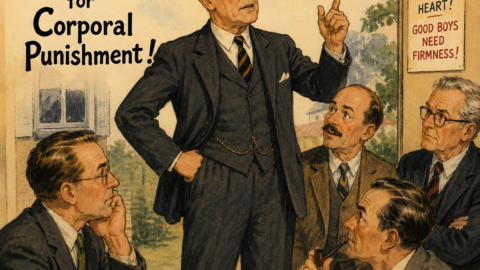
Supporters continued to argue that corporal punishment provided an immediate consequence for bad behaviour. Some believed its decline contributed to worsening classroom discipline.
Opponents saw the matter differently.
They argued that discipline based upon fear could never provide a sound foundation for education and that giving adults permission to deliberately inflict pain upon children created too much opportunity for unfairness, humiliation and abuse.
The argument would continue for years.
But the direction of travel was becoming clear.
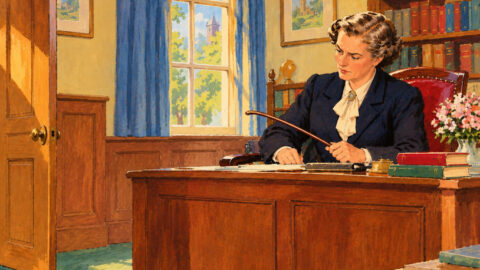
The cane might still be hanging in the headteacher’s cupboard.
The slipper might still be sitting beneath the PE teacher’s desk.
The punishment book might still have empty lines waiting to be filled.
But their days were numbered.
An educational tradition that had survived for generations was approaching its final bell.