For a very long time, corporal punishment survived partly because it was woven into everyday life.
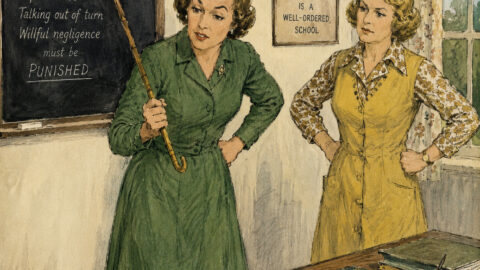
Children could be physically punished at home and then go to school where physical punishment was also accepted. Newspapers joked about spanking. Magazines printed cartoons about it. Films used it for comedy. Advertisements occasionally used the subject to attract attention.
It belonged to the culture of the time.
That did not mean everybody approved of it. There were always parents, teachers and others who disliked corporal punishment or believed that it could be taken too far. What changed during the twentieth century was that these objections gradually moved from the margins towards the mainstream.
Society was changing around the school gates.
The Second World War had already disrupted traditional ideas about authority and gender. Women had entered occupations previously dominated by men. After the war, old social expectations returned to some extent, but they could never be restored completely.
Then came the enormous cultural changes of the 1950s and 1960s.
Young people developed a stronger identity of their own. Music changed. Fashion changed. Attitudes towards relationships and sexuality changed. Television entered millions of homes. Traditional institutions increasingly found themselves being questioned.
The automatic assumption that authority must always be obeyed began to weaken.
That inevitably affected schools.
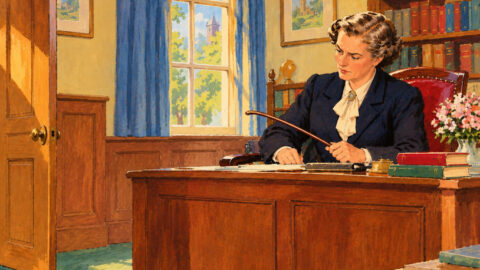
For generations, a teacher had been able to say, in effect, “I am the teacher, therefore I decide.”
Increasingly, parents and pupils began asking another question:
“Why?”
Why was this punishment necessary?
Why should one teacher be permitted to use the cane when another could control a class perfectly well without it?
Why should two pupils committing similar offences receive completely different punishments?
And what happened when the teacher was wrong?
These questions exposed one of corporal punishment’s greatest weaknesses: it relied heavily upon the judgement and temperament of the person administering it.
The original material itself repeatedly returns to the uncomfortable relationship between authority, pain and humiliation. It acknowledges that many punishments were probably administered by adults who genuinely believed they were acting in a child’s best interests, while also questioning whether such enormous personal discretion was always safe.
There was also increasing discomfort about humiliation.
Earlier generations had often regarded embarrassment as part of punishment. Being corrected publicly demonstrated who had broken the rules and reminded everyone else what could happen to them.
Later generations began looking at that same scene differently.
Perhaps humiliation was not character-building.
Perhaps fear was not the same thing as respect.
Perhaps a silent classroom did not necessarily mean that children were learning. They might simply have been frightened of the consequences of making a mistake.
None of these changes happened overnight.
The cane did not disappear because everybody suddenly agreed that it was wrong. Many teachers continued defending corporal punishment. Many former pupils argued that it had never harmed them. Some parents believed schools became less disciplined as physical punishment declined.
Others were equally convinced that its time had passed.
By the 1970s and 1980s, those competing views were colliding.
The cane and slipper were no longer simply instruments of school discipline.
They had become symbols in a much larger argument about childhood, authority and the limits of adult power.
The question was no longer merely whether corporal punishment worked.
Society was beginning to ask whether adults should have the right to use it at all.