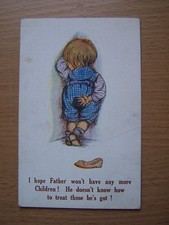
As debates about school corporal punishment have evolved, increasing attention has shifted away from the physical act itself and towards something far less visible—the psychological effects.
Pain eventually fades.
Memories often do not.
For some former pupils, the anticipation of punishment proved far more distressing than the punishment itself. Waiting outside the headmaster’s office, hearing the clock tick, listening to footsteps approaching along an empty corridor, or knowing that classmates were aware of what was about to happen could create a level of anxiety that lasted far longer than the few moments during which the cane or slipper was actually used.
Fear has a remarkable ability to magnify events.
Children often imagine the worst. A punishment that ultimately lasted less than a minute could feel as though it occupied an entire afternoon while they waited for it to happen.
In many schools, this anticipation became part of the disciplinary process.
Supporters argued that this was precisely the point.
If the possibility of corporal punishment encouraged pupils to think twice before breaking the rules, then it was serving its intended purpose without needing to be administered frequently.
Critics reached the opposite conclusion.
They argued that the mere existence of corporal punishment created unnecessary anxiety, not only among pupils who were punished, but also among those who were never caned or slippered themselves.
A child might spend years fearing something that never actually happened.
In that sense, the psychological impact extended well beyond those who personally experienced it.
This led some educational researchers to an interesting conclusion.
If corporal punishment became extremely rare, it could paradoxically become more frightening.
A punishment that almost nobody received gradually acquired an almost mythical reputation. Rumours spread through schools, stories became exaggerated and fear often grew far larger than reality.
Several writers have suggested that this phenomenon helps explain changing attitudes during the 1970s and 1980s.
As corporal punishment became less common, its psychological impact may actually have increased.
One educational commentator summarised the situation by arguing that two conditions were necessary if school corporal punishment was to function as intended.
First, it had to be universally accepted.
Second, it had to be universally expected.
In other words, pupils needed to see it as an ordinary and predictable consequence of serious misbehaviour rather than an exceptional event reserved for a handful of unfortunate individuals.
Whether one agrees with that conclusion or not, it raises an important question.
If a punishment is rarely used, does it become less effective because it is unfamiliar, or more frightening because it is unusual?
Reasonable people continue to disagree.
The discussion becomes even more complex when corporal punishment is compared with modern disciplinary methods.
Isolation rooms, internal suspension units and extended detentions may involve no physical pain whatsoever.
Yet many pupils describe them as deeply unpleasant.
Hours spent alone in silence can create feelings of loneliness, boredom and humiliation that some children find far harder to endure than a brief physical punishment.
Indeed, even during the years when corporal punishment remained available, some pupils voluntarily chose the cane rather than spending an entire Saturday in detention or writing hundreds of repetitive lines.
This decision did not necessarily reflect bravery.
Nor did it suggest they enjoyed being punished.
More often, it reflected a simple calculation.
Physical pain would soon end.
Lost time could never be recovered.
Such choices remind us that punishment cannot be judged solely by how much it hurts physically.
Time, embarrassment, isolation and anxiety all contribute to the overall experience.
Another important factor is certainty.
Children generally cope better with predictable consequences than unpredictable ones.
In schools where discipline was applied consistently, pupils usually knew what would happen if they broke particular rules.
Even those who disliked the system often accepted that it operated according to understood standards.
Problems arose when punishments appeared arbitrary.
If two pupils committed identical offences but received dramatically different penalties, confidence in the disciplinary system quickly disappeared.
Uncertainty breeds resentment.
Predictability encourages acceptance.
This principle applies far beyond the school gates.
Adults are generally more willing to accept unpleasant consequences when they believe rules have been applied consistently and fairly.
The same was true for children.
Looking back today, perhaps the greatest lesson is that corporal punishment cannot be understood simply by counting strokes of the cane or slipper.
Its real influence often lay within the minds of the pupils themselves.
Some remembered fear.
Some remembered relief when it was over.
Others remembered nothing more than a brief interruption to an otherwise ordinary school day.
These widely differing recollections demonstrate why the subject continues to generate debate decades after corporal punishment disappeared from most classrooms.
The physical punishment may have lasted only moments.
The psychological memory, whether good or bad, often lasted a lifetime.