By the closing years of the 1970s, it had become increasingly difficult to argue that England’s boarding schools existed apart from the rest of society.
For generations they had stood as islands of tradition.
Now the tide was reaching their shores.
The changes did not arrive dramatically.
There were no sudden revolutions.
No single meeting where centuries of custom were swept aside.
Instead, change arrived quietly.
One retiring headmaster at a time.
One newly appointed housemaster.
One revised school rule.
One conversation between teacher and pupil that would have been almost unimaginable twenty years earlier.
The schools themselves looked much as they always had.
Grey stone buildings weathered another English winter.
The chapel bells continued to ring across frosted playing fields.
House colours were defended with as much determination as ever.
Morning assemblies still opened the day.
Speech Days still celebrated scholarship, leadership and service.
Parents attending prize-giving ceremonies recognised many of the customs from their own schooldays.
Yet beneath this familiar surface, attitudes were evolving.
The language of education was beginning to change.
Masters spoke less about obedience alone.
Increasingly they discussed responsibility.
Initiative.
Confidence.
Understanding.
Perhaps nowhere was this more apparent than in the classroom.
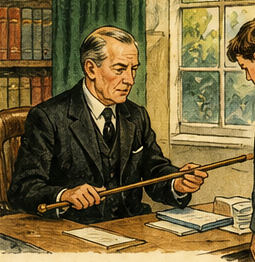
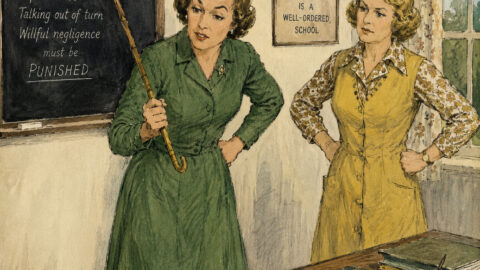
For decades, the master had been regarded as the unquestioned authority.
His word settled every argument.
His opinion concluded every discussion.
Few pupils imagined challenging an interpretation of Shakespeare or questioning a point of history.
By the late seventies, however, many teachers actively encouraged debate.
A thoughtful disagreement, properly expressed, became part of the lesson rather than an act of defiance.
History classes examined conflicting viewpoints.
Literature invited interpretation.
Science demanded investigation instead of simple memorisation.
The objective remained high academic standards.
The methods were becoming more flexible.
Housemasters also discovered that boys responded differently to authority than previous generations.
The youngest arrivals were still nervous during their first weeks away from home.
Homesickness remained a familiar companion.
Letters continued to arrive every Sunday.
Yet staff increasingly recognised that confidence grew more readily through encouragement than intimidation.
Conversations replaced lectures.
Advice often proved more effective than punishment.
The boarding house gradually became less formal.
Not less disciplined.
Simply more human.
Senior boys noticed the difference as well.
Prefects retained important responsibilities.
They supervised evening preparation.
Represented their houses.
Welcomed new arrivals.
Maintained standards.
But their role increasingly resembled leadership rather than command.
The best prefects earned respect through fairness.
They listened before making judgments.
They understood that younger boys followed example more willingly than instructions alone.
Many schools quietly revised long-standing customs that had granted excessive authority to senior pupils.
Leadership, educators concluded, required maturity rather than privilege.
Outside the classroom another transformation was taking place.
The arts flourished.
School theatres became remarkably ambitious.
Drama societies staged Shakespeare one month and contemporary plays the next.
Music departments expanded.
Choirs toured cathedrals.
Orchestras performed for local communities.
Photography clubs documented school life with an enthusiasm that would later provide priceless historical records.
Creative pursuits, once regarded as pleasant additions to school life, increasingly became central to it.
Schools discovered that excellence wore many faces.
Sport retained its special place.
Saturday afternoons still belonged to rugby during winter and cricket throughout the summer.
The changing rooms smelled of liniment and damp jerseys.
The cheers from the touchline carried across muddy fields exactly as they had for generations.
Victory remained deeply satisfying.
Defeat still stung.
Yet coaches increasingly emphasised participation alongside achievement.
Every boy, regardless of ability, was encouraged to discover some activity in which he might excel.
For one it was rowing.
For another athletics.
For someone else debating, music or art.
Education was becoming broader than competition alone.
Technology also began making its presence felt.
A few schools introduced computer studies.
The machines occupied entire rooms.
Large keyboards clicked noisily beneath uncertain fingers.
Most boys regarded them as curious novelties.
Few imagined that these cumbersome machines would one day become essential to everyday life.
The traditional curriculum was expanding.
The future was arriving one lesson at a time.
Relations between schools and parents also continued to evolve.
Communication became more frequent.
Reports grew more detailed.
Housemasters wrote not only of examination results but of personal progress, friendships and confidence.
Parents expected partnership.
Schools increasingly welcomed it.
The belief that education belonged equally to home and school gathered quiet momentum.
For the boys themselves, however, daily life remained wonderfully familiar.
There were still midnight conversations after lights out.
Still desperate searches for missing games socks before inspection.
Still nervous moments outside examination halls.
Still enormous excitement whenever the school defeated a long-standing rival.
Still laughter that echoed along polished corridors despite repeated reminders to keep the noise down.
Some experiences never changed.
Every generation believed theirs was the happiest.
Every generation believed no future pupils could possibly understand what boarding school had really been like.
Every generation, of course, was mistaken.
The boys who followed would build memories every bit as vivid.
Simply different.
Looking back, historians may one day describe the late 1970s as a bridge between two educational worlds.
One looked confidently towards tradition.
The other towards modernity.
England’s boarding schools crossed that bridge cautiously.
They surrendered very little that was valuable.
They questioned much that had simply become habit.
By doing so, many emerged stronger.
Still recognisably traditional.
Yet better equipped for the decades that lay ahead.
The great schools entered the 1980s carrying centuries of history behind them.
But for perhaps the first time, they looked towards the future with almost as much interest as they looked towards the past.
The story of the English boarding school was far from finished.
It was merely beginning a new chapter.