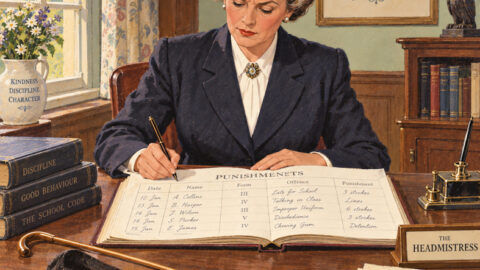
A traditional punishment book was a decidedly official-looking affair.
Depending upon the school and education authority, it might record the pupil’s name, the offence, the date, the punishment awarded and the initials of the teacher, manager or inspector responsible for checking the entry.
To the unfortunate pupil standing outside the headteacher’s study, however, its historical importance was probably the last thing on his or her mind.
For today’s researcher, these books can be fascinating.
They tell us what schools considered serious misconduct and how attitudes towards discipline changed from one generation to another.
Truancy, insolence, fighting, smoking and disobedience appear regularly.
But there are also offences which sound distinctly peculiar to modern ears.
Children could be punished for failing to wear the correct school cap, going into a forbidden playground, climbing trees, throwing stones or failing to show sufficient respect.
One old set of rules even specified punishment according to how high a child had climbed up a tree!
The registers therefore record much more than punishment. They record the values of the society which produced them.