Religious schools appear to have produced some particularly vivid recollections.
A former pupil of a Catholic primary school in Bangor, Northern Ireland, remembers a teacher known as Sister Brendan, whose reputation among the children was formidable.
Behind her back, the girls had bestowed upon her the distinctly unflattering nickname of “Smoky Cane”.
Her classroom methods were rigorous, particularly where mental arithmetic was concerned.
Friday mornings were apparently remembered with particular apprehension. The girls might be called upon to answer mathematical questions delivered at considerable speed. Hesitation could have consequences.
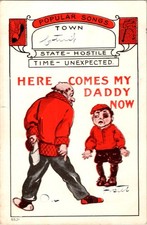
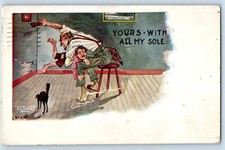
One former pupil recalled that Sister Brendan would line up those who failed to answer sufficiently quickly and administer punishment.
The recollection is significant because the girls concerned were not necessarily accused of misconduct. Their offence, if it may be called that, was failure to produce the required answer with sufficient speed.
Such methods were by no means found in every school.
Indeed, another former pupil who attended a high school during the same decade recalls the cane being used frequently but cannot remember a single occasion upon which a pupil was punished simply for receiving a low mark.
Her school’s attitude was that academic weakness and misconduct were separate matters.
The difference is worth noting.
The educational philosophy behind punishment for poor work rested upon the assumption that the pupil could have succeeded had she made sufficient effort. The obvious difficulty was deciding whether a disappointing result really arose from laziness.
A child might have been tired, nervous or simply unable to grasp a particular subject.
One former pupil remembers having particular difficulty with history.
Her teacher, Miss Joan Harris, was fond of regular tests requiring the memorising of dates, names and places. The pupil consistently performed badly and came to regard the tests as an exercise in memory rather than historical understanding.
Miss Harris did not employ corporal punishment for failure. Instead, those obtaining poor results were required to write an essay upon some aspect of the subject under consideration.
On one occasion, the pupil attempted to complete the task by copying material from a book.
Unfortunately, she did so without much attention.
Whole passages were omitted, while other pieces were accidentally copied from entirely different sections. The resulting essay made remarkably little sense.
Miss Harris was not amused.
She stood beside the pupil’s desk and proceeded to point out the numerous mistakes. The girl, displaying that peculiar determination sometimes found among adolescents, simply continued with her work and attempted to ignore the lecture.
Eventually Miss Harris abandoned the contest, marched away and deposited the offending essay in the waste-paper basket.
Looking back, the former pupil remains unconvinced that endless testing encouraged an affection for history.
Yet the incident illustrates the range of disciplinary methods available to the 1960s teacher.
Not every failure produced the cane or slipper.
Sometimes the punishment was simply more work.
And, to an unwilling schoolgirl confronted with another essay, that could seem quite sufficient.