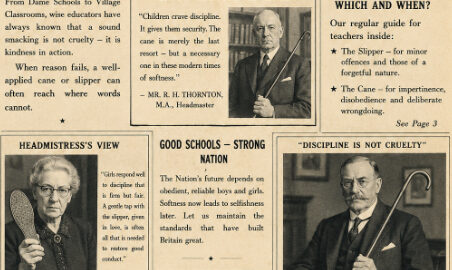
The cane was only one article in a surprisingly varied armoury of school discipline.
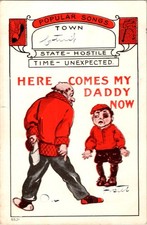
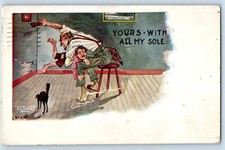
In junior schools and gymnasiums, the slipper was often more familiar. The term could be misleading, for the instrument was generally not a soft household slipper but a substantial plimsoll, gym shoe or rubber-soled training shoe. In the hands of an energetic physical education teacher, it could be administered quickly and with considerable force.
Four strokes were common in some schools, and six were by no means unknown. Punishments might be given for disruptive behaviour, fighting, insolence or repeatedly arriving without the correct games kit. The pupil was usually told to bend over a bench, vaulting horse or desk while the teacher applied the shoe to the seat of the shorts or uniform.
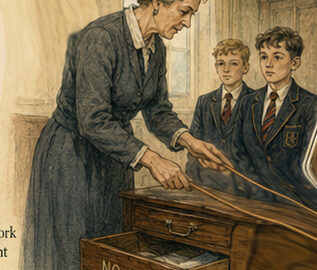
One boy was instructed by his physical education master to fetch a large gym shoe from the equipment cupboard. Hoping to reduce the severity of what awaited him, he returned with the smallest shoe he could find.
The master recognised the manoeuvre immediately.
The original punishment was increased to six.
The story circulated for years, partly because it embodied a recurring lesson of school discipline: attempting to outwit the master was often treated as a fresh offence. What the boy had intended as cleverness was interpreted as defiance, and defiance required a public answer.
Some teachers acquired reputations for unusual or excessively severe methods. One junior-school master was said to reverse the plimsoll and strike with the heel rather than the flat sole. Pupils regarded this prospect with particular alarm. Even by the standards of the time, many remembered such techniques as unnecessarily harsh and likely to cause bruising.
The slipper was often described as a lesser punishment than the cane, but this depended entirely upon who administered it. A half-hearted slippering delivered through thick clothing might be shrugged off. Six forceful strokes from a determined games master or mistress could be quite another matter.
Girls, too, were slippered or caned in a number of schools, particularly for smoking, truancy, leaving the premises without permission or failing to bring physical education kit. Punishments in the gymnasium were commonly given through the games uniform. Accounts differed as to whether skirts were adjusted, whether the punishment was delivered through ordinary uniform or gym clothing, and whether the cane was applied to the hand instead.
These variations reveal one of the central peculiarities of corporal punishment: although schools presented it as an orderly system, much depended upon local custom. A pupil moving from one town to another might encounter an entirely different disciplinary code. An offence worth two strokes on the hand in one school might attract six with the slipper in another.
Even the choice of instrument could reflect the status of the teacher. Classroom masters sometimes carried a light cane or ruler for minor offences. Heads of house or deputy heads might be authorised to administer more formal punishment. In certain grammar schools only the headmaster could use the cane, while junior staff submitted written reports and sent offenders to the study.
This centralisation gave the punishment greater ceremony. To be corrected by a subject teacher was one thing; to be sent through the corridors to the headmaster was another. The journey itself became part of the penalty.
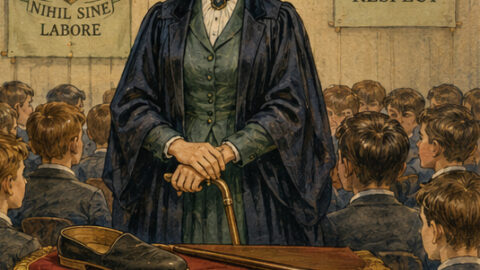
A pupil might be given a note in a sealed envelope, though everyone knew its contents. He would knock upon the study door, enter when called, and stand before a desk while the offence was read aloud. The headmaster might ask for an explanation, though few pupils believed that argument improved matters.
The cane was then selected, inspected or flexed. The pupil was positioned. Instructions were delivered with clipped precision.
The ritual made authority visible. It was designed not merely to punish the offence but to impress upon the pupil that he had passed from the ordinary life of the classroom into the formal jurisdiction of the school.