In Scotland, the chief instrument was not usually the cane but the tawse, widely known among pupils as the strap or the belt.
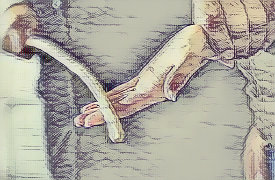
It was a formidable object: a length of dense, heavy leather, often tan or brown, approximately two feet long and sometimes more than a quarter of an inch thick. At the striking end, the leather was divided into two or three tails. These spread across the palm on impact, concentrating the force while making it difficult for the pupil to avoid the full effect.
The standard instruction was simple: “Hold out your hand.”
For a single stroke, one palm might be presented. For more serious punishment, the pupil could be required to place one hand upon the other in what were variously called crossed hands or doublers. After each stroke, the hands might be exchanged.
One or two strokes were normal. Three or four indicated a serious matter. Six were reserved for persistent truancy, violence, gross insolence or repeated defiance.
Some teachers requested the non-writing hand. Others struck whichever hand the pupil happened to offer. In certain schools, three strokes were given to each palm. Elsewhere all six might be applied to one hand, though this was less common and remembered with particular unease by those who witnessed it.
One former pupil recalled seeing six strokes administered on only two occasions. The first recipient was a younger boy who had repeatedly played truant. The second had attacked two smaller pupils in the playground.
Both found the punishment increasingly difficult to receive. After the first strokes, the hand was withdrawn and pressed between the thighs or held close to the mouth. The pupil might blow upon the palm, shake his fingers and delay presenting it again. The teacher would wait, strap at the ready, until the hand was extended.
Those who experienced the tawse commonly described the first ten or fifteen minutes afterwards as the worst. The palms throbbed and burned, and ordinary actions—holding a pen, fastening a button or gripping a schoolbag—became awkward. The discomfort then gradually subsided, though the psychological effect often remained.
Scottish pupils sometimes viewed English caning of the seat with a mixture of astonishment and mockery. To them, punishment on the hand seemed quicker, more direct and less embarrassing. English pupils frequently replied that the hand was more vulnerable and that they would rather take the punishment across clothing.
The argument was never settled. Much depended upon personal experience, the strength of the teacher and the instrument employed.
There were even schools in which pupils were reportedly offered a choice: hand or seat, immediate punishment or a later appointment. At one Catholic school, the formula was remembered as, “Hand or behind; now or later.”
Such a choice may appear curious, but it reflected the elaborate customs that grew around corporal punishment. Pupils developed definite opinions about which instrument was worse, which teacher was most severe, and which method allowed the greatest chance of preserving one’s dignity.
Some preferred the hand because the punishment was over quickly and did not interfere with sitting. Others regarded the palm as too sensitive and chose the cane across the trousers or skirt. A few schools allowed the pupil to select from several canes, though such apparent consideration was unlikely to provide much comfort.
Whatever the location, the punishment depended heavily upon technique. A careless stroke might land awkwardly and cause injury. A practised teacher aimed consistently, paused between strokes and expected the pupil to remain in position.
This was why former pupils insisted that the expression of the best described not merely quantity but quality—or, more accurately, calculated severity.