The survey shows that discipline in many schools followed a recognisable hierarchy.
Not every offence went directly to the headmaster. The person who dealt with a pupil often indicated how seriously the school regarded the matter.
The Classroom Teacher
At the first level stood the ordinary teacher.
Talking, minor disruption and unsatisfactory work might be dealt with immediately.
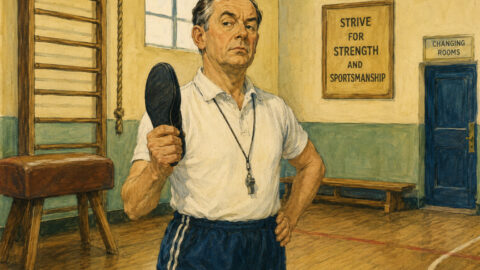
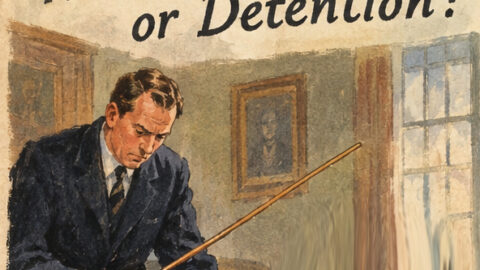
The teacher could issue a warning, give lines or detention, or, in schools where permitted, administer corporal punishment.
An eleven-year-old at St John’s College, Southsea, provides a straightforward example. In 1971 he talked after being instructed to work silently. His form teacher dealt with the matter in the classroom with three strokes of the slipper.
No senior member of staff was required.
Senior Staff
Persistent misconduct could move the pupil upwards through the hierarchy.
The grammar-school respondent whose disciplinary experiences began in 1963 provides several examples.
Repeated talking brought him before the senior mistress.
Running in a corridor brought him before the deputy head.
Repeated failure to complete homework again involved the senior mistress.
The identity of the disciplinarian changed according to the circumstances.
The Headmaster
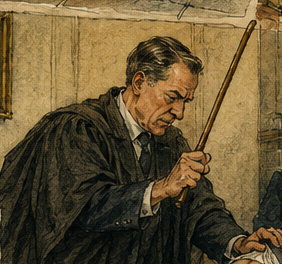
At the top stood the headmaster or headmistress.
Fighting, theft, truancy and other offences regarded as serious were more likely to reach this level.
The Head represented the final disciplinary authority.
Being sent there therefore carried a meaning beyond the punishment itself.
Housemasters and Heads of Department
Some schools possessed additional layers.
A housemaster might deal with conduct involving pupils in his house.
A head of department could deal with misconduct connected with his subject.
The 1969–70 account of truancy from mathematics, for example, describes the head of mathematics dealing with the pupil.
Why Hierarchy Mattered
The system allowed minor matters to be settled without involving the Head.
It also provided a means of escalation.
A pupil who ignored the authority of one teacher could be referred to somebody more senior.
This strengthened the authority of the classroom teacher because the pupil knew that further powers stood behind him or her.
Discipline as an Institution
The hierarchy demonstrates that corporal punishment was not always an isolated act by an individual teacher.
In many schools it formed part of an organised disciplinary structure.
The classroom teacher, senior mistress, deputy head and headmaster represented different levels of the same institution.
The pupil gradually learned where each stood.
And he generally understood that the further upwards he travelled, the more serious his situation had become.