I cannot remember any comparable prestige attaching to the receipt of corporal punishment at either my junior or secondary school, with one curious exception.
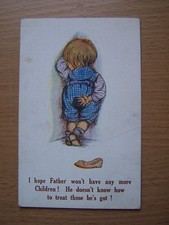
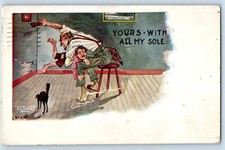
During my first year at secondary school, our form master was a very large and muscular young man. Instead of the more conventional gym shoe, he employed a leather-soled sandal of approximately size twelve.
The effect of this instrument upon a twelve-year-old boy could be considerable.
Nevertheless, there was one boy who attracted a certain admiration by receiving his punishment without displaying any visible sign of distress.
This was in the early 1950s. Before coming to our school he had been a boarder at a local preparatory school which had acquired a considerable reputation for corporal punishment. His parents had been abroad for a period and he had been sent there.
Naturally, the rest of us wanted to know his secret.
When asked how he could endure the sandal so calmly, he gave an answer which seemed to settle the matter.
If, he explained, one had already experienced six of the best on the bare with the cane, a sandal did not hurt very much by comparison.
There may have been something in that.
In truth, however, he was simply a remarkably tough young fellow. We both came from the coal-mining district to the north of the city and spent a good deal of time together outside school.
He was not a boy with whom a sensible person would have picked a fight.
His story illustrates something of the peculiar position which corporal punishment occupied in the schoolboy world of the period.
The cane could be feared, resented and dreaded, yet the boy who endured it bravely might emerge with an enhanced reputation among his fellows.
There was a curious code of conduct. To complain too loudly was liable to attract ridicule. To endure punishment without apparent distress could earn admiration.
But there was a point at which admiration gave way to something else.
A boy who was constantly in trouble and constantly receiving the cane could no longer be regarded as heroic. Repeated punishment eventually suggested not courage but foolishness.
Thus the cane had a curious double character. It was an instrument of discipline in the hands of the school authorities, but among boys it could become an informal test of courage and character.
The circumstances of the punishment mattered greatly. So did the nature of the offence.
Some misdemeanours were regarded by schoolboys as almost respectable. Others were considered contemptible. The same punishment could therefore have quite different consequences for a boy’s standing among his contemporaries.
Detention had no such mythology.
A boy sent to detention simply lost part of his leisure and, in some schools, acquired an unwelcome entry upon his record. There was little glory in spending an afternoon writing an essay while one’s friends had gone home.
Yet for someone like myself, detention remained infinitely preferable.
There was, however, one consideration which could alter the calculation completely.
It had nothing to do with the school, the prefects, the Headmaster or one’s fellow pupils.
It concerned what happened after one arrived home.