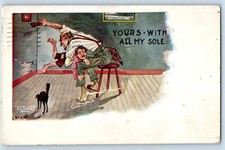
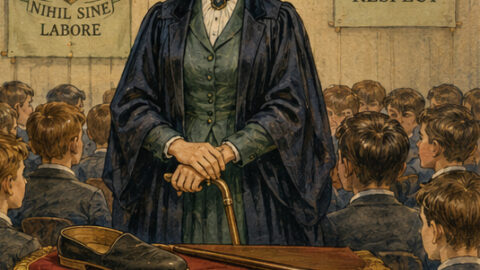
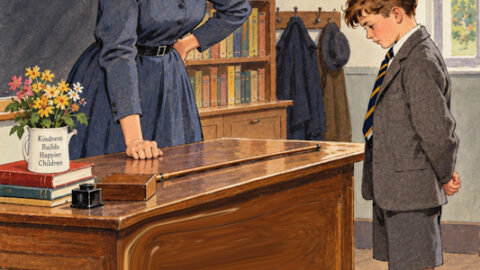
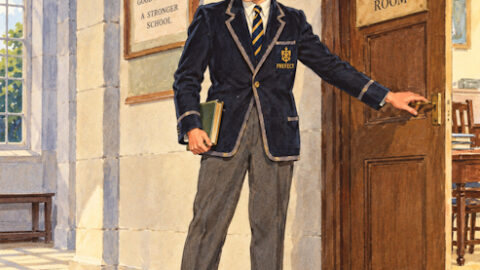
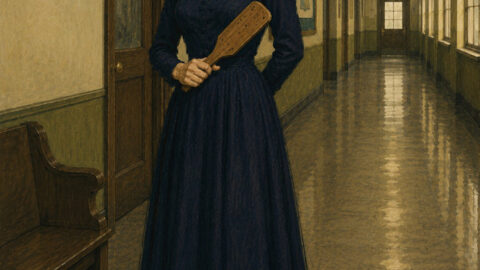
By the beginning of the 1960s something curious was happening in English schools. The regulations remained much the same, the school rules still occupied several closely printed pages in the prospectus, and in countless headmasters’ studies the familiar cane still rested in its accustomed place. Yet many boys sensed that the atmosphere surrounding corporal punishment was subtly changing. It had not disappeared; indeed, in some schools it remained as frequent as ever. Nevertheless, there was a growing feeling that the unquestioning acceptance which had characterised the previous generation was beginning to weaken.
The change was by no means universal. It depended greatly upon geography, the character of the headmaster, and perhaps most of all upon the traditions of the individual school. One could travel only a few counties and find a completely different disciplinary climate. A grammar school in Kent might have quietly reduced its use of the slipper while another in Yorkshire, Lancashire or the Midlands continued much as it always had. There was no national pattern, only hundreds of local ones.
Former pupils often remarked upon this contrast when exchanging memories years later. One old boy would describe a school where only the headmaster still used the cane by the early sixties, while another, attending school at precisely the same time, remembered daily slipperings, frequent canings and prefects who exercised extensive disciplinary powers. Both accounts were perfectly accurate. They simply reflected different educational worlds.
One former grammar school pupil, whose family had moved from South London into Kent, remembered wondering whether the migration itself had influenced attitudes. The years after the war saw large numbers of London families settling in expanding towns across the South-East. Many were ambitious families seeking better housing, improved schools and fresh opportunities for their children. They valued discipline, certainly, but some appeared increasingly uneasy about the harsher traditions they associated with an earlier generation.
Whether this impression reflected reality or merely hindsight is impossible to say, yet it raises an intriguing question. Had educational expectations begun to alter alongside social aspirations? Parents who had themselves experienced severe school discipline during the 1930s and 1940s did not necessarily wish to see their sons treated in exactly the same fashion. Britain was becoming wealthier, educational opportunities were expanding, and there was an increasing belief that schools should produce thoughtful young citizens rather than merely obedient ones.
Grammar schools found themselves balancing these changing expectations with traditions that stretched back decades.
Few institutions valued continuity more highly than the grammar school. School songs, prefect systems, houses, uniforms and elaborate rituals all reinforced a sense of permanence. Corporal punishment formed part of that inheritance. Masters who had themselves attended similar schools frequently regarded the cane and slipper not as controversial implements but simply as established instruments of discipline. They had experienced them, survived them and, in many cases, believed they had benefited from them.
The argument was familiar.
A quick slippering prevented repeated misconduct.
A formal caning dealt decisively with serious offences.
Order was maintained.
Lessons proceeded uninterrupted.
Many teachers sincerely believed that physical punishment ultimately saved boys from harsher consequences later in life. It was viewed less as retribution than as correction. Whether modern readers accept that reasoning is another matter, but it was undoubtedly the philosophy held by a considerable proportion of the teaching profession during the period.
The pupils themselves held rather more complicated views.
Few welcomed corporal punishment, yet many accepted its existence almost fatalistically. Boys became adept at assessing which offences were likely to attract which penalties. Forgetting homework might earn lines from one master, a slippering from another and detention from a third. Persistent talking, insolence or fighting generally increased the likelihood of appearing before a senior master. The unwritten tariff became part of school folklore.
Discussion of punishments occupied an astonishing amount of playground conversation.
“How many did you get?”
“Who gave it to you?”
“Was it the old gym slipper or the new one?”
“Did the Head do it himself?”
Stories travelled rapidly around the school. A particularly severe slippering or an unexpected caning might become common knowledge before afternoon lessons had begun. Facts were embroidered, details exaggerated and reputations enhanced with every retelling. In this way corporal punishment acquired a curious mythology of its own, becoming almost as much a subject of schoolboy conversation as football or examinations.
Primary schools often presented a very different picture.
One former pupil from a mixed South London primary looked back with genuine surprise when hearing tales from others. During more than five years there he could remember remarkably few instances of corporal punishment. An occasional smack on the backs of the legs might be administered in class to an unruly child. Sometimes a boy or girl was taken quietly into the cloakroom for a brief reprimand accompanied by a slap. Yet formal punishments remained rare.
Searching his memory, he could recall only two boys receiving the cane, each on a single occasion and across the hand, while two girls had been slippered twice each by the deputy headmistress. Beyond that, corporal punishment scarcely figured in daily school life. Compared with many grammar schools of the same era, the contrast could hardly have been greater.
Such recollections remind us how dangerous it is to speak of “the British school experience” as though it were uniform. Experiences varied enormously according to age, locality, denomination and type of school.
Boarding schools formed yet another world altogether.
There discipline extended far beyond classroom hours. Masters supervised boys from breakfast until lights out, and housemasters carried responsibility not merely for education but for every aspect of daily conduct. Consequently, opportunities for disciplinary intervention multiplied. Untidy studies, noisy dormitories, breaches of house rules or poor behaviour during recreation all became matters for correction.
Many boarding school boys therefore remembered corporal punishment as woven into the entire rhythm of school life rather than confined to lessons.
At the same time, another educational development was beginning to cast a long shadow across the country.
The comprehensive school.
Educational reform gathered pace throughout the 1960s. Although implementation varied widely, the very debate surrounding comprehensives prompted renewed examination of many established grammar school customs. Progressive educationalists questioned not merely academic selection but also traditional disciplinary methods. If schools themselves were being modernised, should punishment not evolve as well?
Answers differed sharply.
Traditionalists argued that relaxing discipline would inevitably produce declining standards. Reformers countered that respect could no longer depend upon fear. Between these opposing positions lay hundreds of individual headmasters attempting to steer a practical course through changing public opinion.
Interestingly, many boys living through the period scarcely appreciated the significance of these debates. They noticed only small practical changes. A master who once reached automatically for the slipper now imposed detention instead. A prefect who previously administered punishments began assigning lines. Canings became less frequent than older brothers remembered. None of these alterations appeared dramatic in isolation, but together they hinted at a broader shift.
Looking back decades later, former pupils often found themselves asking the same question.
When exactly did things begin to change?
No one could quite identify the moment.
There had been no official declaration, no circular from the Ministry, no announcement during morning assembly. Instead, the old certainties gradually dissolved. One retiring headmaster was replaced by another with different ideas. A younger generation of teachers entered the profession. Parents asked more questions than they once had. Boys themselves became marginally less willing to accept unquestioningly what previous generations had regarded as inevitable.
The cane remained. The slipper remained. Yet they increasingly seemed to belong to an earlier age.
For many pupils this was not yet the end of corporal punishment. Rather, it was the beginning of uncertainty—a growing awareness that while the old discipline still existed, it no longer carried quite the same unquestioned authority. Something fundamental was shifting within British education, although few could yet predict where the process would eventually lead.