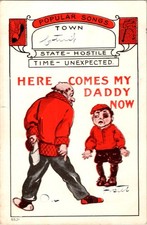
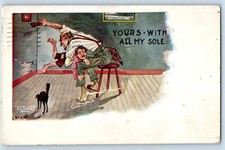
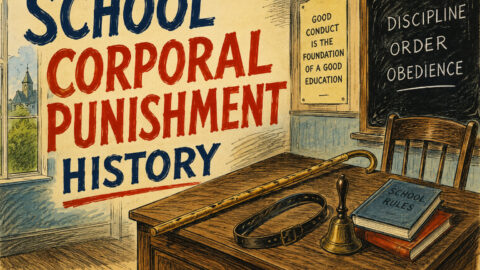
For many people who attended British schools during the 1950s, 1960s, 1970s and even into the early 1980s, corporal punishment was simply another part of everyday school life. It was not viewed as unusual, nor was it the subject of endless debate. It existed alongside lessons, assemblies, sports days and homework. Whether anyone agreed with it or not, it formed part of the educational landscape of the time.
One question, however, continues to provoke fascinating memories:
Did girls receive corporal punishment as well as boys?
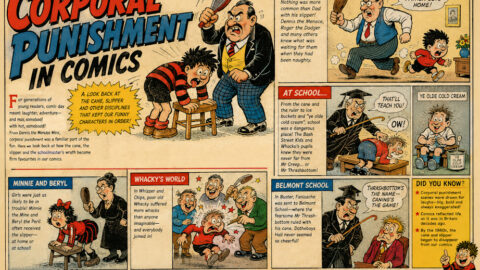
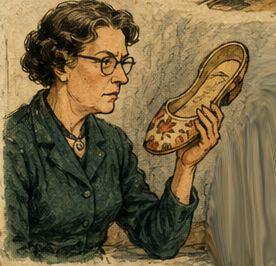
Modern assumptions often suggest that girls were rarely, if ever, punished physically. Yet the recollections of former pupils paint a far more complicated picture. While practices varied enormously from one school to another, many people clearly remember girls receiving the slipper, the cane, the ruler or a hand smacking, depending upon the school, the teacher and the era.
At one primary school, a former pupil remembered a respected class teacher who believed discipline should never be hidden away.
His philosophy was simple.
“Justice should not only be done—it should be seen to be done.”
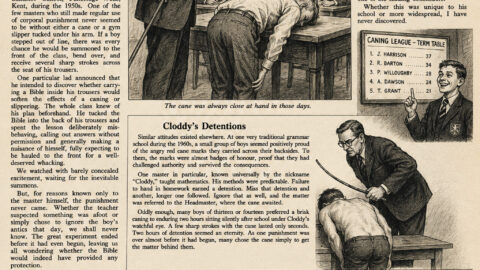
When children misbehaved, boys and girls alike could be called to the front of the classroom. They would bend to touch their toes while the punishment was administered where every classmate could witness it. Most punishments consisted of only a couple of strokes with either the slipper or the cane. Looking back decades later, the former pupil reflected that, although it certainly stung at the age of nine, the punishments were never intended to cause serious injury. At the time, the children themselves accepted the system as fair because everyone was treated in broadly the same manner.
Other memories came from schools where younger children experienced similar forms of discipline.
One former pupil recalled a story time during the early 1970s when several boys and girls were called to the front together. Each child received a few smacks before returning quietly to their place. At that school, such punishments were considered an ordinary response to classroom misbehaviour rather than something extraordinary. Looking back with adult eyes, the writer admitted that it seemed entirely normal at the time, even though attitudes today are very different.
Several contributors made an important distinction between what they considered fair discipline and unfair discipline.
One remembered a teacher who punished children only for deliberate naughtiness such as persistent talking or disobedience. Once the punishment had been given, the matter was forgotten and lessons continued as normal.
Another teacher, however, used the ruler on children who struggled with spelling, reading or multiplication tables. Many former pupils felt this crossed a line. Punishing children for making genuine mistakes rather than for wilful misbehaviour was remembered far less kindly.
These early recollections reveal an important truth.
There was never a single national experience of school discipline.
Every school developed its own customs. Every headteacher set different standards. Some teachers relied heavily on physical punishment, while others rarely used it. Some believed discipline should take place openly before the class, while others preferred punishments behind closed doors.
As the memories continue, an even clearer picture begins to emerge. Girls were not always exempt from corporal punishment—but exactly how, where, and how often they were punished depended greatly on the school they attended, the decade in which they were educated, and perhaps most importantly, the beliefs of the individual teachers responsible for maintaining discipline.