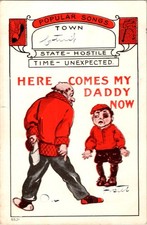
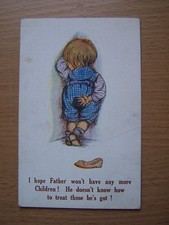
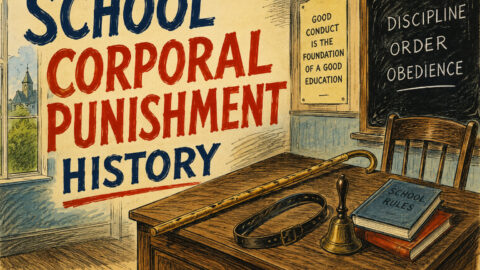
For anyone who attended school in Britain between the late 1940s and the 1960s, corporal punishment was hardly unusual.
Practices varied enormously from school to school.
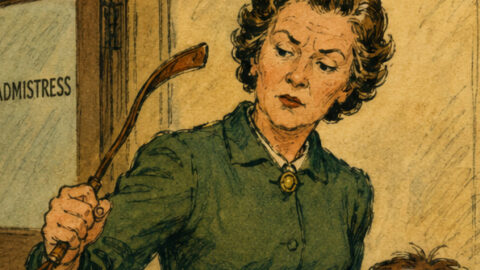
Some primary schools used the cane. Others did not.
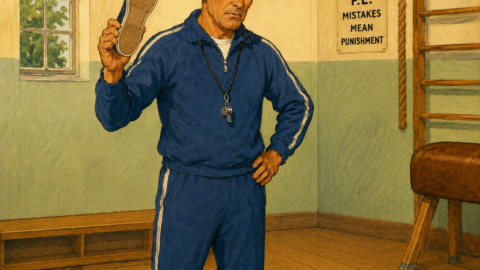
At one school remembered by a former pupil, the most serious everyday punishment was the slipper. Despite the name, this was generally a rubber-soled gym shoe or plimsoll rather than a bedroom slipper.
At boys’ secondary schools, the slipper could be an ordinary classroom punishment, while the cane was reserved for more serious offences.
Some schools even allowed prefects considerable disciplinary authority over younger pupils — something that would seem remarkable today.
The system was accepted by many simply because it had existed for generations.
But by the late 1960s and throughout the 1970s, attitudes were changing.
Parents increasingly questioned whether teachers should have the right to physically punish children. Educationalists debated whether fear actually encouraged good behaviour, while others argued that traditional punishments provided an immediate consequence and allowed the matter to be finished quickly.
The argument continued for years.
Corporal punishment was eventually prohibited in British state schools in 1986 following a European Court of Human Rights ruling and subsequent legislation. The restrictions were later extended across private education, with England and Wales completing the prohibition in independent schools in 1998.
Whatever one’s personal opinion, the disappearance of the cane and slipper represented more than simply a change in school rules.
It marked a transformation in the relationship between adults and children.
The generation growing up during the 1960s and 1970s increasingly expected authority to justify itself.
Teachers remained teachers. Parents remained parents. Rules still existed.
But obedience was gradually becoming something that could no longer be taken entirely for granted.
Perhaps that is why memories of old-fashioned school discipline remain so vivid.
They belong to a Britain that seems simultaneously familiar and remarkably distant: school dinners, packed lunches, playground walls, stern teachers, friendly dinner ladies, staff car parks that absolutely must not be entered — and three giggling schoolgirls who discovered that running away from the dinner lady was considerably funnier before they got back to class.