The school’s approach to teaching was simple, orderly and entirely without fuss.
Lessons were carefully explained by the mistress at the front of the classroom. Every pupil was expected to listen without interruption, make neat notes, and complete the work that followed to the very best of her ability. There was little room for excuses. Education was regarded as a privilege, and every girl was expected to repay that privilege through diligence, good manners and steady effort.
Each morning the classrooms filled with the sound of chalk upon blackboards, fountain pens scratching across exercise books, and the calm but unmistakably authoritative voices of experienced schoolmistresses.
There was very little wasted time.
A lesson was explained.
Work was set.
Answers were expected.
Most of the girls understood exactly what was required of them. Those who struggled through genuine difficulty usually found a patient teacher willing to explain the work again, sometimes remaining behind after lessons to help. Honest effort was always recognised.
Failure caused by laziness, daydreaming, carelessness or deliberate disobedience, however, was viewed rather differently.
Such failings were considered faults of character rather than ability.
Miss Pritchard, who taught Latin, believed firmly that repetition was the mother of learning.
Her classroom possessed an almost military rhythm.
Rows of girls stood beside their desks, books open before them, while the familiar recitations echoed around the room.
“Amo,” began the first girl confidently.
“Amas,” continued the second.
“Amat,” replied the third.
Around the classroom the conjugations continued, each pupil expected to know precisely where her turn would arrive.
The slightest hesitation could be heard immediately.
When a pupil paused uncertainly, Miss Pritchard never interrupted.
She simply waited.
The silence itself often proved more uncomfortable than any sharp word.
Eventually the girl would either remember or attempt an uncertain guess.
If she guessed incorrectly, Miss Pritchard corrected her calmly and had the entire class repeat the sequence again from the beginning.
“If you learn correctly the first time,” she often remarked, “you shall not have to learn it twice.”
Occasionally it became obvious that a pupil had made no attempt to revise the previous evening.
On such occasions Miss Pritchard would slowly close the textbook before her.
The quiet click of its covers seemed louder than a raised voice.
“You were told to learn this.”
“Yes, Miss.”
“You chose not to.”
There was usually nothing further to be said.
The punishment was almost inevitable.
Sometimes it meant several pages of Latin verbs to be copied neatly before breakfast the following morning.
Sometimes fifty carefully written lines.
Frequently it meant detention after lessons while classmates disappeared laughing into the autumn sunshine.
If the same girl repeatedly failed to prepare her work, matters became rather more serious.
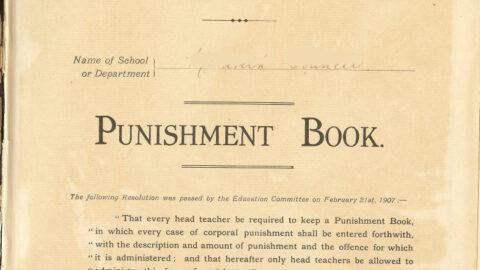
A neatly written note would be placed into the punishment book requesting that the pupil report to the deputy headmistress.
Those few words were enough to quieten even the noisiest classroom.
Miss Eleanor Harcourt inspired a very particular kind of respect.
Tall, narrow-faced and impeccably dressed, with steel-grey hair gathered into a severe bun, she possessed an expression that rarely revealed either approval or disappointment until every fact had been established.
Unlike some teachers, she never acted in haste.
She listened carefully.
She questioned patiently.
She compared accounts from teachers and pupils alike.
Only once she was entirely satisfied that she understood the truth did she decide upon the appropriate consequence.
It was precisely this measured approach that made her such a formidable figure throughout the school.
No girl could comfort herself by believing Miss Harcourt had acted unfairly or in a fit of temper.
If punishment followed, everyone knew it had been earned.
The staff admired her judgement.
The pupils feared disappointing her.
For everyday classroom offences there existed a range of familiar consequences.
Untidy handwriting usually meant rewriting an entire page.
Poor arithmetic required every incorrect sum to be completed again.
Incomplete homework earned detention.
Excessive talking often resulted in moving desks, loss of privileges or remaining behind after class.
Some older mistresses occasionally reinforced discipline with a sharp rap of a wooden ruler across an outstretched palm, or, in accordance with the customs of the period, a stroke of the school’s carpet slipper over clothing for persistent minor misconduct.
These measures were intended to be corrective rather than severe and were expected to be administered sparingly.
More serious disciplinary matters, however, travelled beyond the ordinary classroom.
They were referred to either Miss Harcourt or the headmistress, Miss Beatrice Blyton.
Miss Blyton possessed an air of quiet authority that seemed to fill every corridor she entered.
She was not a woman who raised her voice unnecessarily, nor did she believe discipline should become theatrical.
A simple summons to her study was usually enough to drain the colour from a guilty pupil’s face.
Her office reflected her personality perfectly.
Everything stood precisely where it belonged.
The polished oak desk was immaculate.
Books were arranged in exact order upon the shelves.
Certificates and school honours decorated the walls.
Even the ticking clock appeared unusually loud within the silence.
When Miss Blyton spoke, every word carried weight.
She expected honesty above all else.
A pupil who admitted her wrongdoing often found Miss Blyton unexpectedly understanding.
One who lied, blamed others or attempted deception quickly discovered that the headmistress regarded dishonesty as one of the gravest failings of character.
Only Miss Blyton and Miss Harcourt were officially authorised to administer the school cane, and only after careful consideration of the circumstances.
Among the staff, this distinction mattered greatly.
Rules were to be followed.
Authority was carefully defined.
The mistresses regarded such procedures as an important safeguard against unfairness.
The pupils, however, often viewed matters rather differently.
To them, punishment was simply punishment.
Whether it involved pages of extra work, an evening detention, the school slipper or the dreaded visit to the headmistress’s study, none of it seemed especially desirable.
Nevertheless, every girl gradually came to understand the school’s unwritten scale of discipline.
Untidy work meant repetition.
Talking during lessons meant detention.
Failure to prepare homework meant extra work after school.
Persistent defiance or repeated classroom disruption might bring the slipper.
Serious dishonesty, bullying, stealing, deliberate cruelty, vandalism or leaving the school grounds without permission could result in a formal appearance before Miss Beatrice Blyton herself, where, in the most serious cases, the cane remained the final sanction.
It was a system that belonged unmistakably to its time.
The girls did not always agree with it.
Some accepted it without question.
Others quietly resented it.
Yet every pupil understood one simple truth.
Within the walls of St Bartholomew’s, actions carried consequences, and character was considered every bit as important as academic success.