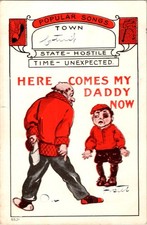
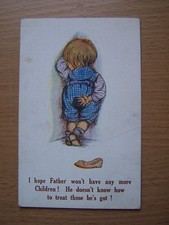
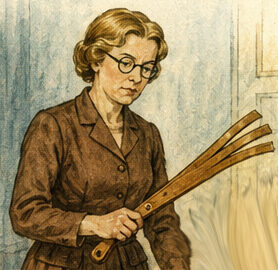
The history of corporal punishment in Scottish schools reflects a significant period of change in educational philosophy and classroom discipline. For much of the twentieth century, the tawse—commonly known as “the belt”—was regarded by many teachers, parents and education authorities as an accepted and legitimate means of maintaining order. By the 1970s and 1980s, however, attitudes were beginning to change, leading to its gradual abolition across Scotland.
In primary schools, the use of corporal punishment began to decline during the mid-1970s, while secondary schools generally retained it for longer. The pace of change varied considerably between local education authorities. Glasgow was among the first major authorities to move away from the practice, whereas Edinburgh was one of the last. Although the legal prohibition in local authority schools came into force in August 1987, the transition was far from uniform.
Some education authorities anticipated the forthcoming legislation and encouraged schools to phase out the belt several years before it became illegal. Others were much more reluctant. Many experienced teachers believed that removing corporal punishment would lead to a serious deterioration in classroom discipline, particularly as generations of pupils had grown up in an educational culture where receiving the belt was considered a normal consequence of serious misconduct. For these teachers, corporal punishment was not simply a punishment but an integral part of the disciplinary framework upon which schools had relied for decades.
The differing approaches reflected wider disagreements about how discipline should be maintained. Teachers who chose not to use the belt during this period were sometimes viewed by colleagues as being overly lenient. Some pupils recognised which teachers rarely administered corporal punishment and, fairly or unfairly, regarded them as easier to challenge. As schools attempted to reduce reliance on the belt, alternative sanctions became increasingly common. These included lunchtime or after-school detentions, writing repetitive lines, additional written work, physical exercises, temporary removal from class, and, in more serious cases, suspension or exclusion. Each alternative had its advantages and disadvantages, and many teachers felt none provided quite the same immediate deterrent effect as corporal punishment.
Throughout most Scottish schools, regular use of the tawse continued well into the early 1980s. During 1986 and the first half of 1987, many schools consciously reduced its use as staff prepared for the forthcoming legal changes. Nevertheless, in numerous schools the belt remained available until the very end of the summer term in June 1987. When pupils returned after the summer holidays in August, corporal punishment in local authority schools had formally come to an end, marking the close of a long-established chapter in Scottish educational history.
The Scottish experience invites comparison with developments elsewhere in the United Kingdom, particularly England, where different forms of corporal punishment existed and where the timing and methods of abolition followed a somewhat different course.
One of the most interesting aspects of comparing Scottish and English school discipline is the variety of implements and practices that developed over many decades. Whereas the tawse became the distinctive symbol of Scottish school discipline, English schools were more commonly associated with the cane, although practices varied considerably between regions, school types and individual head teachers.
As in Scotland, there was no universal approach to corporal punishment in England. Much depended upon the philosophy of the head teacher and the attitudes of individual members of staff. Some head teachers regarded corporal punishment as a measure of last resort, encouraging teachers to resolve disciplinary problems through warnings, extra work or detention whenever possible. Others believed firmly that swift corporal punishment prevented more serious behavioural problems from developing and actively supported its regular use. In some schools, pupils understood that being sent to the head teacher for punishment would almost certainly result in a severe caning, and that reputation alone often acted as a powerful deterrent.
Individual teachers also displayed considerable variation in their use of corporal punishment. Some rarely resorted to it, administering only a handful of punishments during an average week. Others used it much more frequently, believing that consistent and immediate punishment maintained discipline more effectively. In particularly strict schools it was not unusual for a teacher to administer several punishments during a single lesson if multiple pupils committed separate offences.
The experience of awaiting punishment often formed a significant part of the disciplinary process. Pupils recalled the anxious walk to the head teacher’s office, the anticipation while waiting outside the door, and the emotional strain before the punishment itself. Many former pupils have commented that the psychological impact of the anticipation could be almost as memorable as the physical punishment.
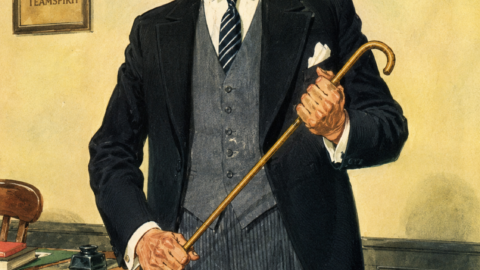
England also differed from Scotland in the variety of disciplinary implements that were employed. The cane became the best-known instrument, particularly in grammar schools, independent schools and many secondary schools. It was typically manufactured from rattan rather than bamboo. Rattan possessed an ideal combination of flexibility, durability and resilience, making it well suited for repeated use without splitting. Bamboo, by comparison, was generally regarded as less satisfactory because it was comparatively brittle and more likely to crack or splinter.
School canes were produced in a range of lengths and thicknesses to suit pupils of different ages. Lighter, more flexible canes were often reserved for younger pupils, while older boys, particularly in secondary schools, might receive punishment with heavier and stiffer models. Canes were supplied by a number of specialist manufacturers and educational suppliers, with schools often purchasing directly from the manufacturers or through educational equipment distributors.
There was also variation in the style of cane itself. Straight canes were perhaps the most familiar, although canes fitted with a crook handle were also used in some schools. Preferences often reflected local custom or the personal choice of individual head teachers rather than any official guidance.
In parts of northern and central England, leather school straps were also employed, sometimes alongside the cane and occasionally instead of it. Several British manufacturers supplied these implements to schools. Among the best known was Cliffe of Walsall, whose distinctive 22-inch three-tailed leather strap featured an unusual handle that resembled the grip of a cane. Another manufacturer, Marshall of Manchester, produced a strap similar in general appearance to the Scottish tawse but made from somewhat lighter leather.
Scottish tawses were not confined entirely to Scotland. The well-known manufacturer John Dick of Lochgelly, in Fife, supplied his products to a number of schools and individual teachers in England, including some in London. Former pupils who experienced punishment with a Lochgelly tawse while attending English schools frequently recalled it as being an exceptionally severe instrument. Many considered it more painful than the cane, attributing this to the heavy, dense leather and the multiple tails, which distributed the impact differently from the narrow stroke of a rattan cane.
These regional differences illustrate that corporal punishment in Britain was never a single, uniform practice. Instead, it reflected a complex combination of local tradition, school culture, individual educational philosophy and the personal preferences of teachers and head teachers. By the late 1980s, however, educational thinking had shifted decisively towards non-physical methods of discipline. The abolition of corporal punishment marked not only a legal change but also a broader transformation in attitudes towards child welfare, classroom management and the relationship between teachers and pupils.
Historical accounts of these practices remain valuable because they help explain how discipline evolved in British schools over the twentieth century and provide important context for understanding modern approaches to behaviour management. They also demonstrate how educational traditions could differ significantly between neighbouring regions, despite operating within the same national education system.