lfjozEdit Profile
When corporal punishment disappeared from British classrooms, one question remained.
What would replace it?
For generations the answer to serious misbehaviour had often been immediate and unmistakable. A pupil broke the rules, the teacher imposed a punishment, and usually the matter ended there.
The cane, slipper and ruler represented consequences that children understood.
Once those methods disappeared, schools did not suddenly become places where children behaved perfectly. Teachers still had to deal with fighting, bullying, disruption, truancy, defiance and countless smaller offences.
What changed was how they were expected to deal with them.
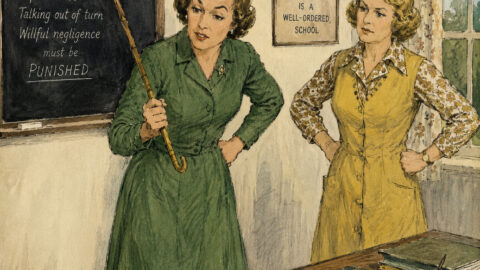
Detentions became increasingly important. Pupils could lose privileges, be placed on report, have parents contacted or, for more serious behaviour, face suspension or exclusion.
Supporters of the old system sometimes looked at these developments with considerable scepticism.
Why, they asked, should a school spend hours dealing with a pupil when a short, immediate punishment had once settled the matter?
It is an argument still heard today.
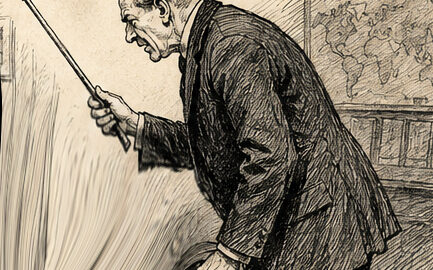
There are people who remember the old classrooms as orderly places where teachers commanded respect and pupils understood boundaries. In their memories, one look from a teacher could silence a room.
Perhaps there is some truth in that.
But nostalgia has a habit of polishing the past.
The old school system certainly produced disciplined classrooms, but it also produced frightened children. It produced excellent teachers, but also teachers who sometimes misused their authority. It produced pupils who considered their punishments fair and others who believed they had been punished unjustly.
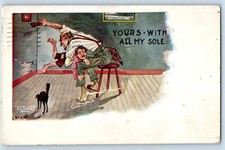
The original recollections demonstrate how differently the same system could operate. The slipper might be used frequently by one teacher and hardly at all by another. Some pupils remembered it as an ordinary classroom punishment, while others remembered the fear and embarrassment surrounding it.
So what was lost?
Perhaps immediacy.
The old system was certainly immediate. There were usually few meetings, behaviour plans or lengthy procedures. The punishment happened and the school day continued.
Something else may have disappeared as well: certainty.
Children generally knew exactly where they stood with teachers who operated according to clear rules. Whether those rules were always fair is another matter, but the consequences were usually understood.
What was gained, however, was equally important.
Children gained greater protection against adults acting in anger.
Teachers gained clearer professional boundaries.
Parents gained a stronger voice in how their children were treated.
Most importantly, society accepted that authority should have limits.
That did not mean teachers stopped being authority figures. Nor did it mean children ceased needing discipline.
It meant discipline had to take a different form.
Whether every modern alternative has worked perfectly is another question entirely. Few teachers would claim that today’s disciplinary systems solve every problem.
But abandoning corporal punishment was never a promise that bad behaviour would disappear.
It was a decision about what adults should be permitted to do when bad behaviour occurred.
That distinction matters.
The argument therefore cannot simply be reduced to whether schools were “better” when the cane existed.
Schools were different.
Society was different.
Childhood itself was different.
Perhaps what people sometimes miss is not corporal punishment at all, but the certainty and structure they associate with the schools of their youth.
The cane has simply become the most visible symbol of that vanished world.
And like many symbols from the past, what it represents depends greatly upon who is remembering it.