The decisive factor for me was the possibility that my mother might learn that I had been in trouble at school.
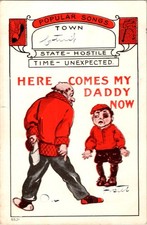
If she discovered that I had been given a detention, I could reasonably expect that the matter would not end when I left the school premises.
There was a fair chance that I should receive a further punishment at home.
Thus, in the circumstances, I could find myself doing the detention and then being punished again when I got home.
If, on the other hand, I could contrive to keep the detention from my mother’s knowledge, I should have accepted it quite willingly.
But if the school was going to insist upon my parents being informed—and it was not uncommon for a boy to be required to obtain a parent’s signature upon a detention—I might well have preferred the strap.
Indeed, under those circumstances, I should probably have preferred the cane as well.
It is perhaps worth pointing out that at my school boys were not, so far as I can recall, offered any choice between punishments.
The question was therefore largely theoretical.
At another high school, according to one recollection, detention was comparatively unusual while the cane was employed regularly.
A boy who had never himself been caned said that, had the choice actually been offered, he would have selected detention.
His reasons were understandable.
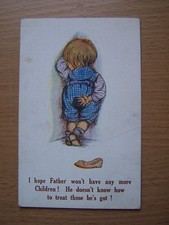
The cane was, in a sense, a semi-public punishment. A boy had to face not merely the physical consequences but also the embarrassment of being observed and the uncertainty of how he himself might react.
There were others, however, who received the cane with considerable frequency and appeared to take a certain pride in the reputation it gave them.
This contrast perhaps explains why memories of corporal punishment are so varied.
To some former schoolboys, the cane remains principally a recollection of pain and humiliation. To others it is remembered as one of the accepted institutions of school life—a punishment which was feared, certainly, but which could also confer a curious form of status upon those who endured it with fortitude.
The circumstances of the individual school mattered greatly.
So did the offence, the master concerned, the manner in which the punishment was administered and, perhaps above all, the boy himself.
For me, however, there was never much doubt.
Detention meant fifty minutes after the school day, an essay on a prescribed subject, and an entry upon the school record.
The cane meant a journey to the top of the school tower, a formal and embarrassing procedure, considerable apprehension, and the possibility of an audience.
The balance, therefore, was heavily in favour of detention.
But the older one becomes, the more one appreciates that school punishments were about more than the punishments themselves.
They formed part of a curious social system in which courage, reputation, obedience and even the nature of one’s offence could determine how one’s fellow pupils regarded the experience.
The cane could frighten a boy, but it could also become a test of character in the eyes of his contemporaries.
Detention was less dramatic, but it carried its own penalties in the form of lost leisure, damaged records and, in some homes, a second reckoning.