Nor was the cane a particularly economical punishment in terms of time.
A prefect’s caning could occupy a quarter of an hour. There was the waiting, the various formalities, and the journey up several flights of stairs to the prefects’ quarters in the tower, followed by the return journey.
A Headmaster’s caning could take longer still, particularly when an additional lecture was involved.
All this took place during the lunch interval and consequently consumed a substantial portion of a boy’s free time.
There was, moreover, an important distinction concerning records. A Headmaster’s caning went upon the boy’s report and school record. A prefect’s punishment, on the other hand, normally remained a matter between the boy and the prefects—unless, of course, the boy chose to appeal to the Headmaster.
Detention, by comparison, seemed almost civilised.
At my school it consisted of writing an essay upon a prescribed subject. This was scarcely a punishment for someone who happened to enjoy writing essays. I enjoyed them then and, rather remarkably, still do.
There was also a certain flexibility about the occasion. In general, a boy could choose whether to serve his detention on the same day or on the following school day.
Thursday was excluded, since Thursday was our half-day. Like many schools of the period, we had lessons on Saturday morning.
There was, of course, a disadvantage. Detention consumed time.
Afternoon school finished at 4.10 p.m. Detention began at 4.15 and ended at 5 o’clock. In practical terms, therefore, a boy lost fifty minutes—from the end of ordinary lessons until he was released.
That was hardly a serious hardship when compared with the cane, but there was one further consideration. A detention went upon the boy’s report and upon his school record.
It is worth considering, too, the question of status.
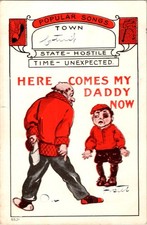
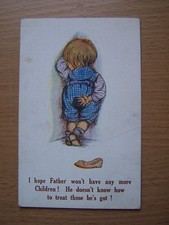
Among boys, the cane could occupy a curious position. For many, being caned was not simply a punishment. It could be regarded as a rite of passage, a test of courage and, in the vocabulary of the playground, a demonstration of manliness.
To take one’s medicine without flinching was not necessarily regarded as undignified. Much depended upon the offence for which the punishment had been imposed.
Some offences were considered far more respectable than others in the eyes of one’s schoolfellows—and, indeed, of some masters.
My impression is that many boys feared the cane much more beforehand than they remembered it afterwards. Very few wanted a second experience, but there were some who appeared to have discovered a remarkable ability to endure repeated canings without obvious distress.
Even then, however, there were limits to the admiration which such behaviour inspired.
A boy who received the cane occasionally might acquire a certain reputation for courage. One who received it with excessive regularity could find that his reputation changed.
His status first rose and then fell as the number of his punishments increased. In the end he was liable to be regarded not as brave but as simply rather foolish.