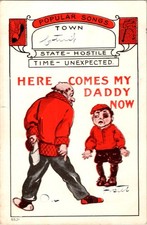
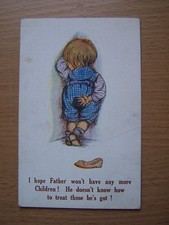
Taken together, these recollections form something far more valuable than a collection of isolated memories. They offer a rare glimpse into the everyday reality of British schools during the decades when corporal punishment remained an accepted part of education.
The stories come from different counties, different generations and different types of schools.
Some pupils attended village primary schools.
Others remembered grammar schools, comprehensive schools or independent schools.
Each school developed its own traditions, and those traditions often reflected the personalities of the teachers who worked there.
That explains why the experiences vary so greatly.
One former pupil might remember girls regularly receiving the slipper alongside boys.
Another could pass through an entire school career without ever witnessing a girl receive physical punishment.
Neither account necessarily contradicts the other.
They simply describe different schools operating under different customs.
Throughout the recollections, one point appears remarkably consistent.
Teachers were generally expected to maintain firm discipline.
Parents often trusted schools to deal with misbehaviour, and pupils usually accepted that breaking the rules would carry consequences. Whether those consequences involved lines, detention, extra work or corporal punishment depended largely upon the individual school.
Many contributors reflected that, at the time, they thought little about it.
Children rarely analysed educational policy.
They simply learned the rules of their own school and adapted accordingly.
Only many years later, when discussing childhood memories with others, did they discover how different another person’s school experience could have been.
That realisation surprised many contributors.
Some had assumed every school used the cane.
Others believed girls were never punished physically until reading memories that suggested otherwise.
For many, these discussions challenged long-held assumptions about what had been considered “normal.”
The recollections also demonstrate the importance of individual teachers.
Again and again, contributors remembered personalities rather than punishments.
There was the calm teacher who rarely needed to raise their voice.
The respected headteacher whose mere presence restored order.
The deputy head who dealt with serious offences privately and without unnecessary fuss.
The strict classroom teacher whose standards were known by every pupil long before anyone found themselves in trouble.
These individuals shaped the atmosphere of their schools far more than any written rulebook ever could.
It is equally striking how often contributors judged teachers not by whether they used corporal punishment, but by how they used it.
Teachers remembered most fondly were those regarded as fair, predictable and consistent.
Former pupils repeatedly emphasised that children accepted strict discipline far more readily when they believed it had been administered impartially.
By contrast, punishment that appeared arbitrary, excessive or linked to poor academic performance rather than deliberate misconduct attracted far greater criticism.
Those distinctions remained vivid even after half a century.
Looking back today, these recollections should not be read as arguments for or against the return of corporal punishment.
Instead, they serve as historical testimony.
They remind us that education has changed enormously within living memory.
Practices once regarded as perfectly ordinary have disappeared.
Ideas about discipline, children’s welfare and classroom management have evolved dramatically.
Yet the memories themselves remain important.
They preserve voices that might otherwise be lost.
They remind us that history is rarely black and white.
Most importantly, they show that behind every educational policy were real children, real teachers and real classrooms, each leaving lasting impressions that survived long after the school bell rang for the final time.
The debate surrounding corporal punishment may continue for years to come, but these recollections ensure that the experiences of those who lived through that era are not forgotten.