Among the many recollections, some memories stood out because they were unusual rather than typical. While most contributors described isolated punishments involving a single pupil, a few remembered occasions when several girls were disciplined together.
One such account came from a former pupil who attended a junior school during the early 1950s.
The class had been talking and misbehaving while the teacher was trying to conduct the lesson. Eventually, enough was enough. Rather than dealing with each pupil separately, the teacher called several girls to the front of the classroom to receive the same punishment.
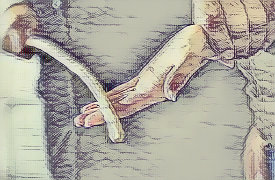
Each girl was given a single stroke of the cane across the palm of the hand.
By modern standards, the punishment would undoubtedly seem severe. Yet the former pupil’s strongest memory was not of tears or panic. Instead, it was of the calm and orderly manner in which everything took place. There was little drama. Most of the girls accepted their punishment quietly before returning to their desks.
One detail remained particularly vivid.
The father of one of the girls was himself a teacher at another school. Before administering the stroke, the class teacher quietly apologised to her, explaining that she had behaved no differently from the others and therefore had to receive exactly the same punishment.
To the former pupil, that brief apology demonstrated something important.
The teacher was not acting out of anger.
He was simply applying the same rules to everyone in the class.
The same contributor went on to explain that, although girls were caned from time to time, it happened relatively rarely compared with boys. That observation appeared repeatedly throughout many of the recollections.
Few contributors claimed that girls were punished more often than boys.
Most instead remembered that girls could receive corporal punishment, but that it generally happened less frequently.
Exactly why this was the case remains open to interpretation.
Some believed teachers considered girls less troublesome.
Others thought teachers simply preferred alternative forms of discipline for female pupils.
Whatever the reason, few schools seemed to follow exactly the same practice.
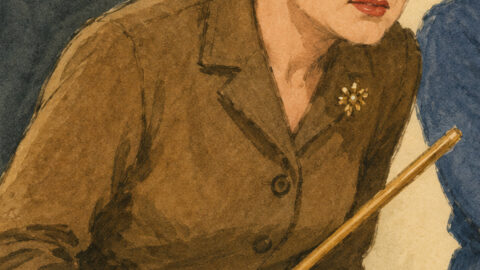
Another recollection came from a pupil who witnessed an older girl receive the cane after failing to carry out her responsibilities as a school prefect.
The punishment took place in the study office rather than in a classroom. Fellow prefects watched as the senior pupil received her punishment before quietly returning to her duties. For those present, it served as a reminder that even pupils entrusted with responsibility remained subject to the school’s rules.
Several contributors also reflected upon the remarkable calmness that surrounded these events.
There were no dramatic speeches.
No lengthy confrontations.
Teachers rarely appeared to lose their temper.
Punishments were administered, lessons resumed, and the school day continued.
Looking back, many former pupils remarked that this matter-of-fact atmosphere probably explains why so many memories focus less on the punishment itself and more on the circumstances surrounding it.
They remembered where it happened.
They remembered who administered it.
They remembered the expressions on teachers’ faces.
They remembered the silence of the classroom.
The physical punishment often lasted only a few seconds.
The memory of the occasion, however, remained for decades.
These recollections also remind us that history is rarely straightforward.
One school might have regarded such incidents as exceptional.
Another might have considered them entirely ordinary.
There was no single British experience of school discipline.
Instead, there were thousands of individual stories, each reflecting the customs, traditions and personalities that shaped a particular school at a particular moment in time.