Britain’s Changing Attitude Towards the Cane
By the middle of the 1970s, the old certainties of school discipline were increasingly under examination.
The controversy surrounding corporal punishment was by no means confined to one grammar school.
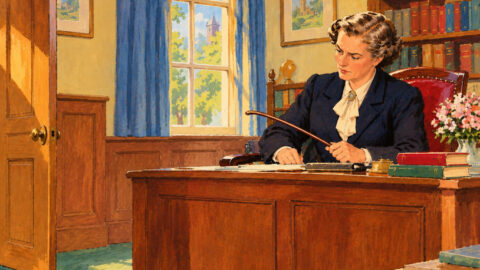
Throughout Britain, the cane had been a familiar part of education for generations.
It was used in grammar schools, secondary modern schools, independent schools and, in some circumstances, junior schools.
The precise customs differed considerably.
Some establishments reserved corporal punishment for the headmaster.
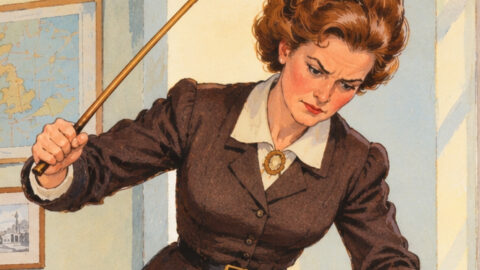
Others permitted deputy heads or ordinary classroom teachers to administer it.
A few schools maintained elaborate regulations governing its use.
Elsewhere, the arrangements were much less formal.
For boys educated during the 1940s and 1950s, the prospect of receiving the cane was often accepted as an ordinary consequence of misconduct.
By the 1960s, however, attitudes were beginning to change.
Educational reformers questioned whether physical punishment encouraged genuine self-discipline or merely obedience through fear.
Psychologists and child welfare campaigners increasingly challenged the assumption that pain was an appropriate instrument of education.
Parents, too, were becoming more divided.
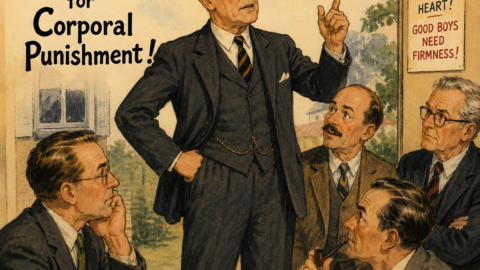
Some continued to believe that a few strokes of the cane did no lasting harm.
Others regarded the practice as degrading and unnecessary.
The debate was not always conducted politely.
Supporters of traditional discipline accused reformers of undermining authority.
Opponents accused traditionalists of defending violence against children.
Between these positions stood many teachers who were uncertain whether the cane was useful, harmful or simply an inherited custom.
There was also the question of consistency.
A boy might receive a severe punishment at one school for an offence which attracted nothing more than detention at another.
One headmaster might regard six strokes as a reasonable response to serious misconduct.
Another might consider the same punishment excessive.
The outcome could depend as much upon the temperament of the teacher as upon the behaviour of the pupil.
And that was precisely what concerned critics of the system.
If corporal punishment was to remain lawful, they argued, it ought at least to be subject to clear safeguards.
The personal anger of a master should never determine the severity of a punishment.
Nor should a pupil’s welfare depend entirely upon the judgement of one individual.
The alleged incident of 1962 illustrated the danger.
A headmaster reputedly known for his temper had, according to the recollection, punished a boy so severely that an apology became necessary.
Whether the punishment was unlawful could not be established from the available account.
But the possibility of excessive force was enough to raise serious questions.
By the middle of the 1970s, Britain was still some years away from abolishing corporal punishment in state schools.
Yet the arguments which would eventually bring about that change were already being heard.
The cane, once regarded as an indispensable symbol of authority, was increasingly becoming a subject of public controversy.
And the headmaster, once considered almost beyond criticism, was discovering that his decisions could be questioned.