If the academic demands of Charles Darwin Grammar came as a surprise, its approach to discipline was equally unfamiliar.
The pupils quickly discovered that rules were intended to be obeyed.
Yet they behaved exactly as generations of schoolchildren have behaved before them: they tested those rules.
Chocolate appeared beneath beds.
Make-up was concealed.
Mobile telephones were smuggled into dormitories.
There was laughter when somebody else was caught.
One particularly unpleasant incident occurred when two boys put toothpaste onto another boy while he slept.
What may have seemed to the perpetrators like a dormitory prank had another side to it. The boy concerned had already become the subject of jokes from his companions.
Here the programme touched upon a question that transcends educational fashion.
Where does harmless schoolboy foolishness end and bullying begin?
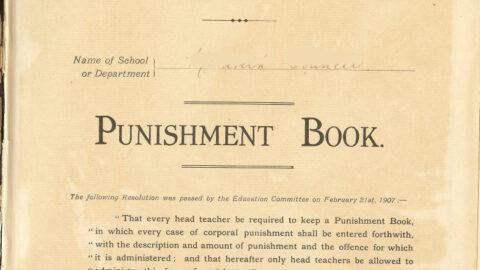
A strict school of the 1950s might have answered such behaviour with severe punishment. The television recreation necessarily relied upon other sanctions.
More interesting than the particular punishment, however, was the question of whether the pupil understood why the behaviour was unacceptable.
The programme repeatedly showed youngsters laughing when either they or their friends were reprimanded.
This sometimes appeared to bewilder the deliberately old-fashioned staff.
The contrast between generations was particularly striking.
The 1950s school depended heavily upon the assumption that the teacher possessed authority simply because he or she was the teacher. The modern pupils were much more inclined to question, negotiate and occasionally argue.
One boy proved especially confident in his ability to talk himself out of difficulties.
When a hidden mobile telephone was discovered, he initially denied deliberately keeping it.
The Headmaster refused to become involved in an endless argument. Instead, the pupil was given a straightforward opportunity to tell the truth.
Eventually he did.
His punishment consisted of two hours’ detention, copying a passage in English and Latin from the Venerable Bede, followed by an early bedtime.
It was thoroughly old-fashioned without becoming theatrical.
There was also an important lesson hidden within the encounter.
Effective discipline need not simply mean imposing increasingly severe punishments.
It can mean creating circumstances in which a youngster is encouraged to stop making matters worse.
Once the truth had been admitted, the matter could be dealt with.
Unfortunately, the same pupil later ignored his early bedtime and was discovered fully dressed and performing an imitation of the Headmaster.
For once, his expression suggested that he realised he had pushed his luck considerably too far.
The incident was amusing television.
It was also a reminder that no system of education, however strict, has ever succeeded in removing youthful mischief.