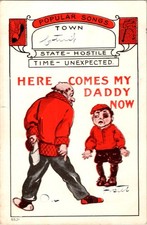
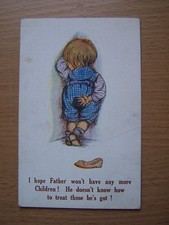
Corporal punishment in schools possesses a history extending back for centuries.
One early English poem, The Birched School-Boy, printed around 1500, records a pupil lamenting the sharpness of the birch used by his teacher.
The verses leave little doubt that physical punishment was already a recognised feature of education.
By the nineteenth century the practice was firmly established throughout much of Britain. It was also the subject of considerable argument.
One particularly interesting debate concerned girls.
An educational correspondent of an earlier age complained that it had been asserted that there was “no reason” why girls should not be punished physically in precisely the same fashion as boys.
The writer strongly disagreed.
Much of the argument reflected Victorian assumptions about womanhood. Girls were described as gentler and more delicate than boys and therefore deserving of greater protection.
Some of the supposed medical explanations offered at the time would not withstand modern scientific examination. Nevertheless, the correspondence is revealing because it demonstrates that corporal punishment was controversial even when it was widely practised.
There was never the complete agreement about it which later generations sometimes imagine.
Some teachers believed a carefully administered punishment could bring misbehaviour swiftly to an end. Others regarded frequent punishment as evidence that a teacher had failed to command respect by better means.
The same disagreement can be found in America.
A newspaper report from Nebraska told of a schoolmistress, Miss Clara Wilmot, who was fined five dollars after severely chastising a troublesome pupil. Curiously, the local school board nevertheless approved of her general handling of discipline and subsequently increased her salary.
Such stories reveal the contradictory attitudes of the period.
Severity could bring official criticism on one hand and public approval on the other.
Another American story concerned Miss Elvira Heston, a schoolmistress in Lisbon, Ohio, whose class apparently included several considerably older and larger boys.
When one boy became particularly troublesome, contemporary newspapers reported that Miss Heston removed him from the classroom and dealt firmly with the matter. A dispute subsequently developed with members of the boy’s family and became an extraordinary local incident.
Whether every newspaper detail should be accepted literally is another question. Nineteenth-century editors were no strangers to colourful reporting.
Nevertheless, the popularity of such tales demonstrates the status once accorded to the strong disciplinarian.
British schools produced their own formidable characters.
A stern mistress such as Miss Eleanor Gibson, portrayed in reconstructions of 1950s schooling, might seem startlingly severe when judged according to the standards of the 1960s.
Yet supporters of the old system argue that pupils emerged with a clearer understanding that personal wishes could not always take precedence over the rules of the institution.
Its critics reply that obedience achieved through fear is not necessarily the same thing as genuine self-discipline.
That argument has never been entirely settled.
Even among those who favour firm discipline, there remains the question of proportion.
The old schoolroom could impose penalties for matters which would scarcely be considered offences today.
Talking, untidy handwriting, speaking the wrong language, arriving late, failing to stand perfectly in line or even writing with the left hand could all attract attention.
For many pupils, therefore, the most lasting memory of strict schooling was not the seriousness of the offence but the extraordinary importance that adults seemed to attach to it.