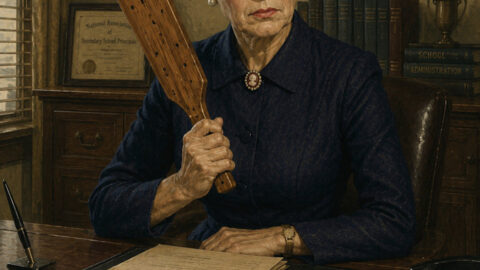
Not every teacher relied upon physical punishment.
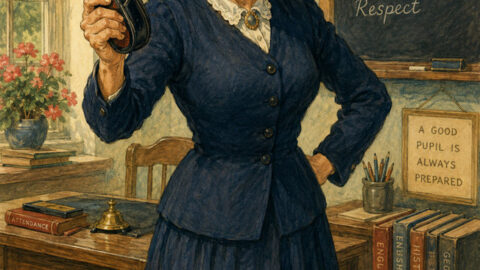
Miss Daphne Wren, who taught English and geography, possessed a far more dangerous weapon: ridicule.
She was elegant, quick-witted and capable of reducing a boastful boy to silence with a single remark.
When Peter Larkin claimed that he had been unable to complete his essay because the dormitory had been too noisy, Miss Wren examined the blank page and said:
“How remarkable. Shakespeare wrote during outbreaks of plague, but Larkin is defeated by a squeaking bedstead.”
The class laughed. Larkin wished the floor would open.
Miss Wren kept a cane behind the classroom cupboard but used it rarely. Its presence was sufficient.
She preferred essays, apologies and public correction. A boy who used bad language might be required to find twenty more civil ways of expressing the same thought. A pupil who damaged a library book copied several pages by hand and paid for the repair from his pocket money.
However, direct insolence brought out her sterner side.
When a senior boy told her that geography was pointless because women did not understand exploration, Miss Wren calmly removed the cane from behind the cupboard.
She gave him four strokes across the hand and then required him to write an account of the journeys of Isabella Bird, Mary Kingsley and Gertrude Bell.
The essay was read aloud to the class.
Miss Wren awarded it eight out of ten.
“An improvement in both knowledge and manners,” she observed.