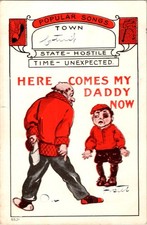
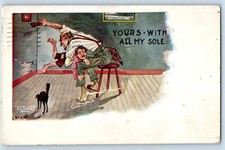
As memories from former pupils accumulated, the discussion gradually shifted away from simply recalling punishments. A far more thought-provoking question emerged.
Should boys and girls have been treated differently when they committed exactly the same offence?
For many former pupils, this question remained surprisingly vivid, even decades after leaving school.
Some remembered classrooms where boys and girls received identical punishments. If two pupils were caught talking during a lesson, both might receive the slipper or ruler. If they were caught smoking, they might both be sent to the headteacher’s office together. In these schools, equality was considered part of maintaining discipline, and teachers appeared determined that the same rules applied to everyone.
Others experienced something entirely different.
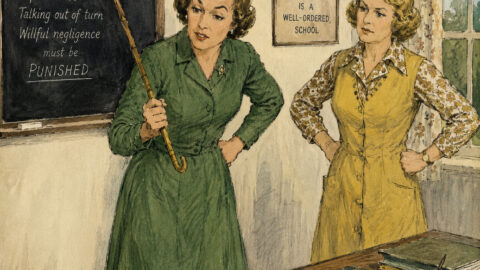
Several former pupils recalled a noticeable change during the early 1960s. At their primary schools, girls gradually stopped receiving corporal punishment altogether, while boys continued to face the cane or a spanking for similar offences. There was no formal announcement. No assembly explained the change. Children simply began to notice it happening.
A boy might be sent for the cane after breaking a classroom rule.
A girl committing precisely the same offence would receive a telling-off, lines or another form of punishment instead.
To many of the boys, this felt deeply unfair.
One former pupil remembered that, as young children, the issue had nothing to do with politics or complicated ideas about equality.
It was simply about fairness.
Children naturally compare themselves with one another.
“Why does she get away with it?”
“Why is he being punished when she isn’t?”
Those were the questions many boys asked at the time. They accepted that boys and girls were different in many ways, but when two children broke the same rule, they struggled to understand why only one received the cane.
Interestingly, several women who contributed their own recollections reached much the same conclusion.
One former pupil, who had attended a school where boys and girls received the same punishments, argued that exempting girls from corporal punishment could be just as unfair as punishing everyone. In her view, holding girls to lower standards of behaviour ultimately benefited nobody. She believed that equal expectations encouraged equal responsibility, while different rules based solely upon gender created resentment on both sides.
Others remembered schools where girls quickly realised they were unlikely to face the same consequences as boys.
According to several accounts, some girls became bolder because they knew the harshest punishments would usually fall upon their male classmates. Whether this was widespread or confined to particular schools is impossible to know, but it was a recurring theme in a number of recollections.
Not everyone agreed.
Some contributors argued that boys and girls should never have been disciplined in exactly the same way. They believed that differences in maturity, behaviour and development justified different approaches to school discipline. Others maintained that every child should be judged individually rather than according to whether they happened to be a boy or a girl. These differing opinions reflected wider educational debates that continued long after corporal punishment had disappeared from British schools.
Looking back today, these memories reveal far more than simply how discipline was carried out.
They show how children developed their earliest ideas about justice.
For some pupils, fairness meant treating everyone identically.
For others, fairness meant recognising differences and responding accordingly.
Whichever view one holds, the recollections demonstrate that corporal punishment was about much more than the cane, the slipper or the ruler. It also shaped the way generations of pupils thought about authority, responsibility and equality—questions that remain just as relevant today as they were in classrooms more than half a century ago.