Kostka Hall, Brighton, Victoria, served for many years as the preparatory school to Xavier College. Accounts of school life during the mid-twentieth century, drawn from Kostka: Xavier by the Sea by Helen Penrose and Catherine Waterhouse (1997), depict an institution in which discipline, religious instruction and academic formation were closely intertwined.
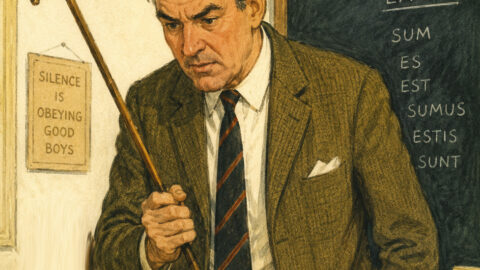
Father McCurtin was already seventy-two years of age when he commenced his duties at Kostka. He was widely regarded as a gentle and cheerful man with a notable sense of humour. Former pupils recalled that he did not generally teach the younger boys in the classroom, but instead spent time speaking informally with students, particularly the older boys. While remembered by many for his kindly and paternal manner, some former students also recalled that he could be strict in matters of discipline, administering corporal punishment publicly at school assemblies for serious offences.
Mr Carroll, who served as master and prefect of discipline from 1937 until 1940, resided in St John’s with the boarders. Former pupils remembered that, once the boys had prepared for bed, they would sit together while he read passages from devotional works such as The Lives of the Saints, followed by lighter literary selections, often by P. G. Wodehouse. Mr Carroll was also responsible for maintaining order in the boarding house after lights-out and regularly patrolled the dormitories until silence had been restored. Former students recalled that he possessed a considerable temper and that corporal punishment was sometimes administered swiftly to boys found misbehaving after hours.
Father Craig was remembered by younger pupils as a stern and imposing figure, distinguished by his silver hair and deeply lined face. Although he was not known to use corporal punishment frequently, students recalled that when he did so the punishment was severe.
Father Michael Fitzgibbon taught at Kostka during a significant period of rebuilding and renewal beginning in the 1950s. Appointed in 1954, he instructed students in French, History, Latin and Religious Studies. Former pupils described him as genial and witty, though capable of firmness when required, and noted that he often provided thoughtful guidance to boys experiencing difficulties. Commonly known among students as “Fitzy”, he habitually carried a disciplinary strap to class. According to school recollections, the strap disappeared one day after being used on a class of boys, and its fate remained unknown until another member of staff later admitted to having removed it.
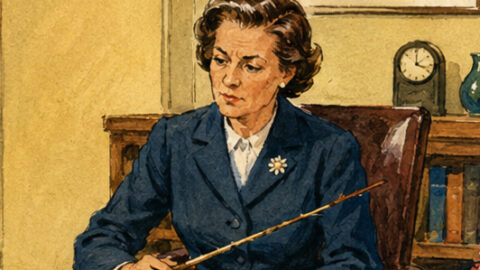
Mrs Mitchell, a diminutive but respected teacher, was remembered with affection by many former pupils. By 1964 she was teaching Grade 3 and was regarded as caring yet appropriately strict. One former student recalled an occasion during a walk to the old chapel at Maritima when he remarked to another boy that he was taller than his teacher. Mrs Mitchell turned and replied that true stature depended not upon physical height, but upon intelligence and character. Her disciplinary methods included striking pupils across the knuckles with a ruler, a practice then common in many schools.
Classrooms themselves were central to the disciplinary culture of the school. Discipline extended beyond punishment and informed many aspects of daily life, including compulsory silence at certain times and the orderly marching of boys between activities. Former students and staff generally recalled that, during Kostka’s first three decades, punishments varied in severity but were seldom regarded as cruel by the standards of the time. In comparison with many contemporary schools, including Burke Hall, corporal punishment at Kostka was considered relatively restrained.
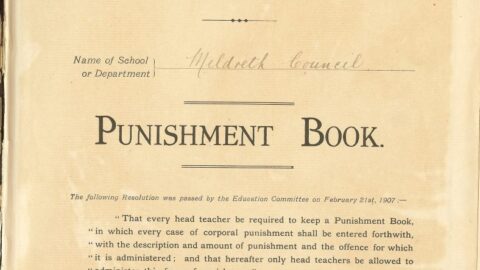
For many years Jesuit priests and some lay teachers employed the strap as punishment for particular forms of misconduct, though rules limited its use to no more than six strokes per boy in a single day. Detention, commonly referred to as “penals”, generally involved the writing of lines after school hours. Nevertheless, it was corporal punishment that left the most enduring impression upon many former students.
One former pupil recalled Father Craig addressing new students on their first day at the school. He emphasised the importance of discipline within the Jesuit tradition and explained that obedience formed a central part of life at both Kostka and later at Xavier College. Among the rules mentioned was a prohibition against climbing the large cypress trees situated between Maritima and the classrooms. Before long, one new boy tested the regulation, climbed the trees, and upon being discovered several branches above the ground, received four strokes of the strap before being sent home for the remainder of the day.
By the 1970s, discipline at Kostka continued largely according to long-established custom, although the use of corporal punishment had begun to decline. There was no formal written policy governing disciplinary matters, which generally concerned incomplete homework, disobedience and misconduct in the school grounds. Detention sessions were conducted twice weekly after school, while the strap, employed only by male staff, was gradually falling out of favour.
Peter Hawkins, appointed in 1971 to oversee disciplinary matters, had previously served at St Patrick’s College as Prefect of Discipline. In addition to his disciplinary responsibilities, he taught Geography, History and later Latin to students in Years 7 and 8, and introduced Civics to the curriculum. Former students and parents remembered him as a dependable and highly organised teacher, as well as an accomplished sporting coach. During his long service at the school he sought increasingly constructive approaches to student behaviour and school discipline.