Physical education occupies a distinctive place in the survey evidence.
The gymnasium, changing room and playing field operated differently from an ordinary classroom.
Pupils were moving rather than sitting at desks, and opportunities for noise, horseplay and disobedience were correspondingly greater.
The Physical-Education Master
The physical-education master was frequently remembered as a strict figure.
He had to control groups of active pupils in circumstances where disorder could quickly become dangerous.
Running about, ignoring instructions or misusing equipment could therefore attract an immediate response.
The Gym Shoe
One contributor from an all-boys school in Lincoln recalled his first substantial school punishment in 1956.
He was fourteen.
His offence was remarkably ordinary: he had failed to unlace a gym shoe before removing it.
The physical-education master interpreted this as laziness and decided to make an example of him.
The respondent did not repeat the particular offence.
More significantly, however, he stated that once he had experienced the punishment he became less anxious about maintaining his previously high standard of behaviour.
Thus the punishment succeeded narrowly but may have failed more broadly.
Impertinence to the Gym Master
Another grammar-school pupil, aged sixteen in 1958–59, was punished after being accused of impertinence towards his gym master.
The pupil later admitted that he had been cheeky but believed the teacher had interpreted the incident too severely.
He received six strokes with the slipper.
He did not repeat the offence and considered the punishment effective, though only partly deserved.
Immediate Discipline
Physical education also encouraged immediate punishment.
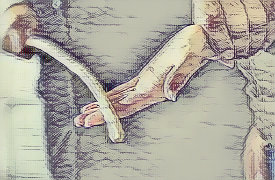
The slipper or gym shoe was readily available.
There was no need to interrupt the lesson by sending a pupil across the school to obtain an implement.
This may help explain why the slipper is particularly prominent in recollections involving physical education.
Safety
The environment also gave teachers legitimate safety concerns.
Horseplay around gymnasium equipment could result in injury.
Failure to follow instructions during organised exercise might endanger more than the offending pupil.
This does not establish that every punishment was justified.
It does explain why physical-education teachers often expected rapid obedience.
A Distinctive Environment
The gymnasium therefore developed its own disciplinary character.
Noise, movement and physical activity were unavoidable.
The teacher’s task was to prevent these from becoming disorder.
Within the schools represented by the survey, corporal punishment was one of the methods sometimes used to maintain that control.