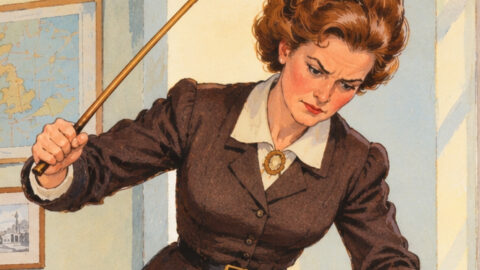
The temptation when writing about school punishment is to concentrate upon the dramatic.
That would produce a distorted history.
Ordinary Discipline Matters
The single stroke for talking may tell us more about everyday school life than an exceptional severe punishment.
Routine classroom discipline reveals how teachers actually maintained order from Monday morning to Friday afternoon.
The Unpunished Pupil Matters
The pupil who watched others being punished but never experienced it personally is also part of the history.
The system affected him through observation and reputation.
The Teacher Matters
Teachers should not be reduced to caricatures.
The evidence contains strict teachers, rarely punishing teachers and teachers whose decisions pupils later considered unfair.
We cannot responsibly assume motives which the evidence does not establish.
The Pupil’s Voice Matters
Equally, the child’s viewpoint should not disappear beneath official records.
A punishment book may state what happened administratively.
The former pupil tells us how the event was understood.
Both are historical evidence of different kinds.
Contradiction Must Remain
A good survey should not force contradictory experiences into one conclusion.
One respondent says punishment was effective.
Another says it failed.
One remembers a teacher as fair.
Another remembers injustice.
The contradiction is itself part of the evidence.
History Rather Than Legend
The objective must therefore be neither to romanticise the old system nor to turn every recollection into a tale of cruelty.
Both approaches replace history with legend.
The purpose of this book has been more modest:
to examine what happened,
how it happened,
why schools believed they were doing it,
and what those who experienced it thought afterwards.