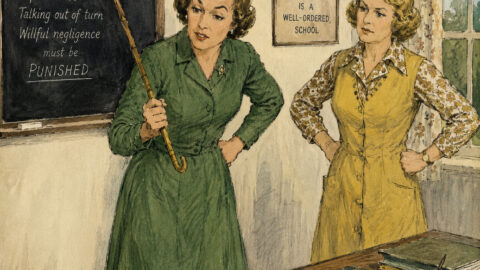
Perhaps the most striking feature of these recollections is how differently people remember exactly the same era.
Some admitted that witnessing punishment genuinely upset them throughout childhood and left memories they would rather forget.
Others confessed that they sometimes enjoyed seeing certain classmates punished, particularly habitual troublemakers or pupils who had caused problems for everyone else. A teacher’s favourite who repeatedly landed others in trouble often attracted very little sympathy when their own turn finally arrived.
Between these opposing viewpoints lies the experience of many children who simply accepted corporal punishment as part of everyday school life. It was neither especially shocking nor especially entertaining—it was simply there.
The discussion also illustrates how memory itself evolves. Decades later, contributors still debate whether teacher age influenced severity, whether boys or girls were punished more often, and whether public punishment was intended primarily to correct behaviour or to reinforce authority before the class.
There are no universal answers.
Every school developed its own traditions. Every teacher had a different approach. Every child reacted according to their own personality, friendships and experiences.
What is beyond dispute is that witnessing corporal punishment affected children in many different ways. For some it produced fear, anxiety and lasting sadness. For others it became little more than another lesson in the daily routine of school life. A few even found humour in memories that once seemed entirely ordinary.
Today these experiences belong to history. They provide a window into a very different educational world—one where discipline was often public, physical and immediate, and where every child, whether punished or merely watching, became part of the story.