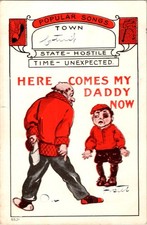
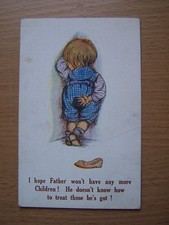
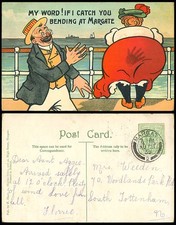
Back in 1985, I bought a complete run of The Beano from 1955 from a shop in London (yes, it was Soho—but not that kind of shop!).
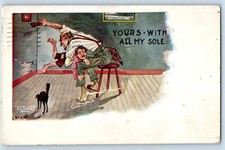
Almost every issue featured the Big Three getting the slipper. One story I particularly remember involved Roger trying to hypnotise his dad into doing his maths homework. His father pretended to be hypnotised, deliberately got all the answers wrong, and Roger ended up receiving a twelve-stroke caning. There was definitely a moral lesson running through many of these stories—cheating, especially copying schoolwork, was always portrayed as a serious offence.
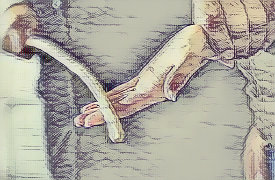
One issue from 1955 contained eleven comic strips, and in nine of them someone was either caned or slippered. That really shows just how common corporal punishment was in children’s comics at the time. There was even a Cat and Dog strip where Cat misbehaved and was punished in a rather unusual way. Their owner tied a carpet slipper to Dog’s wagging tail while holding a bone in front of him, so the wildly swinging slipper repeatedly smacked Cat!
Did seeing Dennis the Menace constantly getting the slipper make me behave better? Absolutely not. If anything, it just taught me to become more inventive at avoiding getting caught. The hiding place I once found for the catapult I took to school says it all.
Those comic strips brought back a lot of memories.
I remember reading the Whacky strip as a child, although I don’t remember the character actually being Whacky. I seem to recall it featuring Roger the Dodger or perhaps one of the Bash Street Kids. Does anyone else remember it differently?
I also vaguely remember Teacher’s Pet, so I must have read Cor!! when I was younger, although I don’t clearly remember the characters.
I am currently researching my family history, and I’ve found that names, places and events only really come alive when you understand the everyday life surrounding them. The same applies to the history of school corporal punishment. Children’s comics were a small but important part of that social history. They helped make school punishment seem completely normal and, for me at least, made the experience feel less frightening.
Dean, I hope you continue posting these examples, and I also hope you can keep the comic extracts in your book if possible.
Growing up in the early 1970s, miniskirts were still fashionable. Many older women wore them too, and some looked more stylish than the younger girls. Female teachers often still wore their hair in buns. Most white boys had military-style short haircuts, while many Black boys wore medium-sized Afros.
Corporal punishment was still common in schools. Most teachers used their hand, with paddles becoming more common later. Cannabis was around from about fifth grade onwards, but thankfully I never experimented with it. Some pupils even joked about using “the Colombian leaf” in their art projects.
Cartoons were sometimes adapted into more risqué versions, occasionally showing a reddened bottom. While some people might find those drawings offensive, they were far from pornographic. School corporal punishment rarely appeared in Archie comics, although Betty and Veronica were occasionally shown being punished at home. At that time, punishment was generally portrayed as taking place without clothing being removed, certainly in mainstream comics.
It’s great to hear that you’re still finding time to work on your book. It would be a shame if the comic extracts had to be left out because, judging by the examples you’ve shared, they provide fascinating historical insight.
Before reading your posts, I had no idea that school corporal punishment appeared so frequently in children’s publications. My own reading as a child was mostly limited to The Eagle and Arthur Mee’s Children’s Newspaper, and I don’t remember corporal punishment featuring very often in either of them.